Selected site-specific project
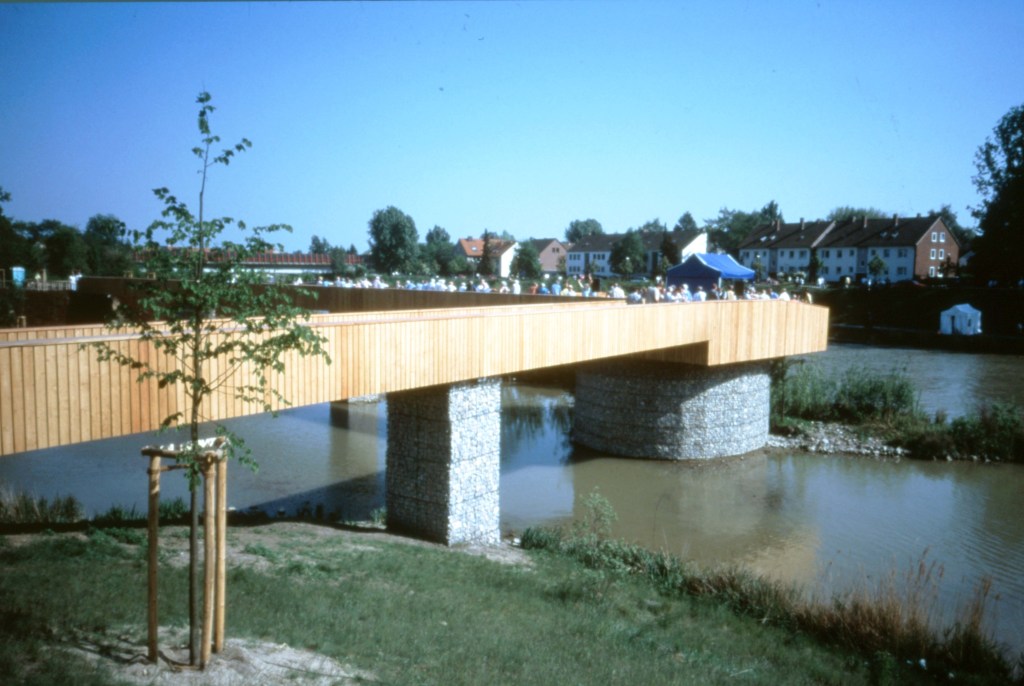
Viewpoint Terrace
2000
Mittellandkanal, Hannover, Germany.
Viewpoint Terrace is an installation created in 2000 for the Kunst am Kanal competition at the Mittellandkanal. This initiative brought together regional and international artists to produce site-specific works along the Mittellandkanal, a major waterway traversing Hannover, with the aim of integrating contemporary art into the urban and natural landscape. Several of the works realized during the competition are permanent and are accessible via the “Grüner Ring”, a pedestrian and cycling route encircling the city.
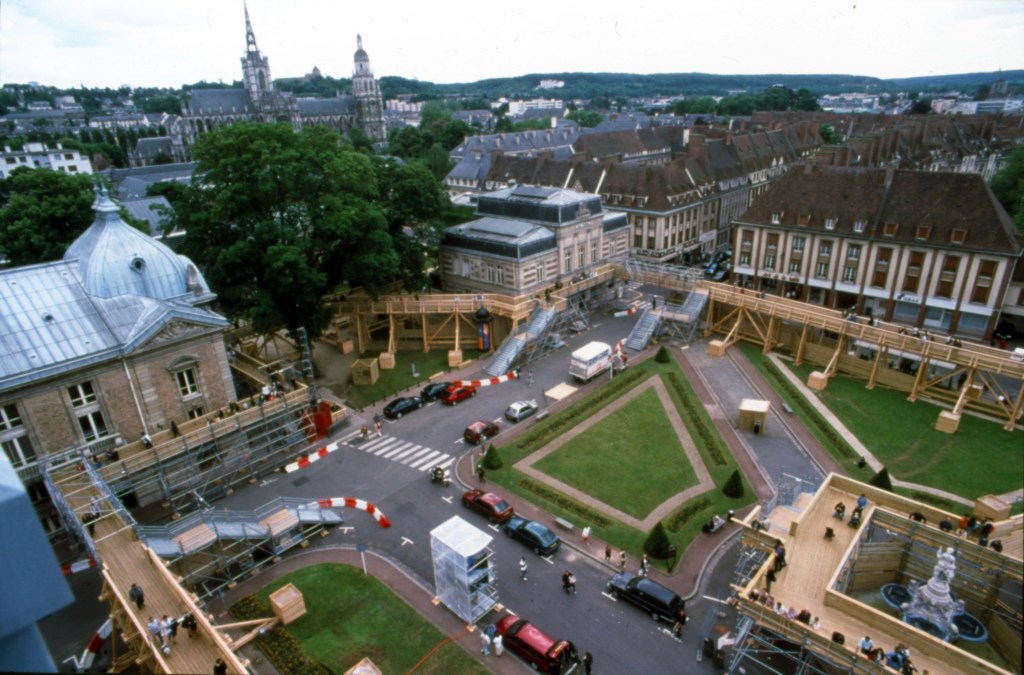
Sur la Voie
19 May – 16 July 2000
Place de l’Hôtel de Ville, Évreux, France.
On the occasion of the Biennial d’Évreux Les Passavents
Sur la Voie is a temporary, monumental, site-responsive work installed in Place du Général de Gaulle (Place de l’Hôtel de Ville), Évreux, from 19 May to 16 July 2000. Consisting of a footbridge, the work connected four buildings that survived the 1940 bombings: the town hall, the theatre, the former museum, and the 11th-century belfry. In parallel with the installation, the solo exhibition Documents, showcasing models and archival materials by Kawamata, was on view at the Évreux Museum from 20 May to 24 September.
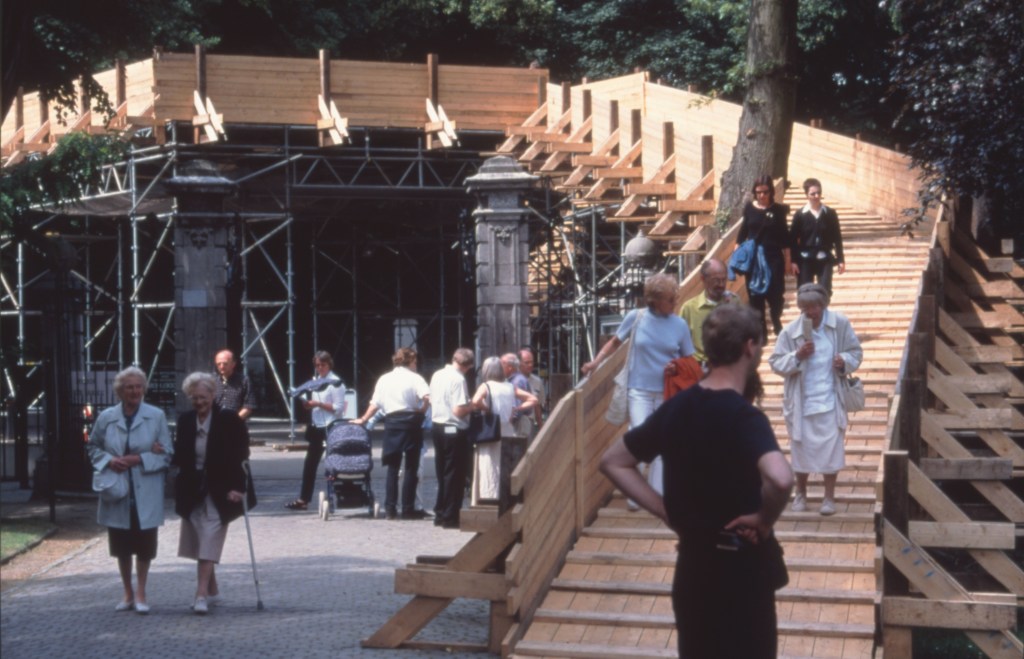
Trench and Bridge
2000
Open Air Museum of Sculpture Middelheim, Antwerp, Belgium.
The Middelheim Sculpture Park is a museum of modern and contemporary outdoor sculpture, established on 30 hectares in the Middelheim domain on the outskirts of Antwerp. For his intervention, Kawamata created two wooden structures at the periphery of the museum: a bridge spanning the road that separates the park’s contemporary section from its modern section, and a Trench in the area included in the then-recent expansion of the park, near the hospital. At the summit of the bridge, an observation platform, protected by tall wooden planks, transforms this simple passageway into a privileged, all-encompassing viewpoint. Meanwhile, the sinuous and erratic development of the trench suggests movement and transforms its usual resting function into that of a path.
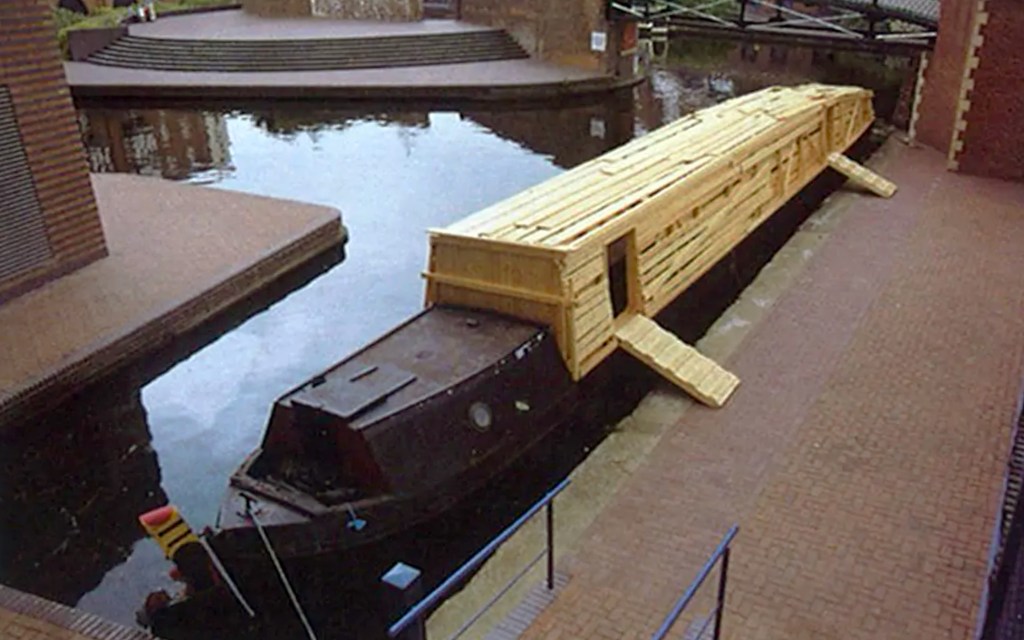
Canal Boat
1 June – 30 September 2000
Ikon Gallery, Birmingham, UK.
Canal Boat is a participatory off-site project that was part of the group exhibition As it is, held at Ikon Gallery from 1 June to 30 September 2000. For this project, Kawamata worked with a group of local people to convert the hull of a 21-metre former commercial narrowboat into an architectural installation using wood planks.
Boat Project
2001
From Tagawa to Wakamatsu Bay, Japan.
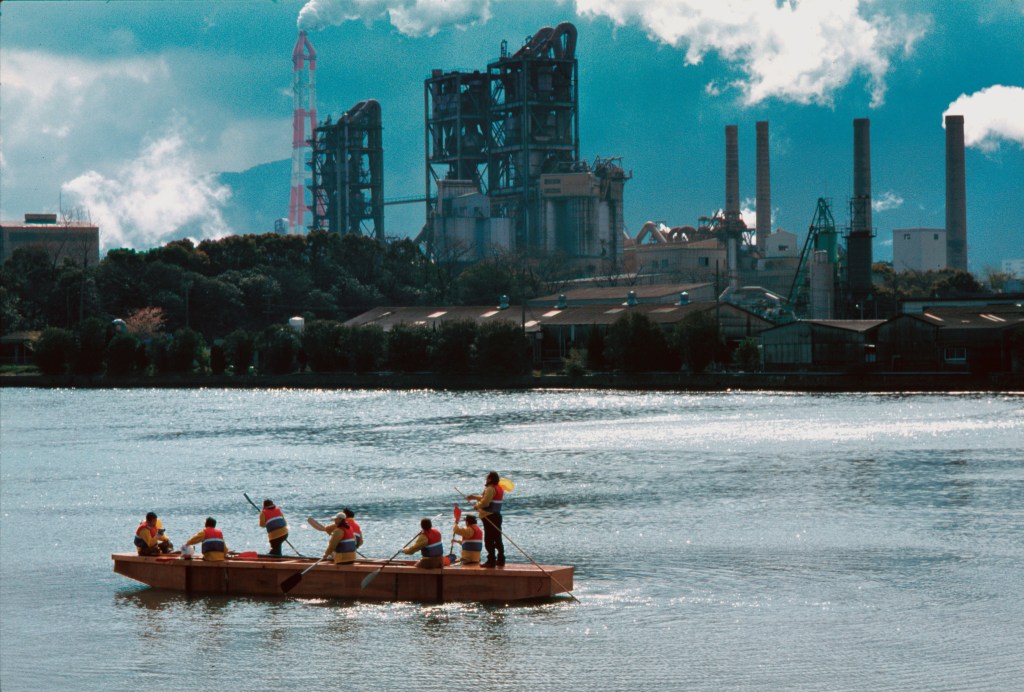
A travelling project produced jointly by the 6th Kitakyushu Biennale and Tadashi Kawamata’s long-term Coalmine Project Tagawa. With the help of local participants between October 2000 and March 2001, Kawamata adapted boats and waterfronts into site-specific travelling installations, connecting former coal-mining communities with coastal infrastructure across multiple locations in Fukuoka Prefecture — including Tagawa, Akaike, Nogata, Koyanose, Mizumaki, Orio, and Dokai Bay in Wakamatsu Harbour area.
Daily News
3 November 2001 – 14 January 2002
Art Tower Mito Contemporary Art Gallery, Mito, Japan.
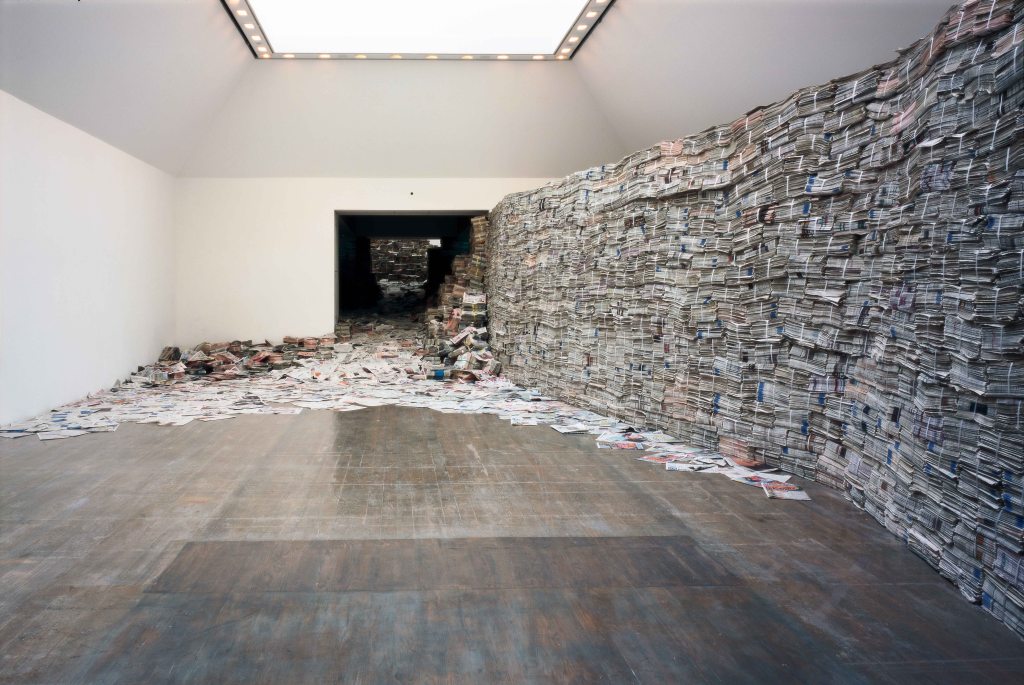
For his solo exhibition at the Art Tower Mito Contemporary Art Gallery in Mito, Japan, Kawamata created Daily News, an installation that occupied the entire gallery. The work was assembled by stacking diverse elements into a unified composition: approximately one hundred tons of newspaper, reflecting the vast quantity of information and materials consumed in everyday life, combined with one hundred photographs from local newspapers, arranged along the gallery walls to evoke the transitory nature of information. Archival material from Kawamata’s previous projects and workshops was also incorporated into the installation. To accompany the exhibition, the artist produced Book in Progress: Kawamata Tadashi Daily News on site — an artist book in a journal-like format documenting the creative process.
Observation Balcony
5 May – 20 October 2002
Neuchâtel, Switzerland
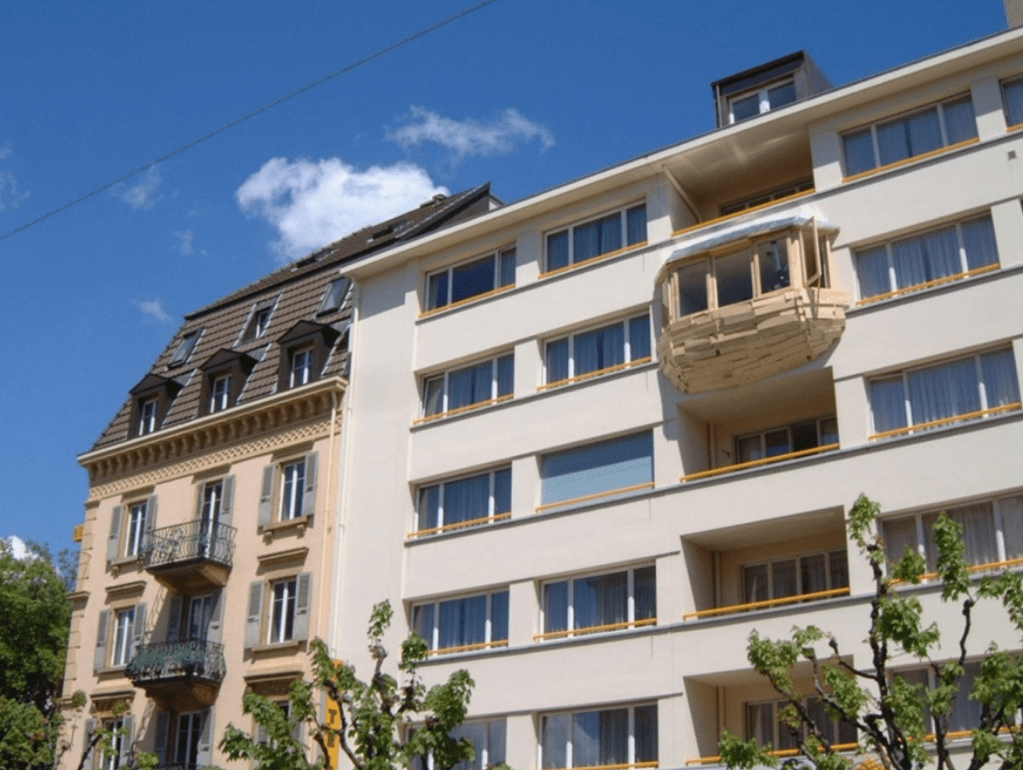
For his participation in Expo.02, the Swiss National Exhibition held from 15 May to 20 October 2002, Kawamata installed an observation post on the balcony of room 507 on the fifth floor of the Hotel des Arts in Rue J. L. Pourtalès, Neuchâtel, Switzerland. A wooden and glass porch concealed the original balcony structure and housed a telescope, offering a clear, privileged, bird’s-eye view of the main entrance to the Arteplage Neuchâtel. Both random visitors and specially invited guests were encouraged to stay on the balcony and record their impressions in a guest book, reflecting Kawamata’s interest in gathering unbiased perspectives—whether positive or critical—on the event. The collected notes were later published as a book following the conclusion of Expo.02.
Absent Racetrack
13 July – 23 September 2002
Obihiro Racetrack, Obihiro, Japan
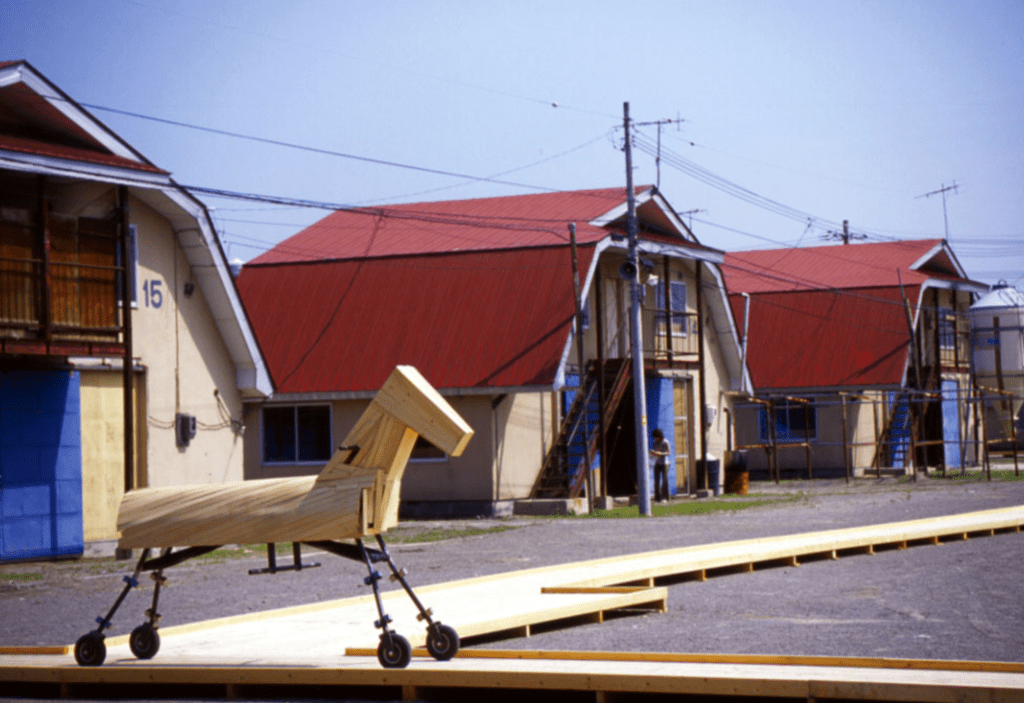
The group exhibition: Tokachi International Contemporary Art Exhibition: Demeter was an international event held at the Obihiro Racetrack in Hokkaido, commemorating the 120th anniversary of Obihiro City’s municipal administration. Participating artists visited Obihiro to engage with the site and create works inspired by its local memories and characteristics. The horse stables, built for banei racing—a form of draft horse racing unique to Hokkaido—served as both venue and thematic context. For the exhibition, Kawamata arranged for a two-year-old male horse to be named “Demeter,” which actively participated in races at the racetrack, while wooden sculptures representing “Demeter” traversed the exhibition site, symbolically highlighting the horse’s absence.
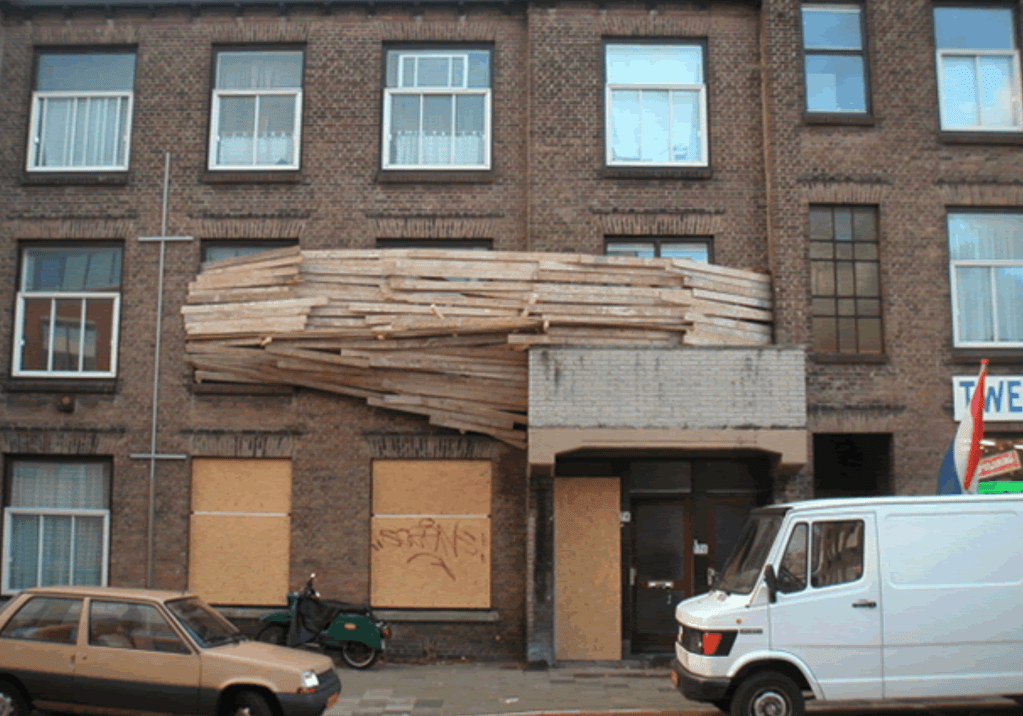
Spui 2002 ; Transvaal
15 October 2002 – 18 January 2003
Stroom Den Haag, The Hague, The Netherlands.
Two site-specific installations created on the occasion of the exhibition Installation Spui 2002 + Photo Archives 1986-2002
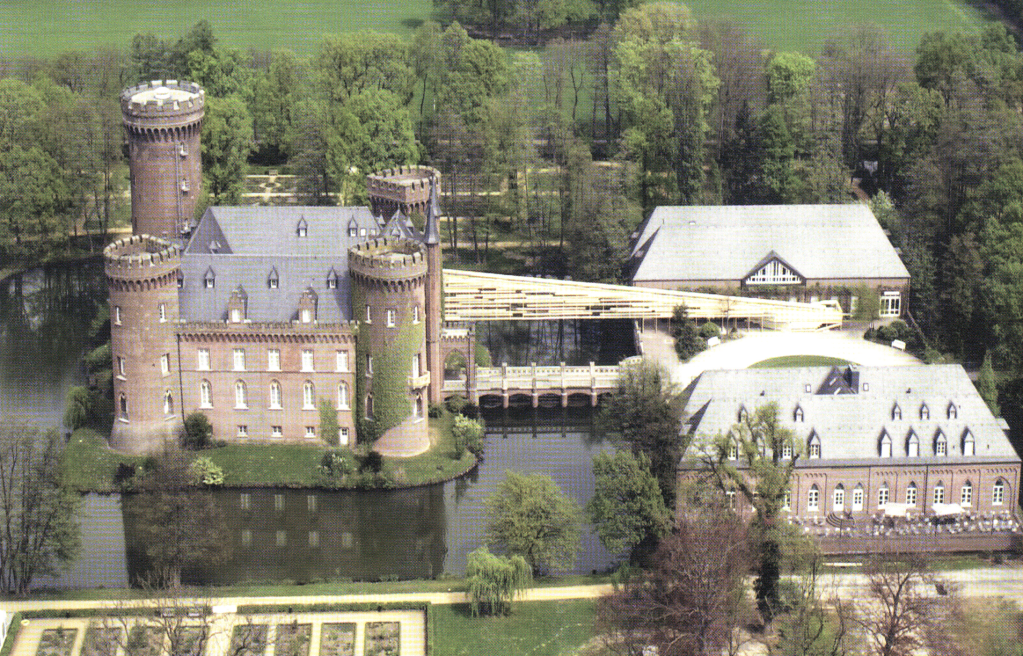
Bridge and Archives
11 May – 26 October 2003
Museum Schloss Moyland, Bedburg-Hau, Germany.
For this project, Kawamata constructed a walkable bridge connecting the Moyland Castle to the Neue Vorburg. This site-specific, monumental installation not only physically links two buildings within the museum complex but also symbolically connects the art of Joseph Beuys with that of Kawamata. The Museum Schloss Moyland houses the world’s largest Beuys collection and the Joseph Beuys Archives, while an archival exhibition of Tadashi Kawamata is presented in the hall of the Neue Vorburg. The exhibition features maquettes, models, drawings, films, and photographic documentation of previous projects.
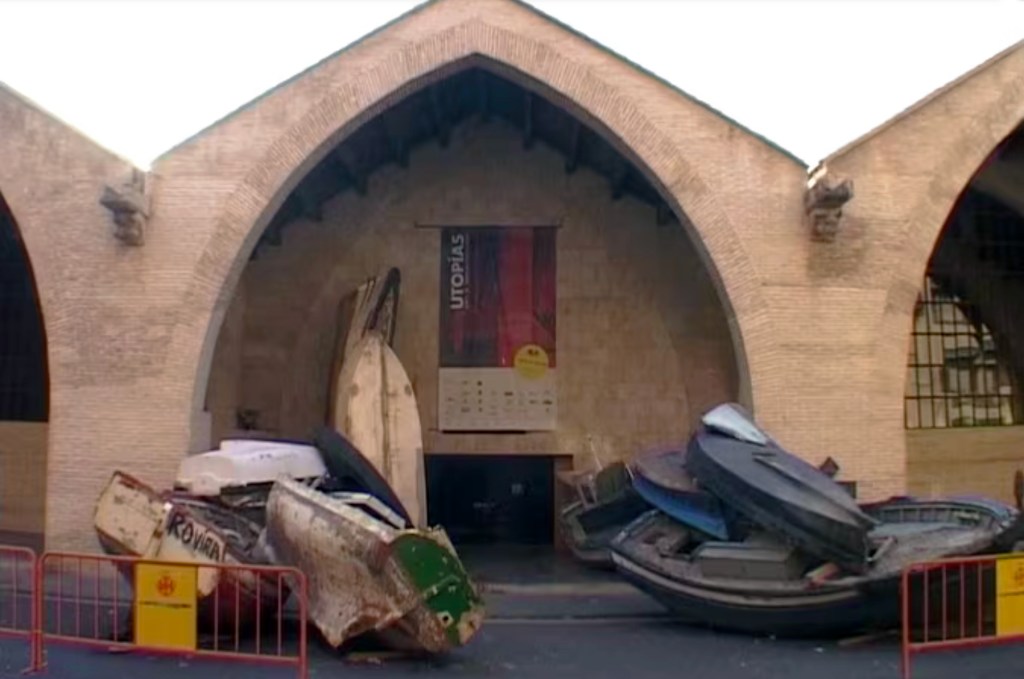
Barquitos
2003
Reales Atarazanas, Valencia, Spain.
On the occasion of the Bienal de Valencia 2003
MicroUtopías was a group exhibition curated by Francisco Jarauta and Jean-Louis Maubant, presenting works by forty-three artists and architects active over the past half-century, installed within the magnificent Atarazanas building in Valencia. Originally medieval shipyards, the Atarazanas are now among the city’s most remarkable exhibition spaces. Framed within the theme “Ciudad Ideal / The Ideal City” of the Bienal de Valencia 2003, the exhibition explored radical ways of living. Kawamata’s Barquitos consisted of an installation made from old boats arranged in the atrium of the Atarazanas — a poetic evocation of the site’s memory and Valencia’s maritime tradition. The work seems to recall the old way of life shaped by the sea, a mode of dwelling that challenged the waves with small boats that once served both as vessels of work and as fragile shelters.
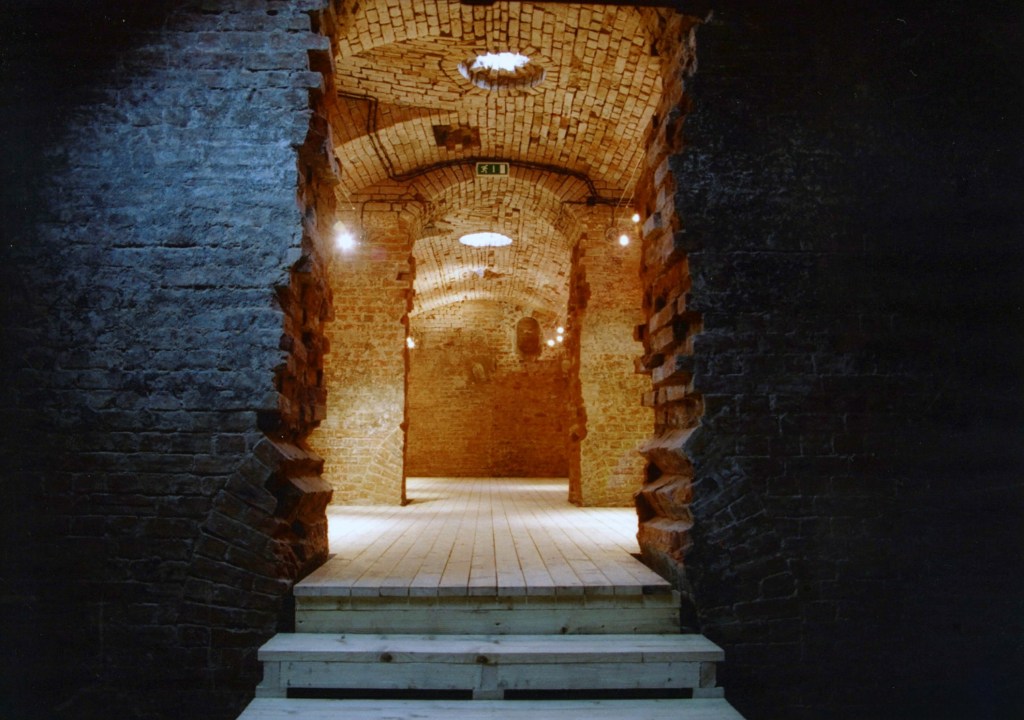
Reconstruction / Rekonstrukcja
2003
Ujazdowski Castle Centre for Contemporary Art, Warsaw, Poland.
Reconstruction is a site-specific project conceived for the Centre for Contemporary Art at Ujazdowski Castle in Warsaw. It consists of an intervention in a 19th-century cellar – originally a water reservoir located in the square in front of the castle – transforming it into a new space for art. After consolidating the structure of the cellar, including its walls and vaulted ceilings, Kawamata installed wooden stairs and a wooden floor. The intervention extends into the castle’s underground areas, which once served as a reservoir when the building functioned as a hospital in the 19th century. By rediscovering and reactivating a hidden and long-forgotten part of the site, Kawamata’s project blurs the boundaries between art, archaeology, and architecture. Through this act of spatial and historical reconstruction, the artist gives new life and purpose to a neglected space. The resulting underground structure now stands as a permanent installation, part of the castle’s sculpture garden collection.
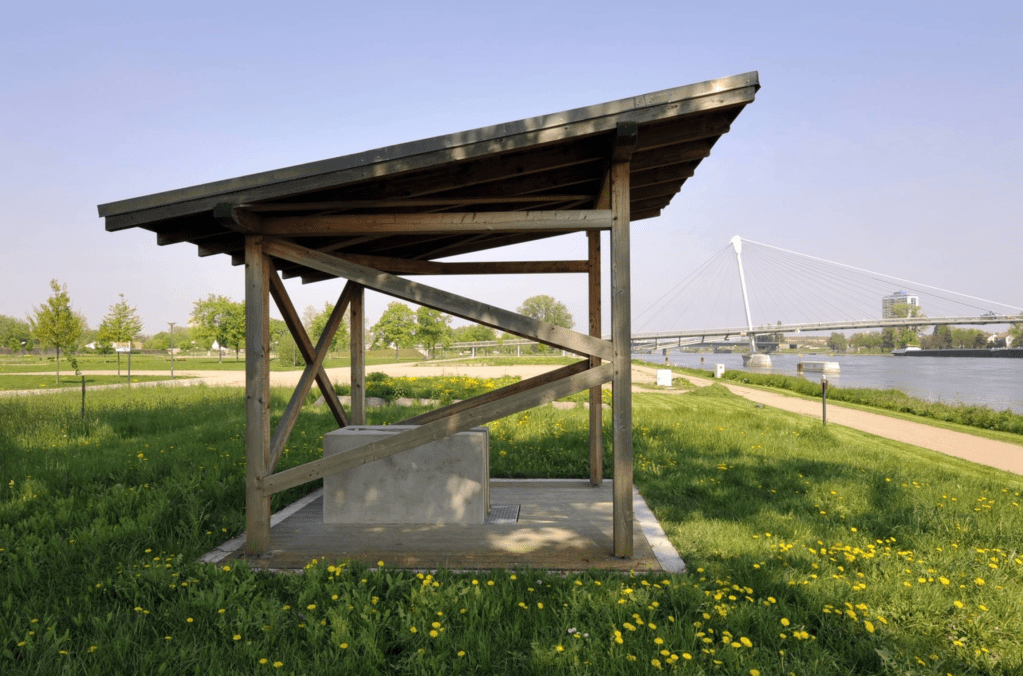
Garden Folly’s and Wooden Structures
23 April – 10 October 2004
Festival des Deux Rives, Strasbourg and Kehl, Germany.
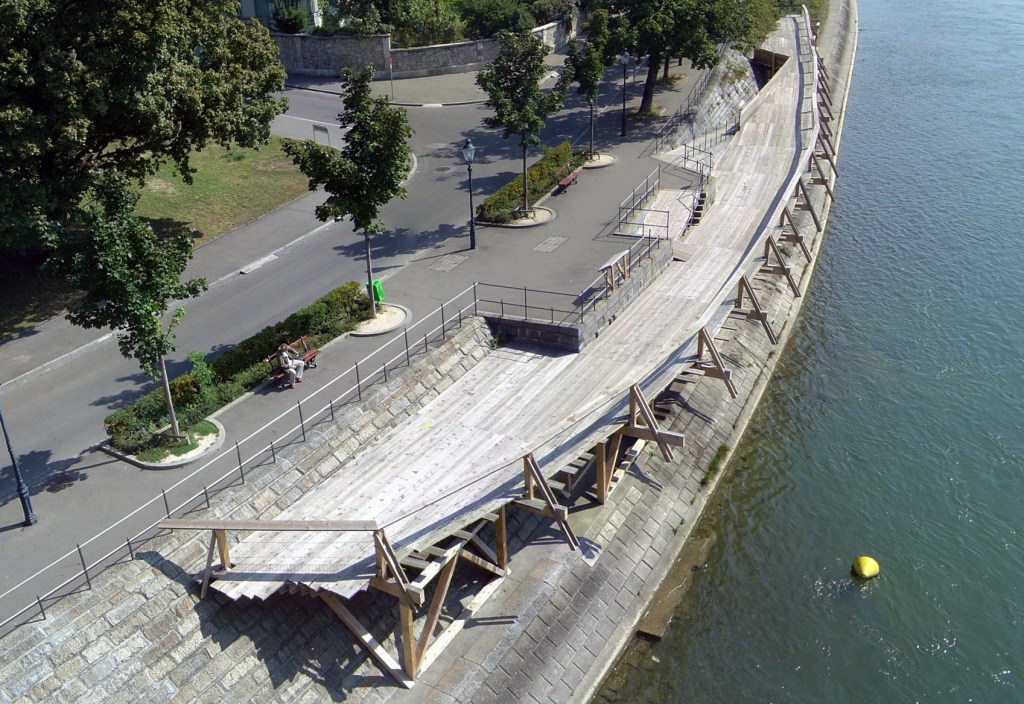
Wooden Terrace Beach
2004
Hohe Wettsteinbrücke (High Wettstein Bridge), Basel, Switzerland.
Parallel Exhibition:
Wooden Terrace Beach – Process and Documents
Museum Tinguely, Basel, Switzerland
11 June – 29 August 2004
Wooden Terrace Beach was a temporary 100-meter-long wooden sun deck along the Kleinbasel bank of the Rhine, in front of the Theodorsanlage in Basel, Switzerland. Commissioned by Sun21, this intervention offered passers-by and visitors a new, freely accessible open space to soak up the sun, take a break from city life, and enjoy views of the river. Inspired by the sun balconies of Alpine guesthouses, Kawamata conceived the installation as an urban sanatorium. Made from borrowed planks and recycled beams, the structure blended seamlessly into the landscape while inviting reflection on the surrounding environment..
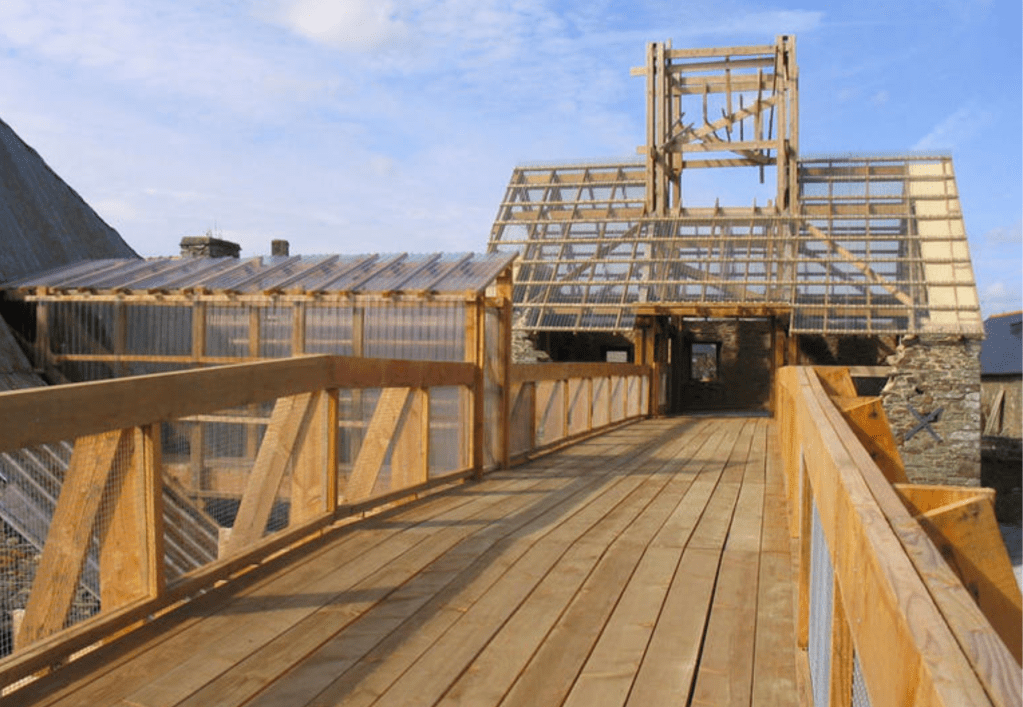
Memory in Progress / Mémoire in demeure
30 August 2004 – 7 September 2006
Saint-Thélo, France.
Memory in Progress (Mémoire en demeure) is a permanent site-specific intervention involving the renovation of a group of former weavers’ houses, located opposite the Musée des Toilesin the village of Saint-Thélo in Brittany. Fine Arts and architecture students of various nationalities participated in the restoration process during workshops held over three years. Conceived as part of the Nouveaux Commanditaires initiative by the Fondation de France, the project received a special out-of-category Prix Architecture Bretagne in 2008.
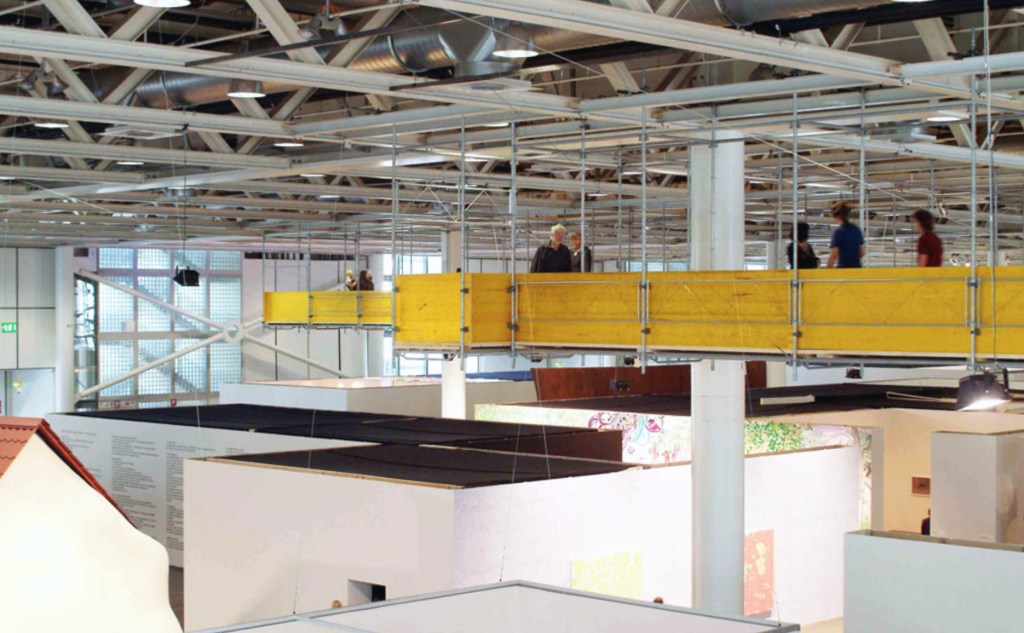
Catwalk
16 – 21 June 2004
Art Unlimited, Art Basel, Basel, Switzerland.
For the Art Unlimited section of Art Basel 2004 — a special exhibition program introduced in 2000 to showcase large-scale art projects — Tadashi Kawamata created a wooden walkway suspended above the fair, allowing visitors to overlook the booths below.
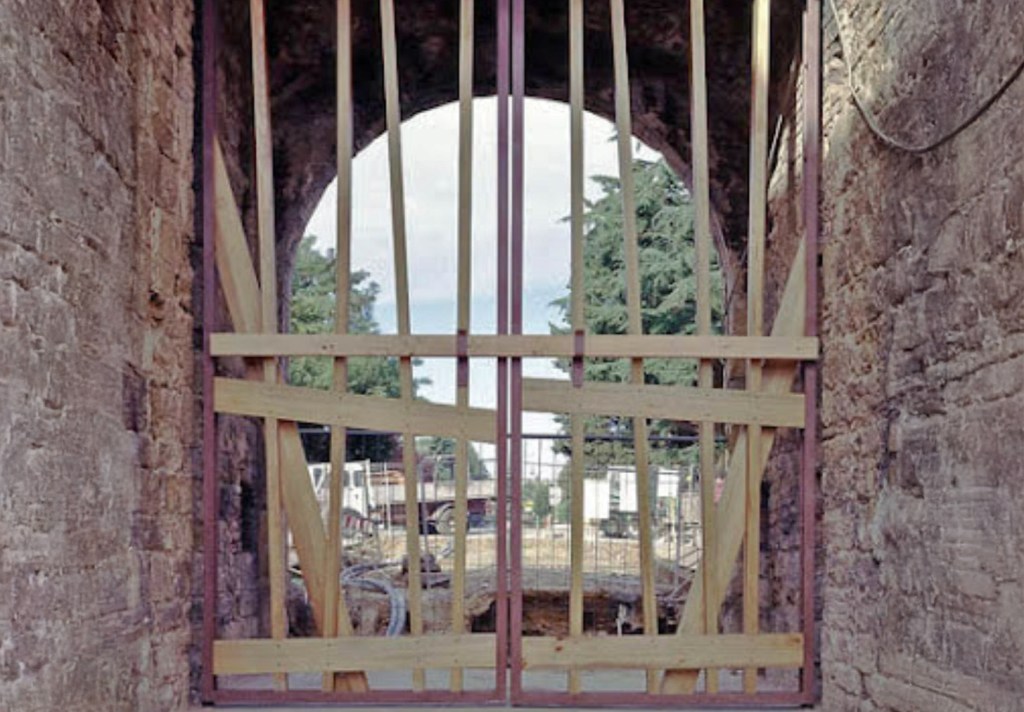
Porta Nuova
19 September – 8 December 2004
Colle di Val d’Elsa, Siena, Italy.
On the occasion of the group exhibition Arte all’Arte organised by Associazione Culturale Arte Continua
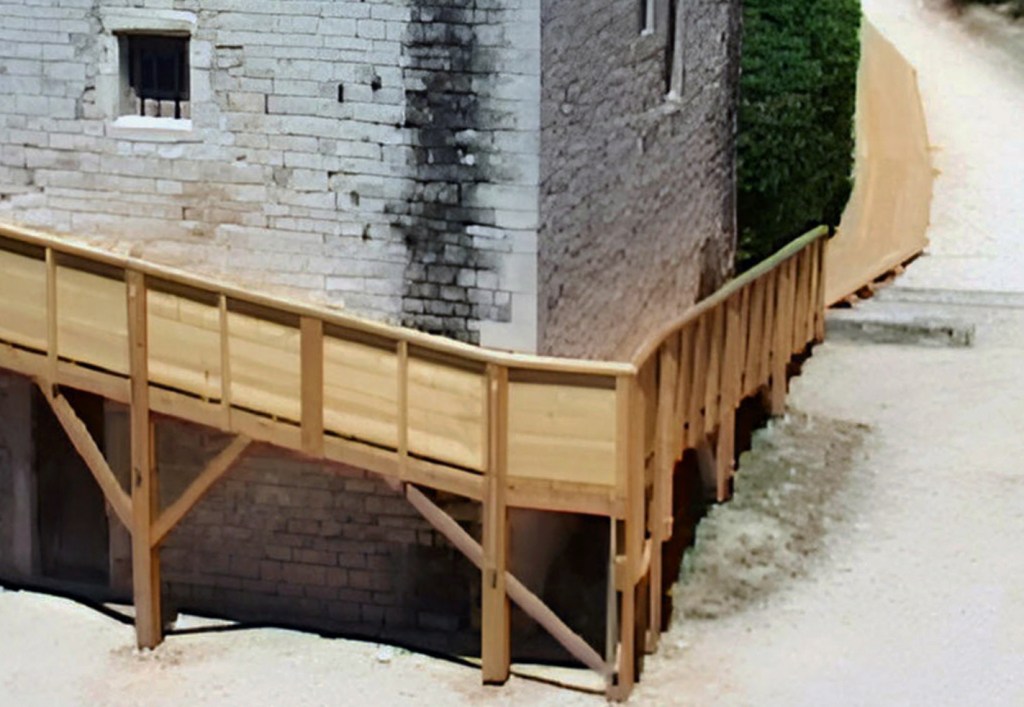
Détour des Tours
25 June – 25 September 2005
Centre d’Art Contemporain Le Creux de l’Enfer, Le Creux de l’Enfer, Thiers ; Château des Adhémar, Montélimar, France.
Organized in collaboration with students from the École nationale des beaux-arts de Lyon, this project involved two sites steeped in local history — locations that have left a strong mark on their surroundings and continue to do so today through their role as spaces devoted to art. Le Creux de l’Enfer, a former industrial site rehabilitated in the late 1980s, and the Château des Adhémar, a medieval palace dating back to the 11th century. Although completely different in character, both structures share the appearance of a fortress. This monumentality, on one hand, ensures their endurance and the preservation of the heritage they embody; on the other, their closed and imposing presence seems to separate them from the outside world. Through his interventions, Kawamata opens new perspectives and creates genuine pathways that invite visitors to rediscover and reconnect with the stories embedded within the very architecture of these remarkable sites. The installation at Le Creux de l’Enfer is a river-like platform composed of multiple layers of wooden planks supported by a few vertical pillars. It conveys a sense of movement and flow, echoing the energy of the river that historically powered the site’s industrial activity. The structure extends from the main entrance of the art center, runs along the sides of the space, and continues toward other openings in the building, intersecting the ground floor at mid-height. At the Château des Adhémar, Kawamata reopened several passages that had been blocked over time due to decay or demolition. He reinstated a lost staircase and constructed a walkway along a wall to connect with a door positioned high on the façade. These interventions enable visitors to explore the castle in new ways, reaching areas that were previously unaccessible.
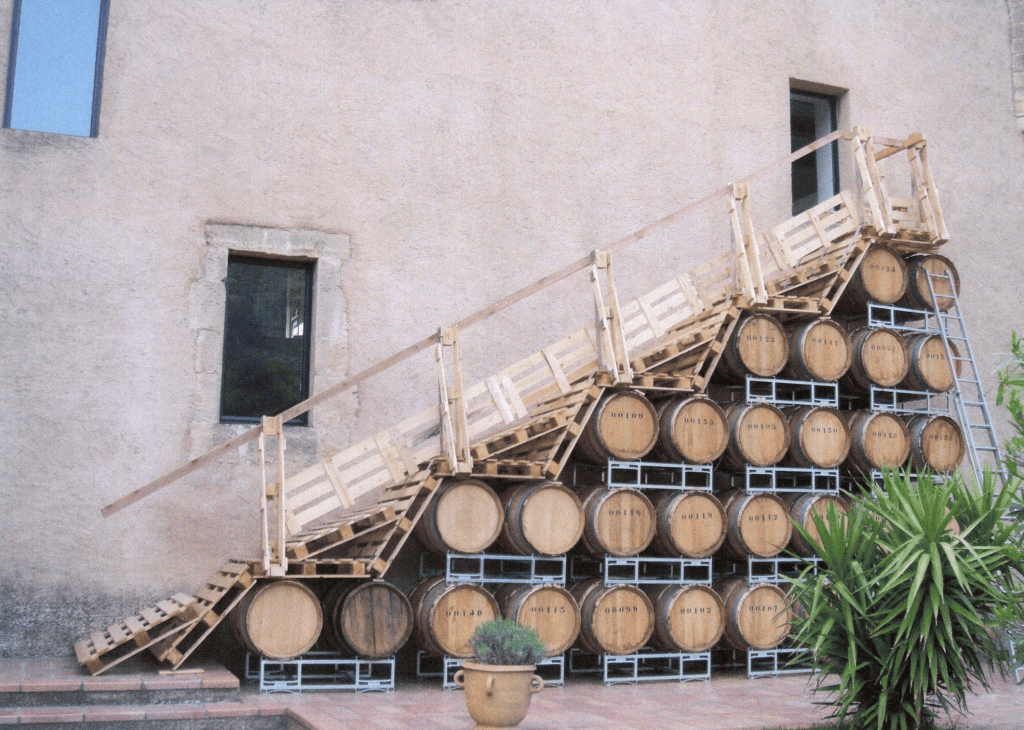
Élevage en fût (working in barrel)
7 July – 16 September 2006
Chateau de Fraïssé-des-Corbières, Fraïssé-des-Corbières, France.
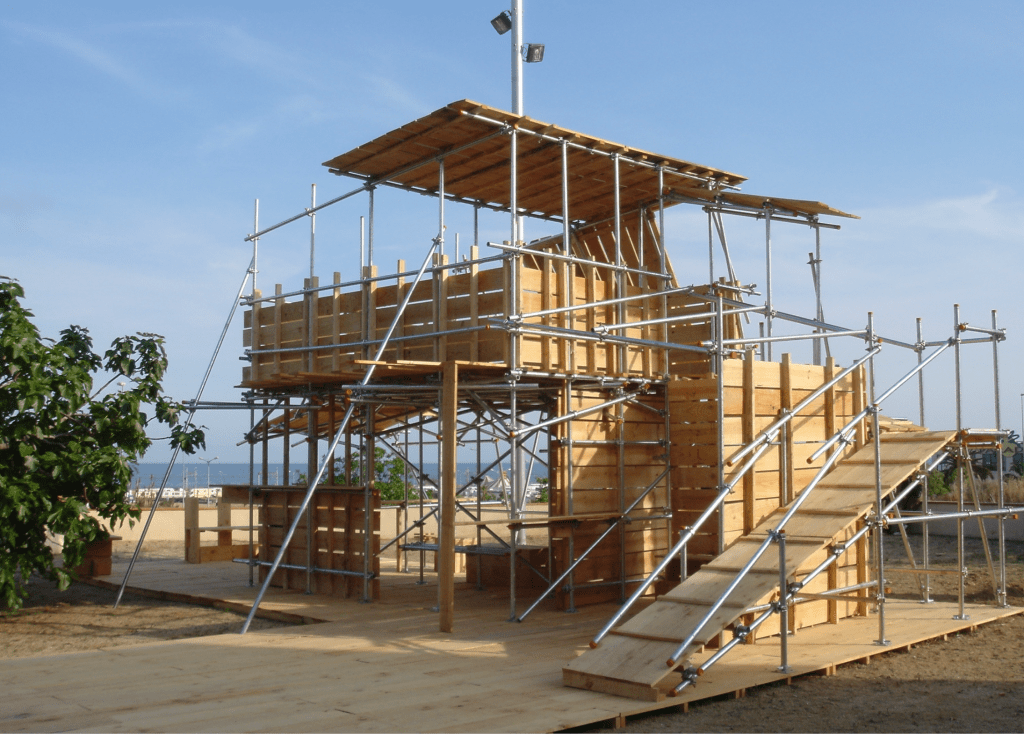
Xiringuito Mataró
2006
Can Xalant, Barcelona, Spain.
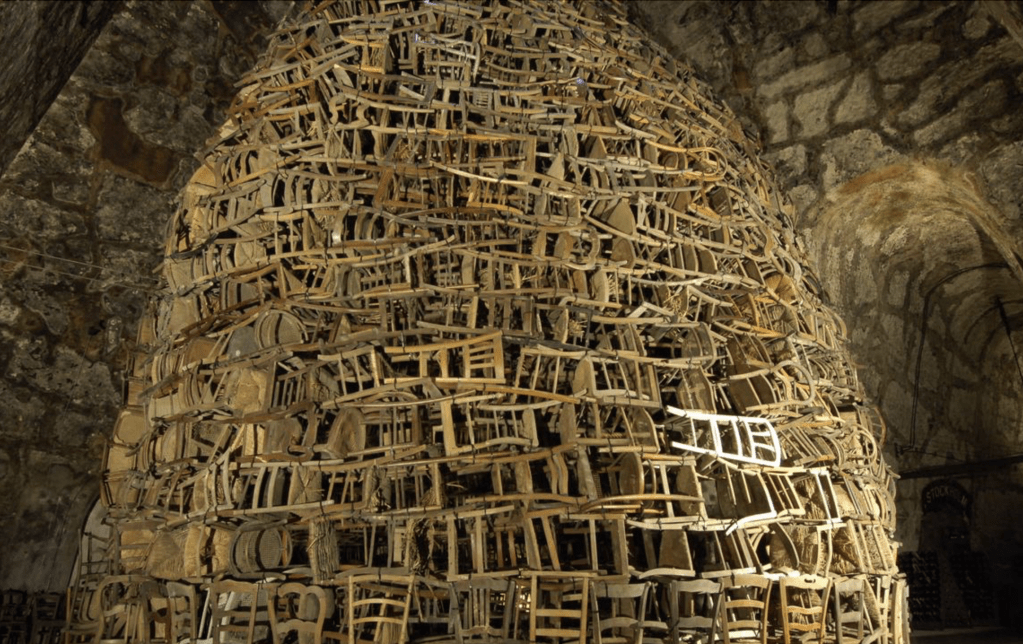
Cathédrale de Chaises
2007
Domaine Pommery, Reims, France.
As part of the group show L’Emprise du lieu, curated in 2007 by Daniel Buren, thirty-six international artists exhibited their works in the ancient Gallo-Roman chalk quarries repurposed as wine cellars by the Champagne house Maison Pommery. Within this evocative setting, located around thirty metres underground, Kawamata created a monumental in-situ installation using approximately three thousand reclaimed chairs stacked into a tower-like structure. The resulting form, reminiscent of a cathedral cupola, soared toward the cave’s ceiling, engaging the full volume and verticality of the site.
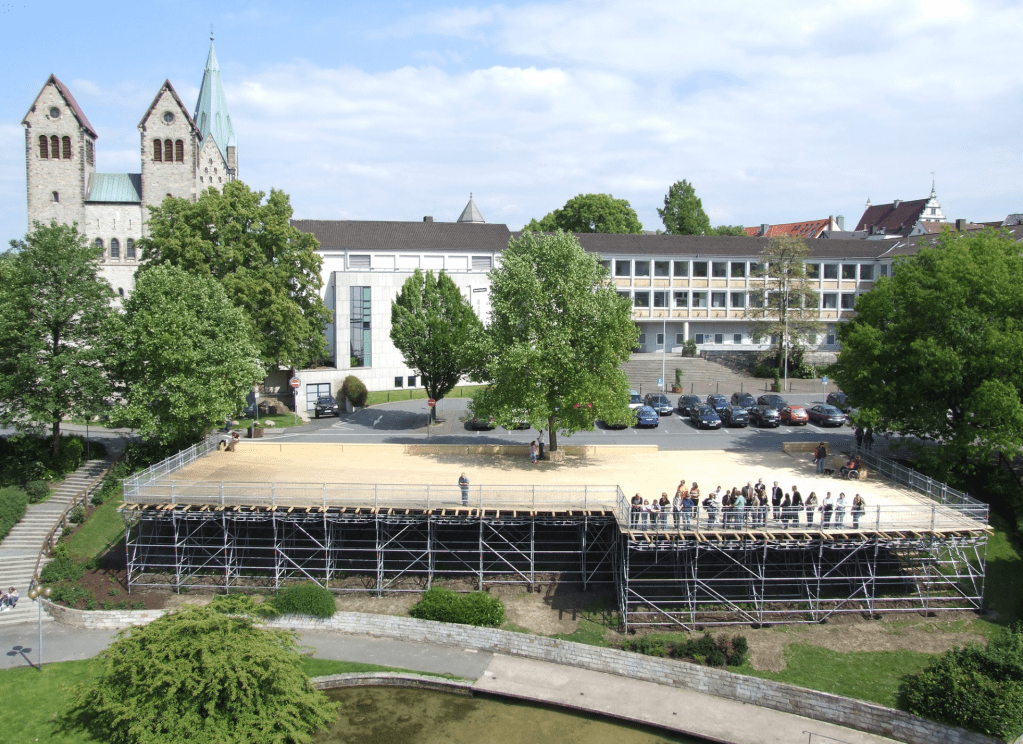
View point terrace in Paderborn
17 Mai – 2 September 2007
Paderborn, Germany
The exhibition Tatort Paderborn – Idriche Macht und Himmlische Machte (Earthly Powers and Heavenly Powers), featuring the work of twelve international artists, marked the first display of public artworks in Paderborn. On this occasion, the site-specific installation View point terrace in Paderborn was created, featuring an elevated platform built on a hill overlooking the springs of the Pader River. This viewpoint terrace provided both a space for contemplation and a fresh perspective on the city.
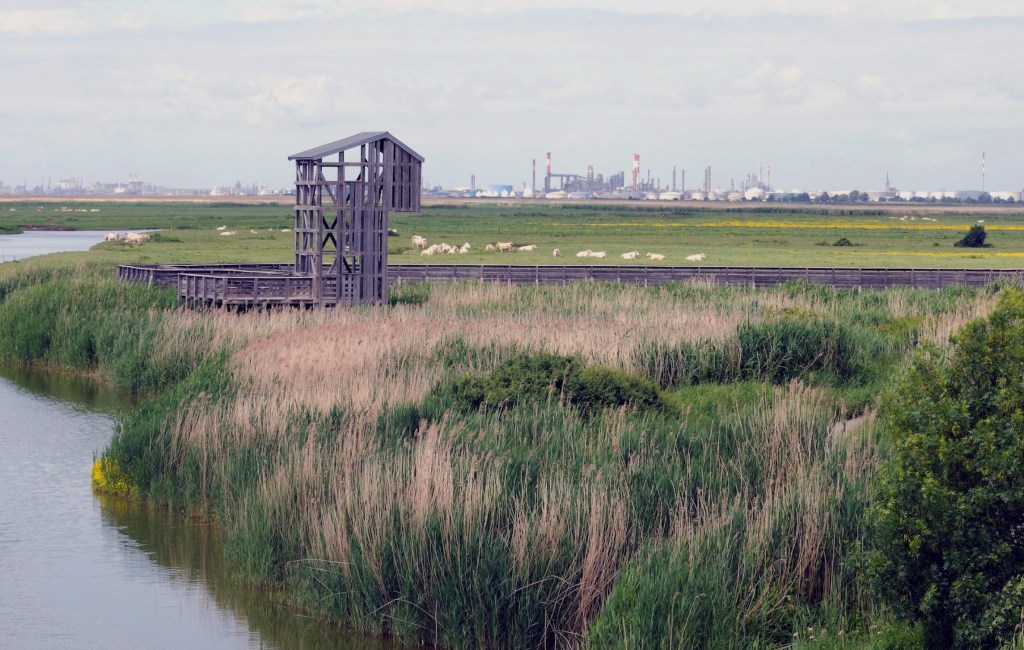
L’Observatoire
2007
Lavau-sur-Loire, France.
Permanent site-specific installation created as part of the art project ESTUAIRE 2007 Nantes – Saint-Nazaireheld from June 1st to September 1st, 2007.
Around thirty artists placed works along the banks of the Loire as part of Nantes’ second public art project. Kawamata’s intervention at the Estuaire in Lavau-sur-Loire offers a new perspective on the river, with an 800-meter passerelle culminating in an observation tower. While the majority of the pieces displayed during the event were temporary, l’Observatoire has become a permanent part of Lavau-sur-Loire’s cultural landscape.
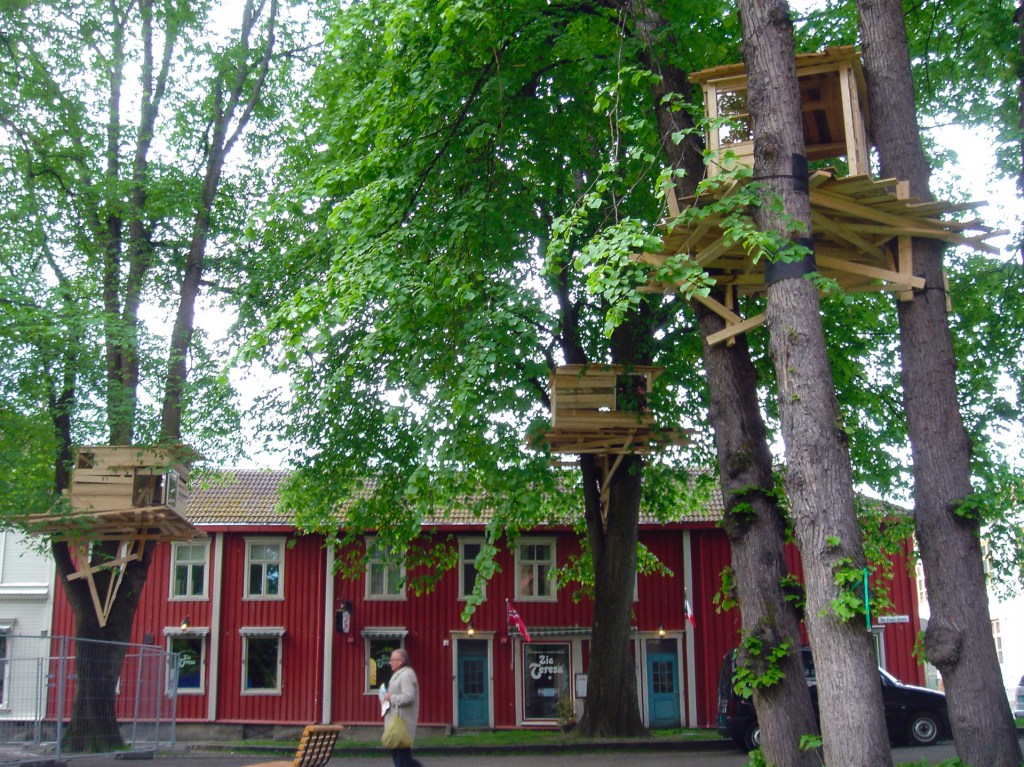
Tree Huts in Trondheim
9 June – 30 September 2007
Trondheim, Norway
Generator was an art project organized by the Trøndelag Centre for Contemporary Art in collaboration with the municipality of Trondheim. It consisted of nine temporary art interventions by international artists in Trondheim’s public spaces. In partnership with ten students from Trondheim’s School of Architecture, Kawamata built eleven tree huts among the trees in front of Vår Frue Kirke, a church dating back to 1739 in the city’s historic center.
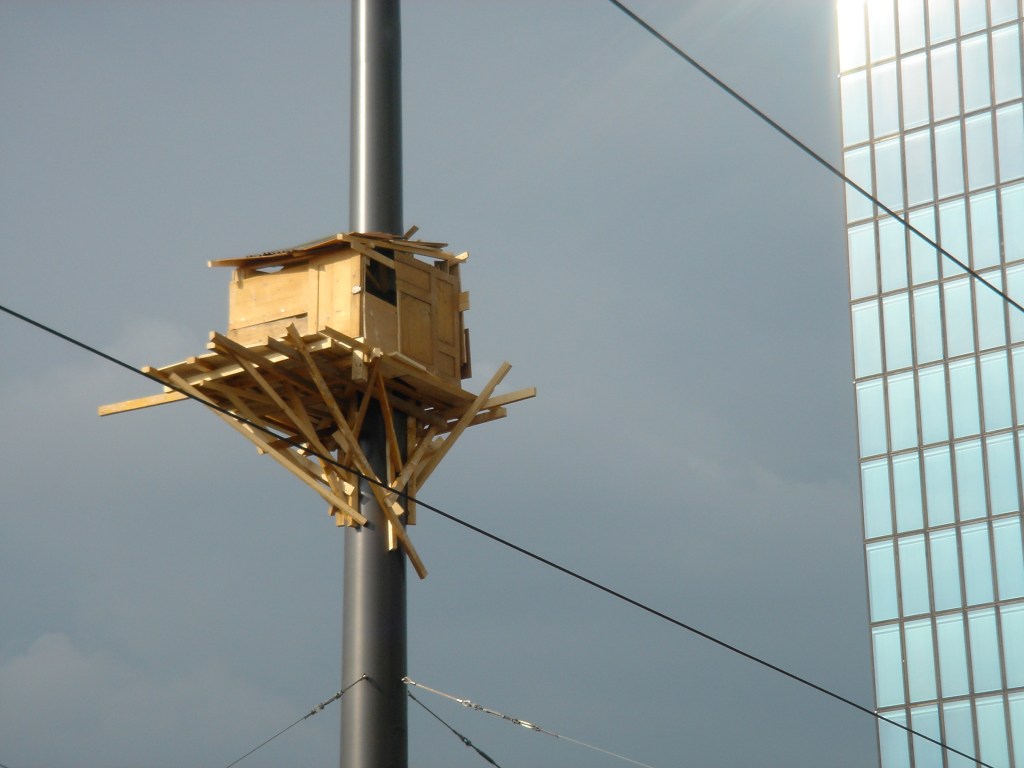
Tree Hut in Basel
13-17 June 2007
Art Unlimited – Art Basel, Basel, Switzerland
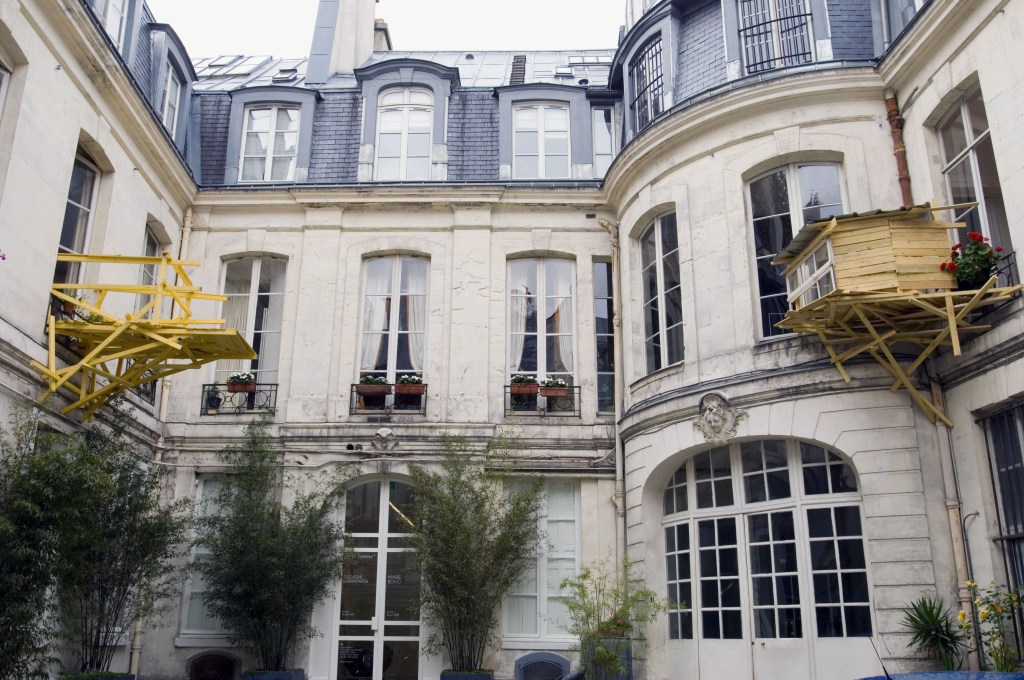
Tree Huts
15 May – 14 June 2008
Kamel Mennour, Paris, France
This was Kawamata’s first solo exhibition at Mennour in Paris, marking the beginning of an ongoing collaboration with the gallery.
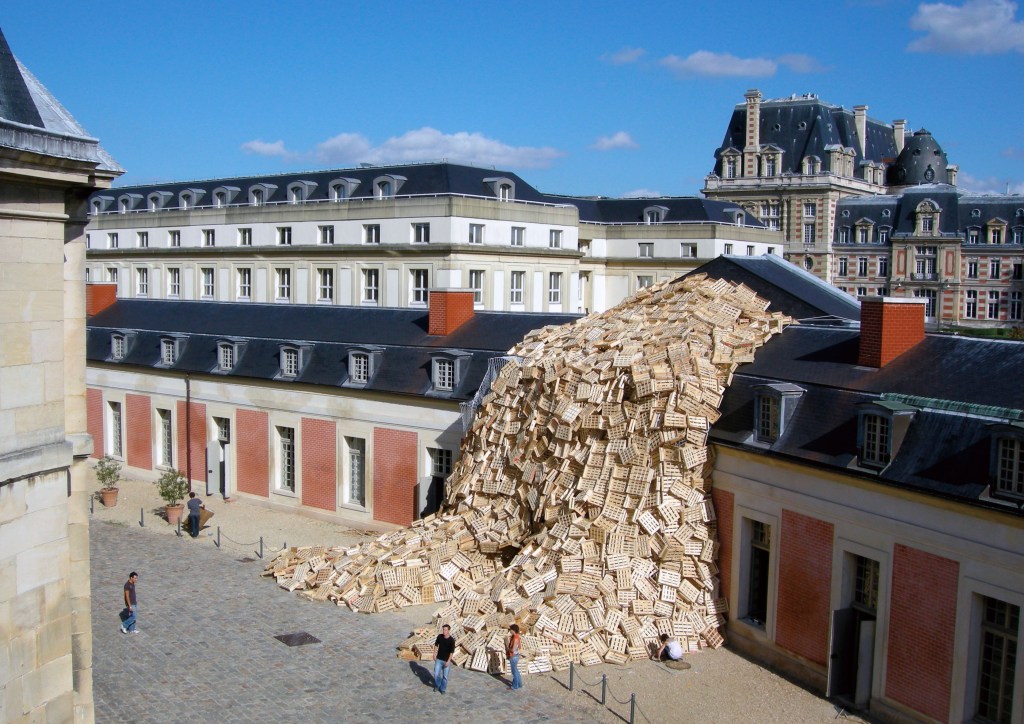
Gandamaison
19 September – 13 December 2008
La Maréchalerie – centre d’art contemporain, Versailles, France
For his intervention at Versailles, Kawamata transformed both the interior and exterior of the art center with a monumental structure made from an accumulation of 5,000 fruit and vegetable crates collected from a local market. This gigantic body was composed of ten distinct yet interconnected elements, all part of a single entity, evoking a gundam—a Japanese term referring to transformer-like robots. The work resulted from a workshop conducted with students from the École Nationale Supérieure d’Architecture de Versailles.
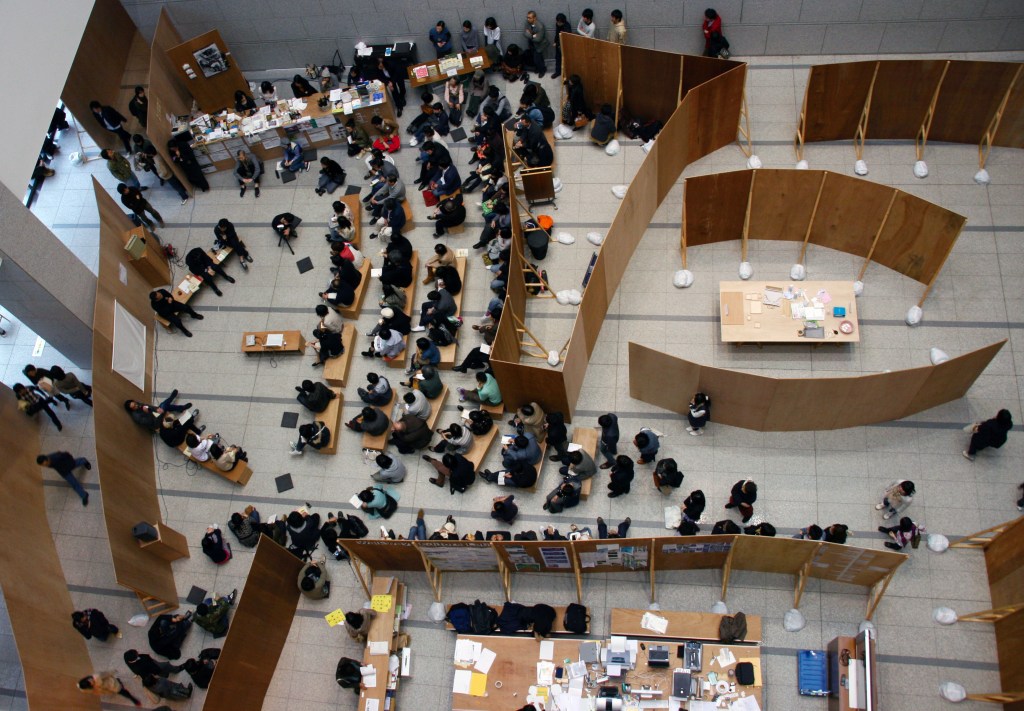
Walkway
9 February – 13 April 2008
MOT – Museum of Contemporary Art Tokyo, Tokyo, Japan
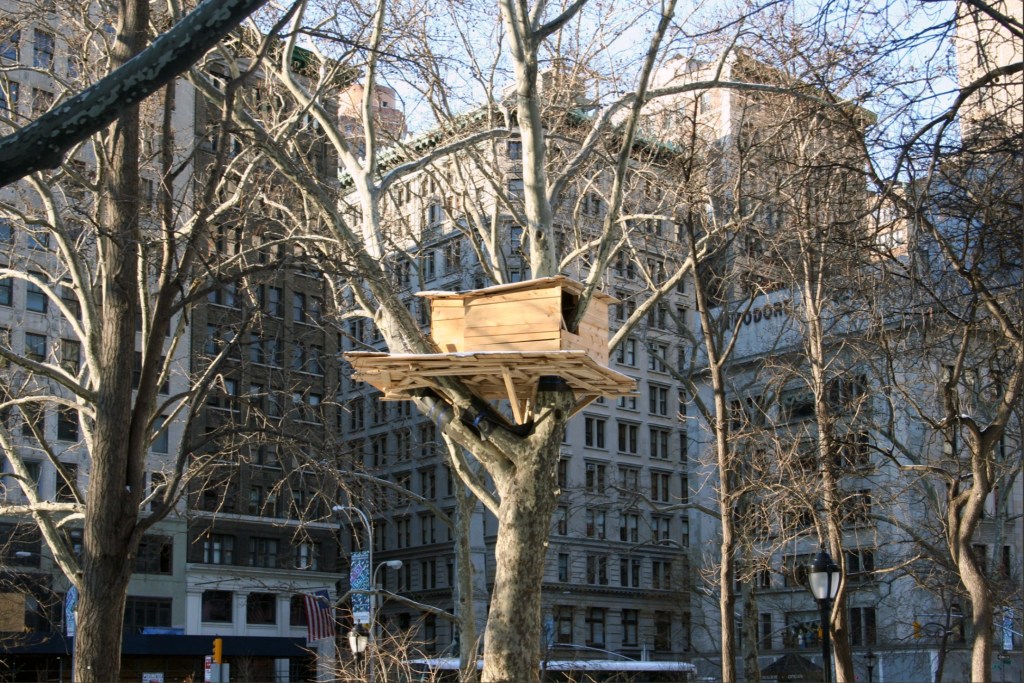
Tree Huts
2 October – 31 December 2008
Madison Square Park, New York, US
In response to Mad. Sq. Art’s invitation to take part in their annual program of installations at Madison Square Park in New York, presented by the Madison Square Park Conservancy, Kawamata’s intervention consisted of twelve wooden huts placed in the park’s trees.
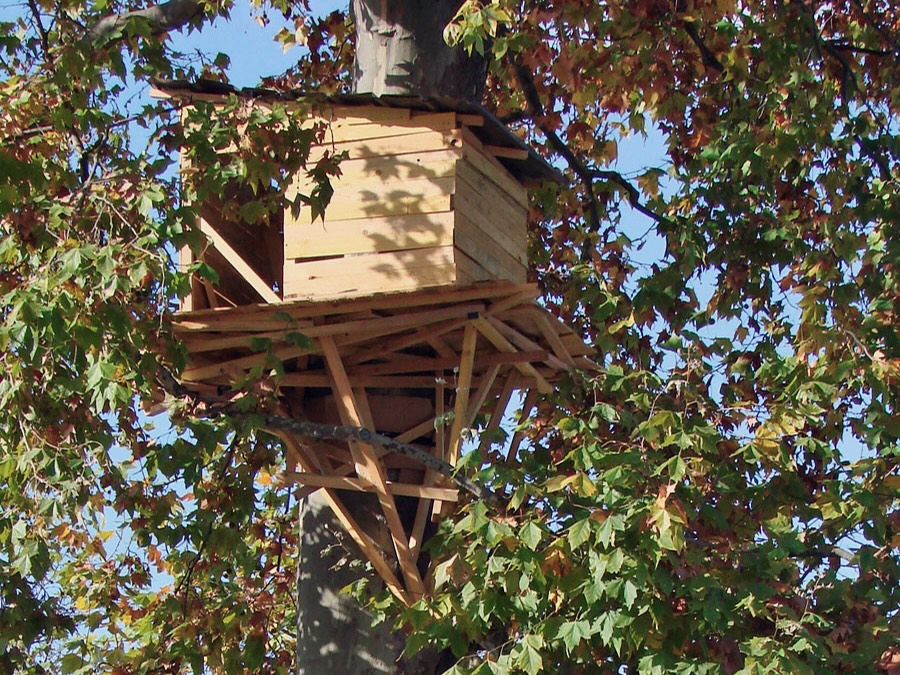
Tree Huts in Paris
23 – 26 octobre 2008
Tuileries Garden, Paris, France
On the occasion of the 35th edition of FIAC in Paris, five tree huts were installed in the Tuileries Garden as part of the outdoor projects program.
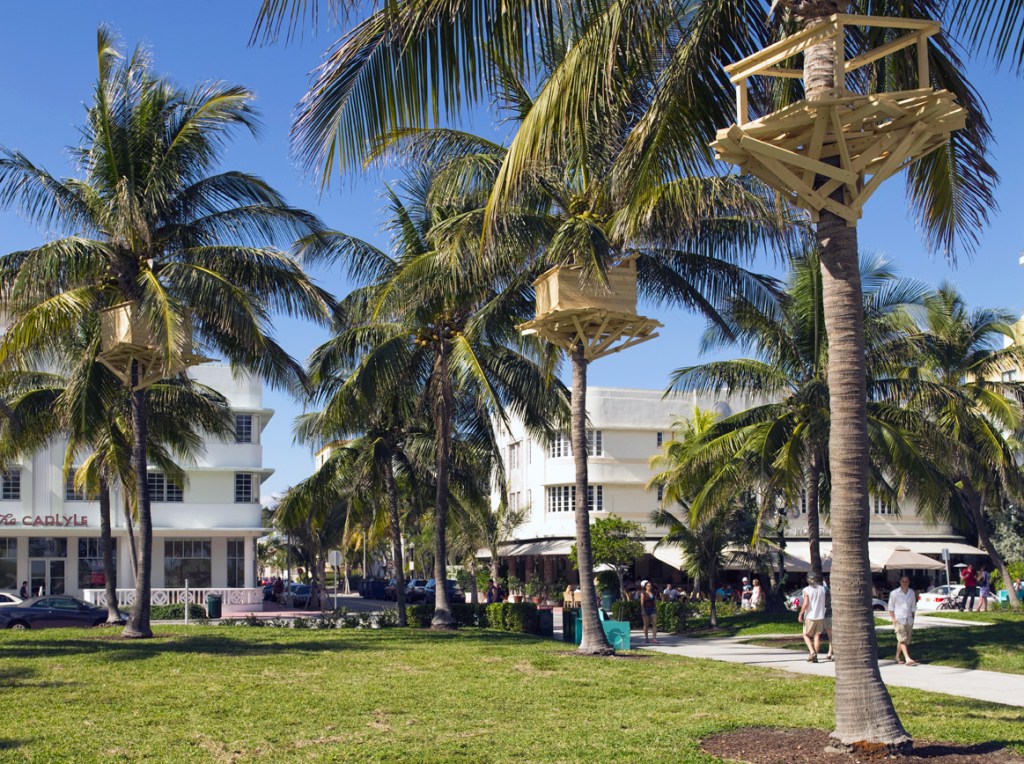
Tree Huts in Miami
4 – 7 December 2008
Lummus Park, Miami, Florida, US
Outdoor installation created in the context of Art Basel Miami Beach
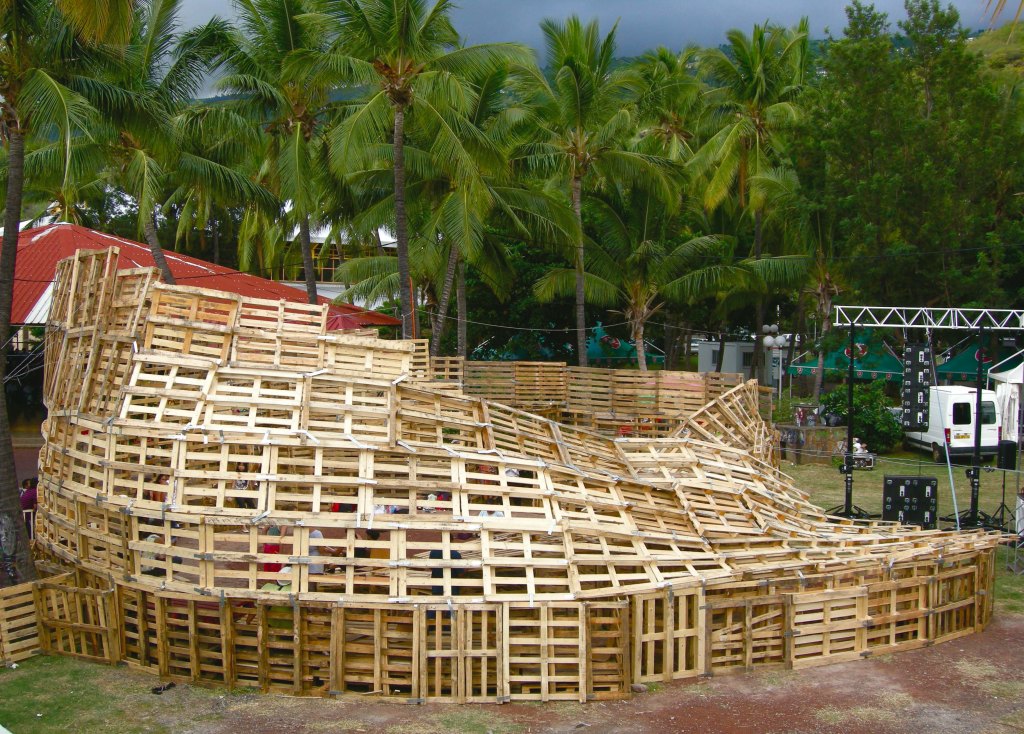
Workshop at La Réunion
12-16 May 2009
Saint-Leu, La Réunion, France
On the occasion of the Leu Tempo Festival in 2009, several artists, including Betty Bui, Daniel Buren, Jace, and Louis Pavageau, were invited to create interventions in the public spaces of the island of La Réunion. Kawamata, holding a workshop with local people and students from l’École Supérieure d’Art de La Réunion, used about 400 transportation pallets to create a dome-shaped structure at Le Parc du 20 Décembre in Saint-Leu..
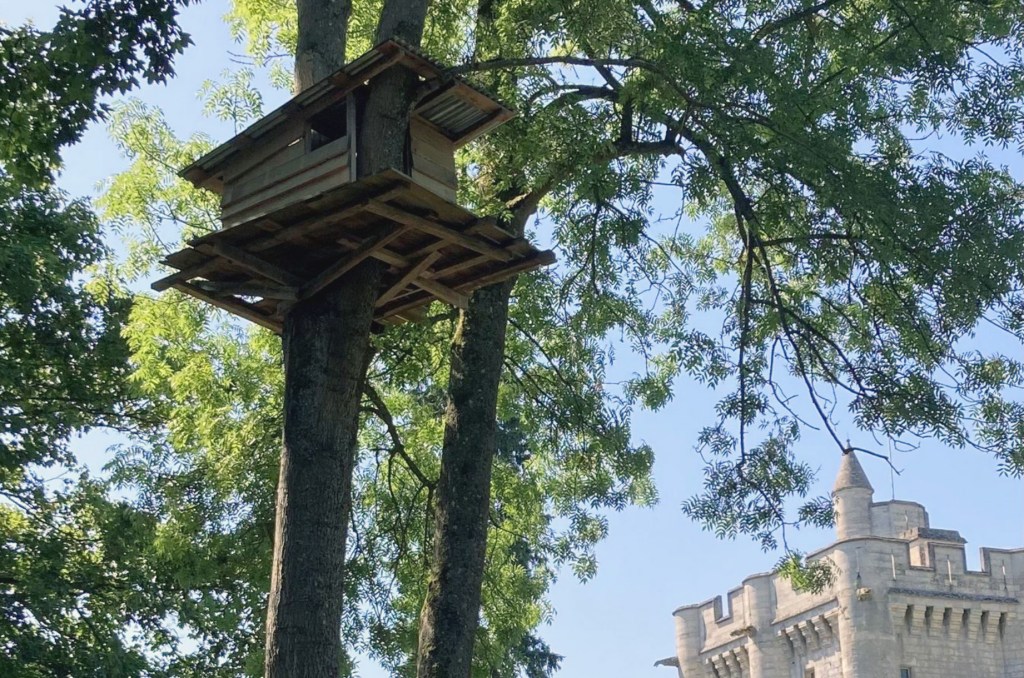
A permanent site-specific installation located in the courtyard of the Donjon de Vez in Picardy, commissioned by art historian Francis Briest for the art collection at his medieval residence.
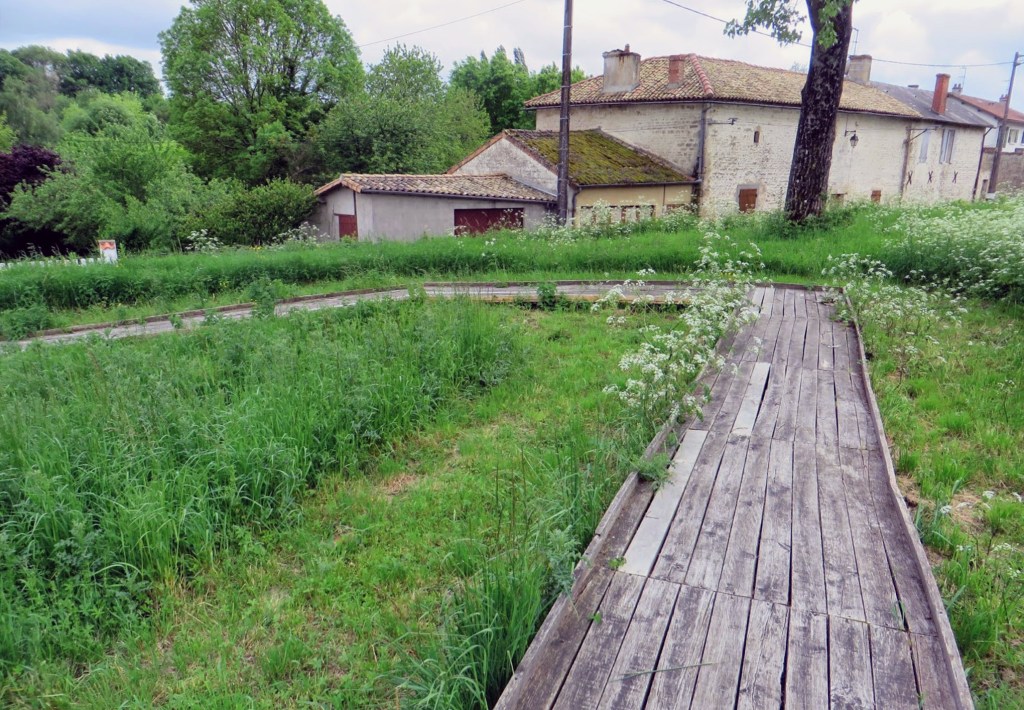
Chemin de Bois
27 June – 30 August 2009
Parc de la Bretagne, Melle, France.
Chemin de Bois is a permanent outdoor installation created as part of Etre arbre, être nature – the 2009 International Contemporary Art Biennial in Melle, France. Set in the heart of Parc de la Bretagne — a three-hectare wild field — at the crossroads of the Camino de Santiago de Compostela and the Chemin de la Découverte, this new chestnut-wood walkway connects Le Musée des nuages, the parks of La Garenne and La Maladrerie, and Gilles Clément’s botanical Garden of Resistance. The work was built during a workshop held from 16 to 30 March 2009, involving ninety young participants from the Jacques-Bujault Agricultural High School, the Vocational Assistance Center, the Local Employment Mission, the Fine Arts Schools of Poitiers, Limoges, and Tokyo, as well as the Faculty of Humanities at the University of Poitiers. The project was realized with the support of the Regional Union of Private Forest Owners of Poitou-Charentes.
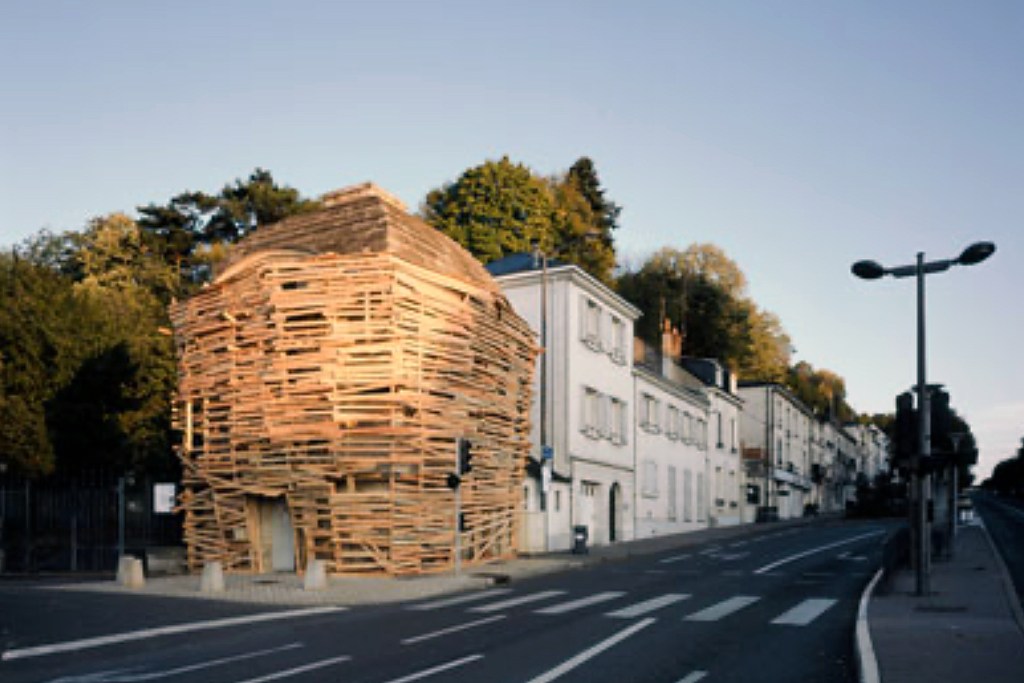
Okotori Basket
15 September – 15 October 2009
Tours, France.
This installation was commissioned by Eternal Network, an association in Tours that has been organizing contemporary art projects in public spaces since 1999. For the SAISON 10 exhibition, marking their 10th anniversary, Kawamata’s intervention involved surrounding with wooden planks one of the four former octroi pavilions in Place Choiseul: the octroi nord-est, which has been converted into the association’s headquarters.
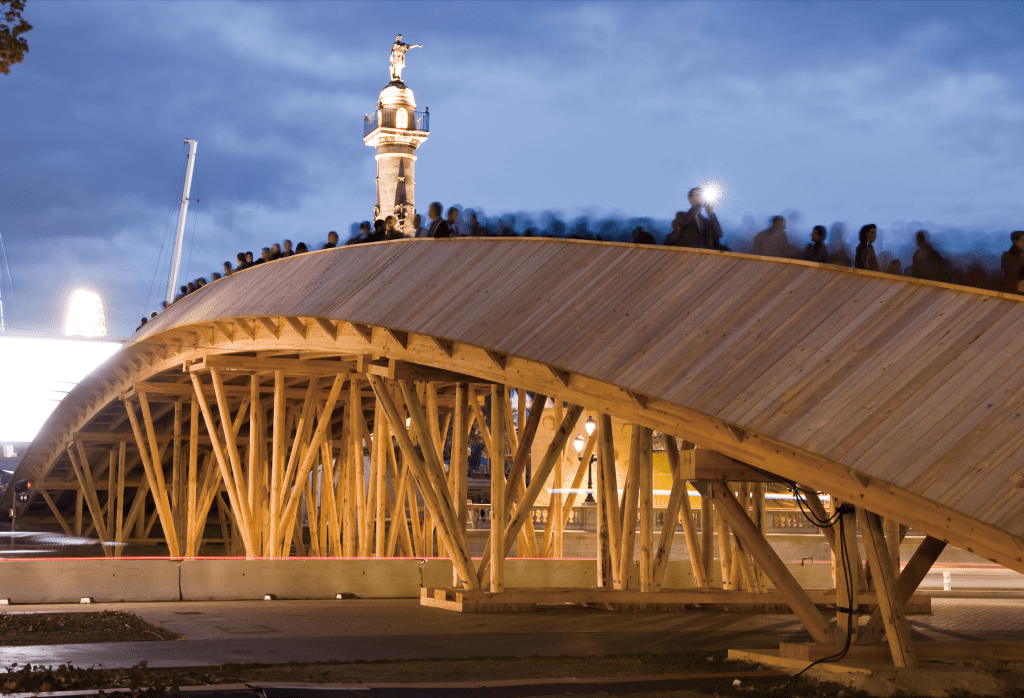
Foot Path
October 2009 – June 2010
Bordeaux, France
For his participation in the 2009 Evento Biennale, held from 9 to 18 October 2009, Kawamata created a monumental wooden footbridge connecting the city center to the riverbank. Measuring 12 by 120 meters, this site-specific installation was built during workshops with students from the School of Architecture, using 405 cubic meters of maritime pine felled in January 2009 after Storm Klaus. The work remained in situ until June 2010.
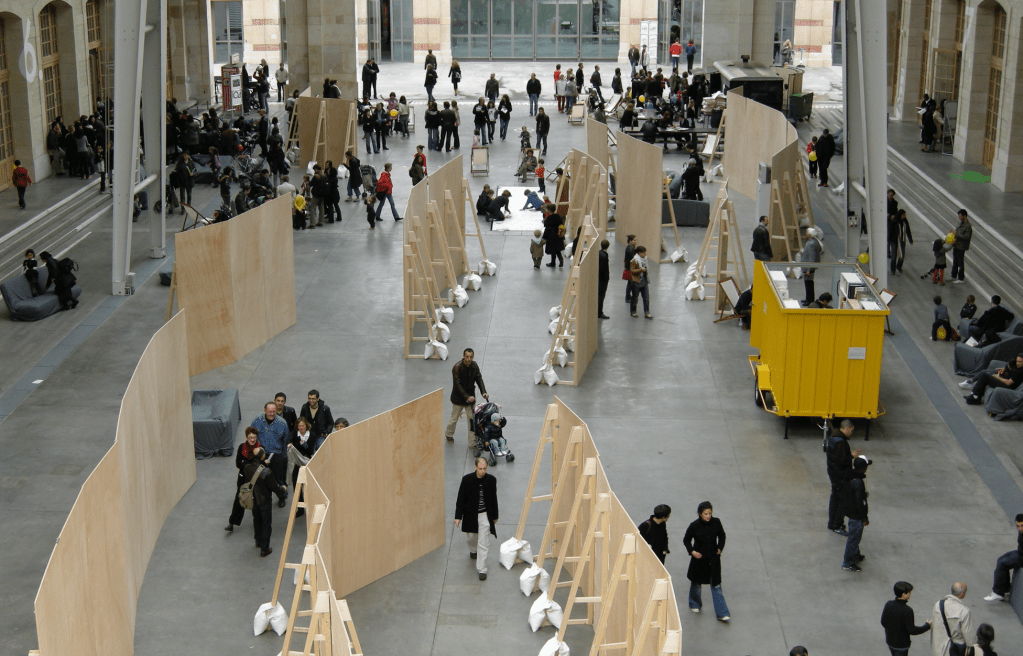
Exchange Library
2009
Centquatre-Paris, Paris, France.
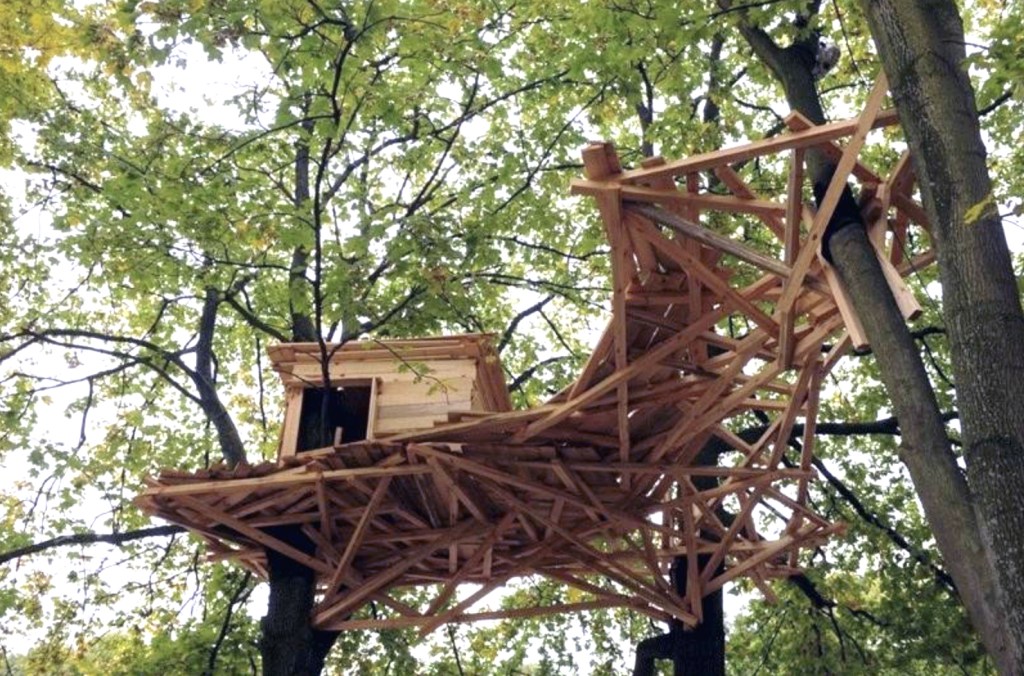
Berlin Tree Huts
9 October 2009 – 10 January 2010
HKW – Haus der Kulturen der Welt, Berlin, Germany
Coinciding with the Asia-Pacific Weeks in Berlin, Kawamata built thirteen tree huts, spreading from within the Congress Hall of the Haus der Kulturen der Welt (HKW) to its façade and further into the adjacent Tiergarten public park.
