Selected site-specific projects
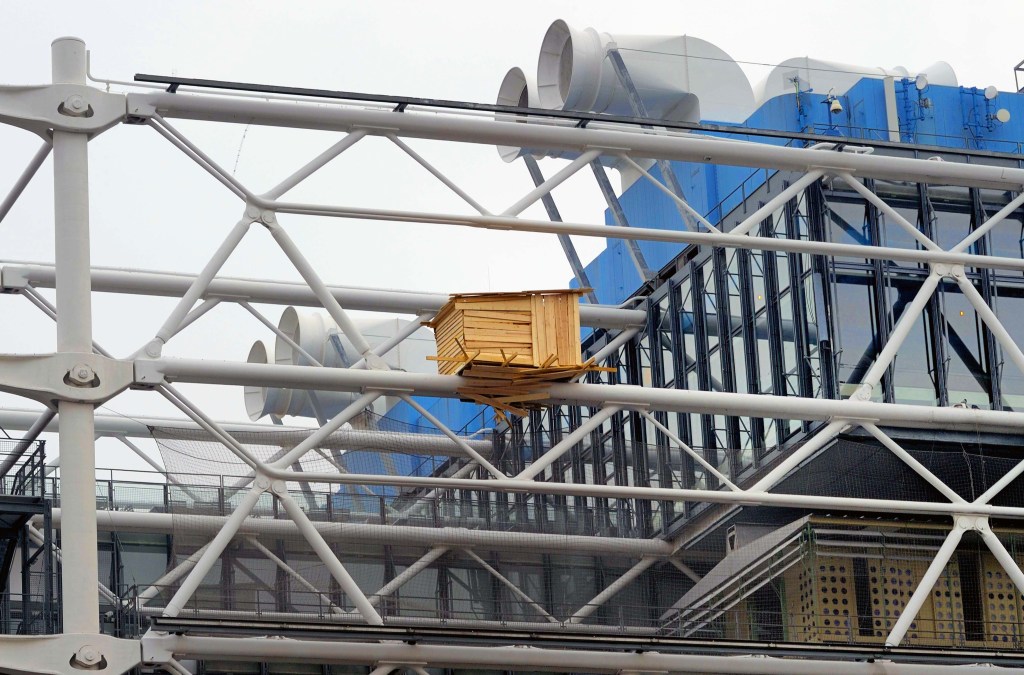
Carton Workshop
10 April – 23 August 2010
Centre Pompidou, Paris, France
On the occasion of Kawamata’s monographic exhibition at the Centre Pompidou in Paris, several site-specific wooden tree huts and a nest were installed in the Forum and on the building’s external façades, while cardboard installations were created as part of a workshop held in the Children’s Gallery.
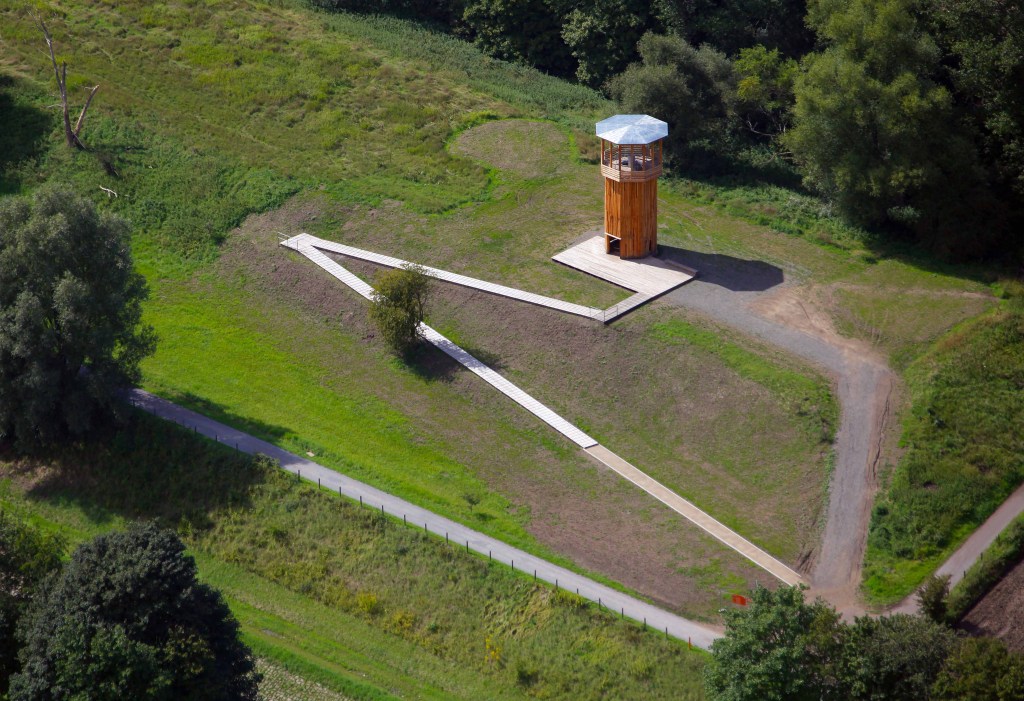
Walkway and Tower
2010
Emscher River, Recklinghausen, Germany
Permanent commissioned work, part of the Emscherkunstweg, the public collection of contemporary art along the Emscher River.
The Emscher Art Trail (Emscherkunstweg) is a public art collection along the banks of the Emscher River, featuring 24 works by international artists. Among them, Kawamata’s 12-meter-high wooden observation tower, accessible via a walkway, was constructed in situ for the exhibition Emscherkunst. 2010 – An Island for the Arts, held from 29 May to 5 September 2010. This permanent installation offers visitors a space for contemplation and a panoramic view of the riverbank landscape.
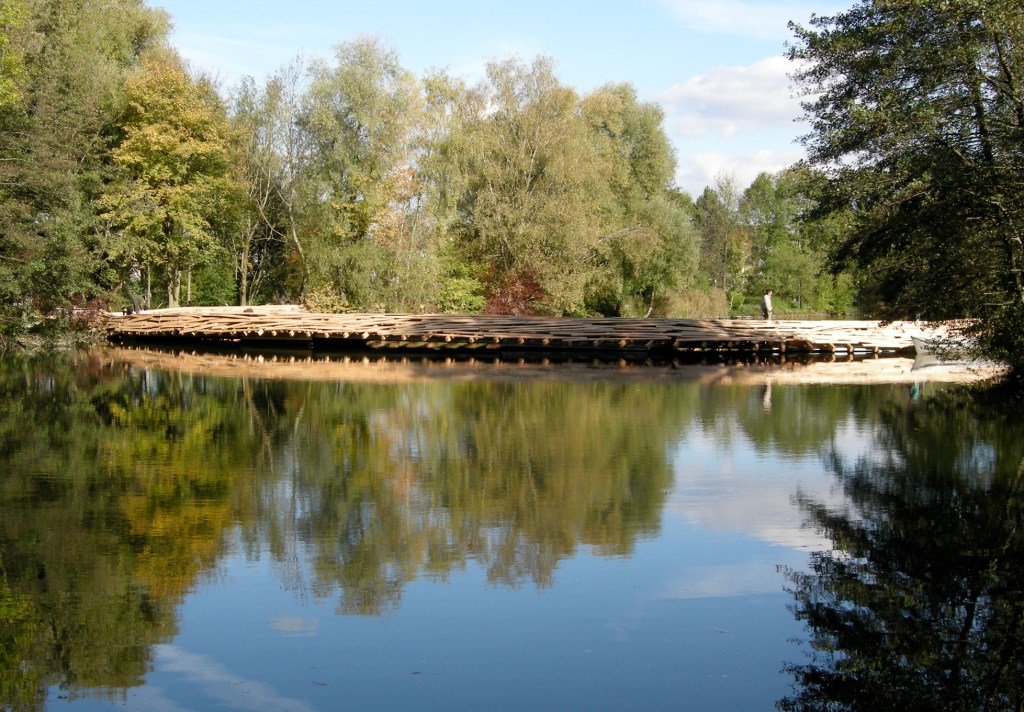
Drift Structure
2010
Zellwegerpark, Uster, Switzerland
Permanent commissioned work for the Zellweger Park.
Commissioned by the city of Uster, Drift Structure is a permanent site-specific installation consisting of an arched bridge that floats over the Zellweger Pond, connecting the northern and southern banks. The project is part of a new residential development planned for the area surrounding the park. During the restoration of the wooden bridge in 2022, Kawamata added a tree house to the park.
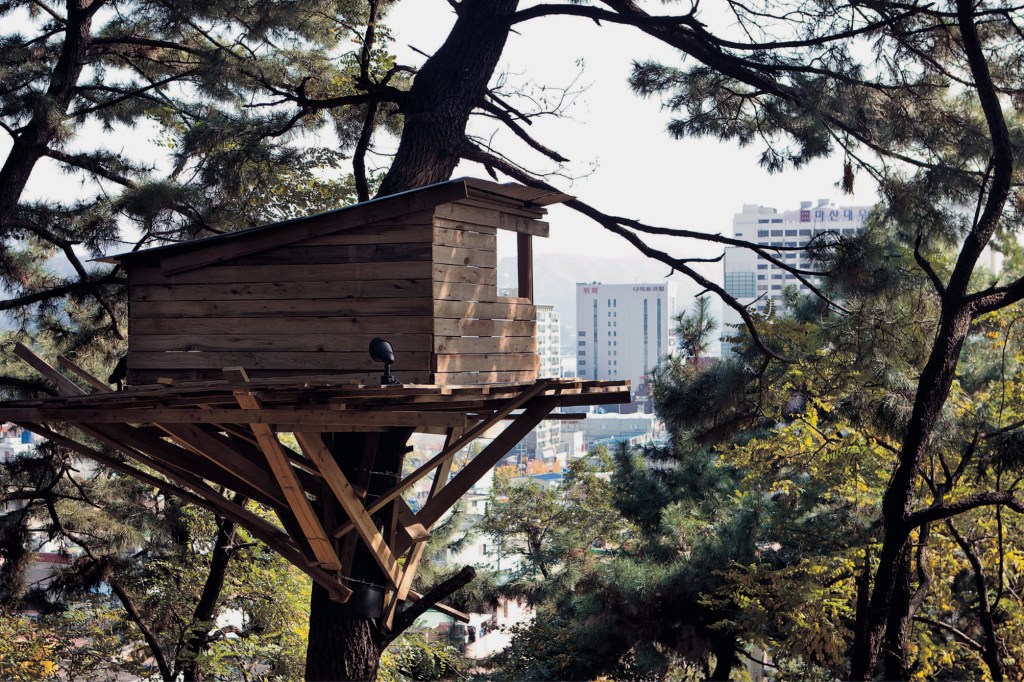
Tree Hut in Masan
8 September – 29 October 2010
Chusan Park, Changwon City, South Korea.
On the occasion of the Moonshin International Sculpture Symposium Symmetry-Asymmetry In the Nature.
Mukaijima Project – Make Island From Island
2006-2010
Mukaijima Island, Setouchi, Japan
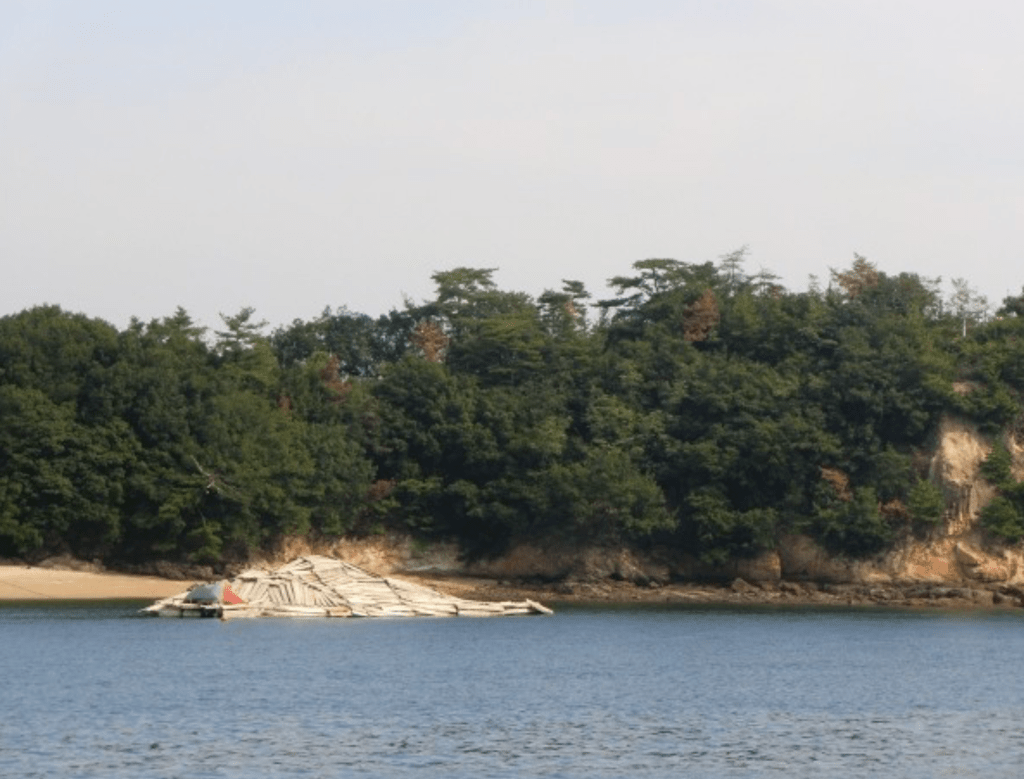
Starting in 2006, Kawamata began renting a studio space on the small island of Mukaijima, located about 500 feet from Naoshima in the Kagawa region of Japan, where he started collecting garbage and debris from its beaches. For the first edition of the Setouchi International Art Festival, held in Kagawa from July 19 to October 31, 2010, he created a floating artificial island anchored between Naoshima and Mukaijima, made from driftwood, styrofoam, and the waste materials he had previously gathered.
Chaumont-sur-Loire Project
2011
Domaine de Chaumont-sur-Loire, Chaumont-sur-Loire, France
On the occasion of the Saison d’Art 2011, held from 8 April to 3 November 2011.
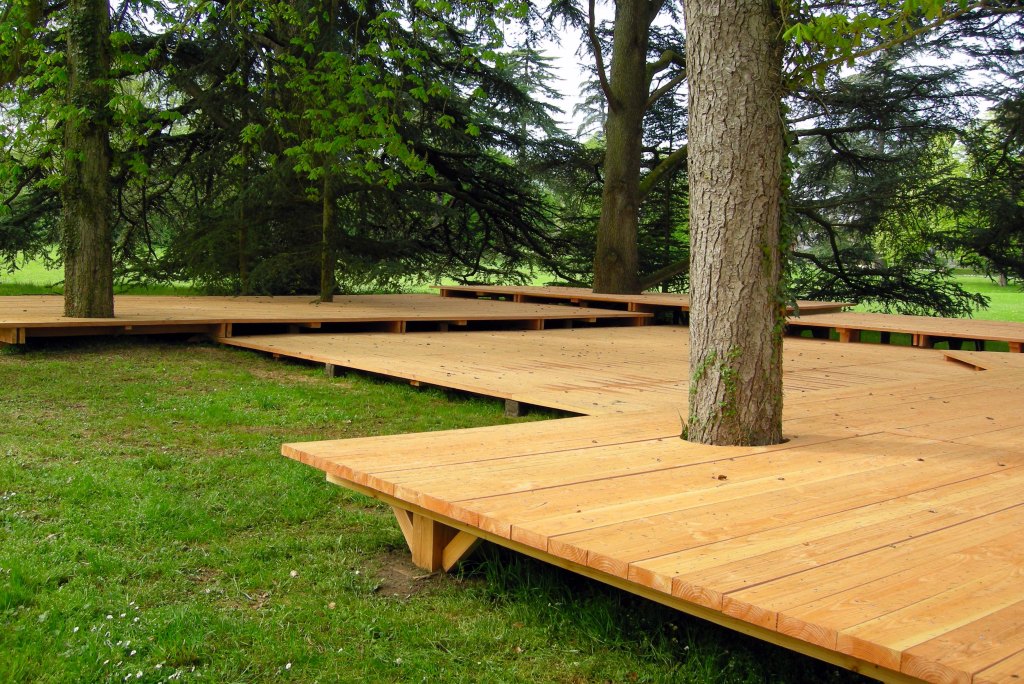
In response to the 2011 commission from Le Domaine de Chaumont-sur-Loire – Centre d’Art et de Nature, Kawamata created three permanent, site-specific installations in the Château’s historic grounds. Promontoire sur la Loire is a suspended walkway above the river, offering a panoramic viewpoint over the riverbank; Promenade sous les arbres forms a network of floating pathways that guide visitors through the park’s century-old trees; and Cabanes dans les arbres consists of three fishing huts perched in the treetops. These interventions emphasize the connection between the Château and the cultural landscape of the Loire River
Cergy-Pontoise Art Commission work
2011
Cergy-Pontoise, France
Permanent commissioned work
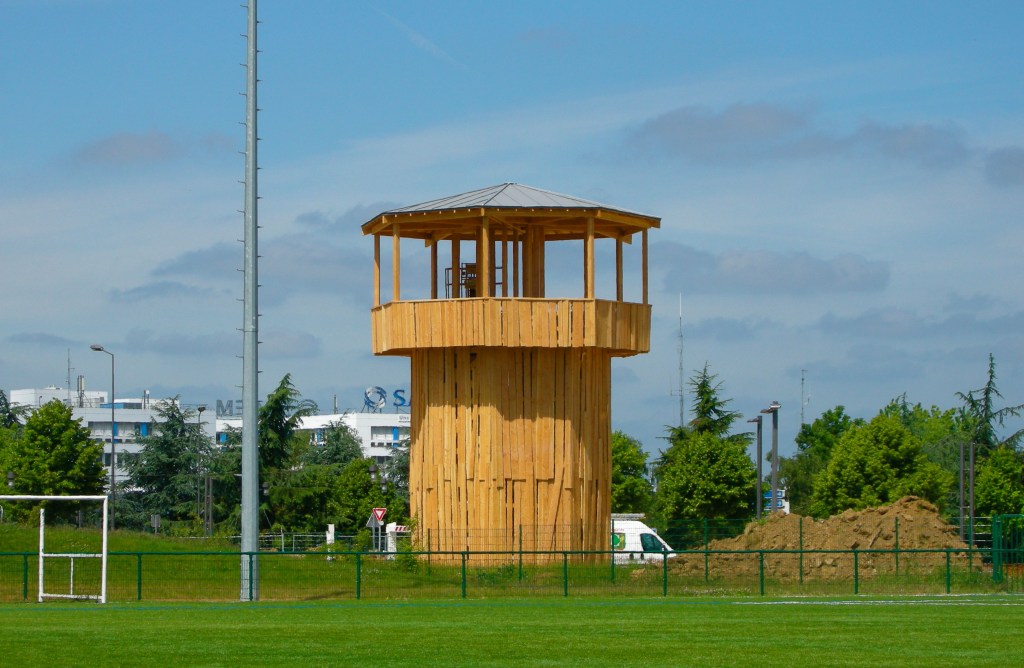
This permanent installation, located in the Plaine de Linandes at Cergy-Pontoise, is a 12-meter wooden observation tower inspired by the Osny water tower. After the competition for the public commission was awarded in 2007, the tower was finally built in June 2011 during a workshop with local young people.
Au fil de la Saône
2011 – 2013
Les Rives de Saône (Saône riverbanks), Lyon, France
Permanent commissioned works
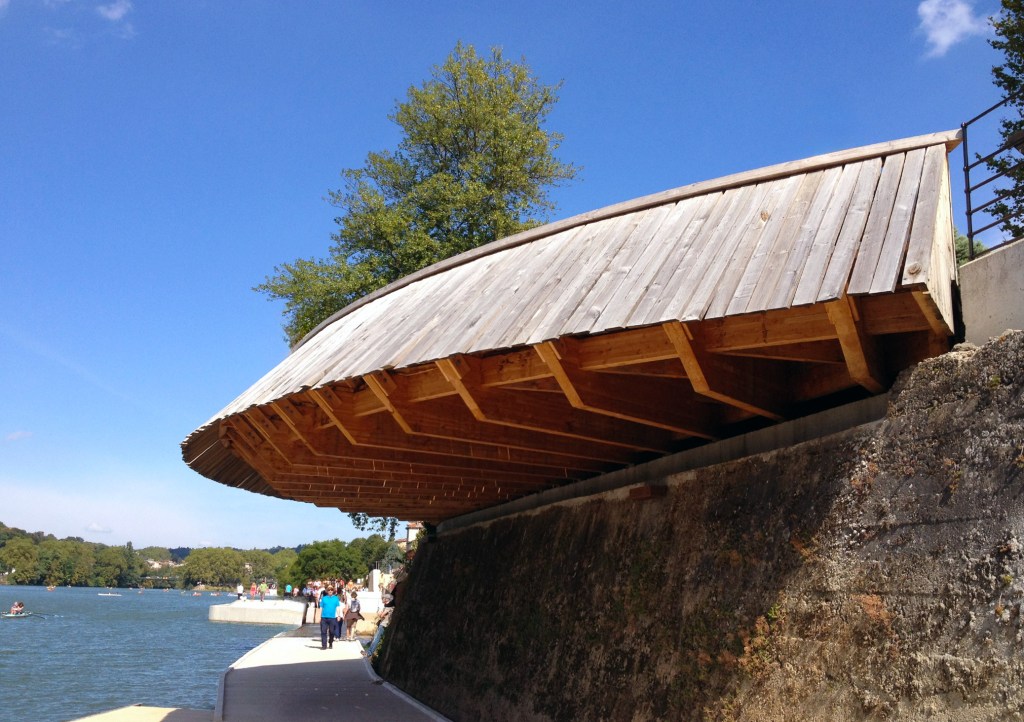
Six site-specific artworks – Tree Hut (La Cabane), Belvedere Tower (La Tour Belvédère), Planks (Les planches), Double Ramp (La double Rampe), Terrace (La Terrasse), and Balcony (Le Balcon) – were installed along the Saône River in Lyon between 2011 and 2013. These works are now permanent installations.
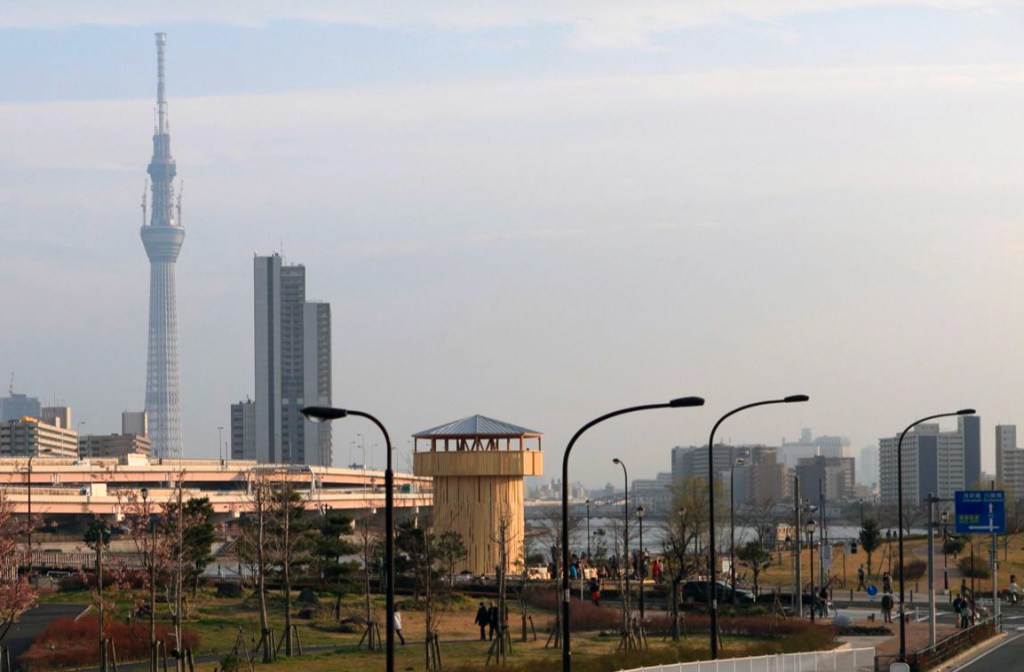
Shioiri Tower – Tokyo in Progress
2011
Shioiri Park, Tokyo, Japan
Conceived to create a space for people to observe and reflect on the city of Tokyo, Shioiri Tower was built along the Sumida River with the support of the local community. This work was the first stage of the Tokyo in Progress project organised by Tokyo Culture Creation Project Office and CIAN.
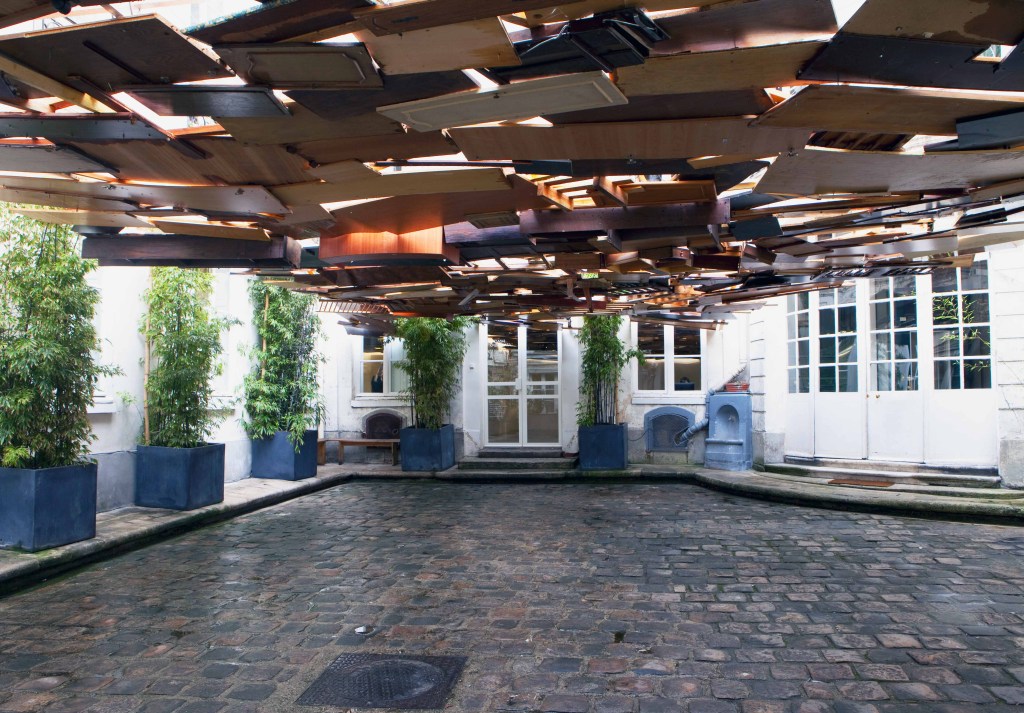
Under the Water
10 December 2011 – 18 January 2012
Mennour, Paris, France
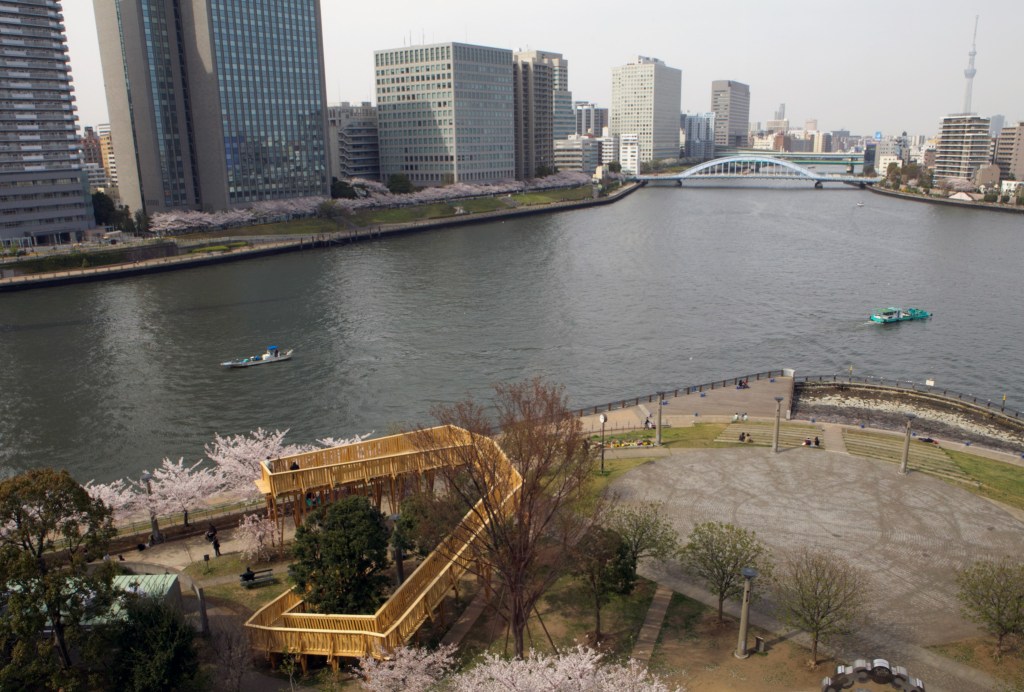
Tsukuda Terrace – Tokyo in Progress
2012
Place de Paris, Ishikawajima Park, Tokyo, Japan
The second iteration of the long-term project Tokyo in Progress began in July 2011, following discussions after the Great East Japan Earthquake of March 11. The project’s original theme from the previous year — an exploration of Tokyo’s evolving landscape from the banks of the Sumida River — was now reconsidered in relation to the earthquake’s impact. Constructed between February and March 2012, Tsukuda Terrace, with its slope winding through the trees of the plaza up to an observation deck, offers visitors a serene space to rest while enjoying panoramic views of the Sumida River bank and the new broadcasting tower, the Sky Tree.
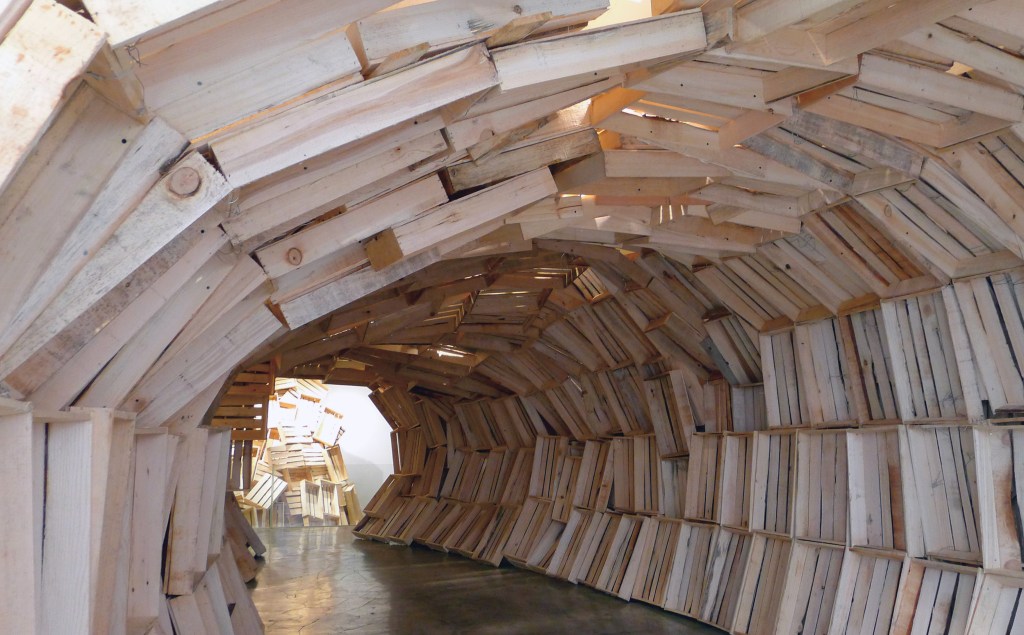
Box construction
17 March – 5 May 2012
Gallery 604, Busan, South Korea
The installation inside Gallery 604 was made from about 3.000 wooden fish boxes that were found at the harbour in Busan.
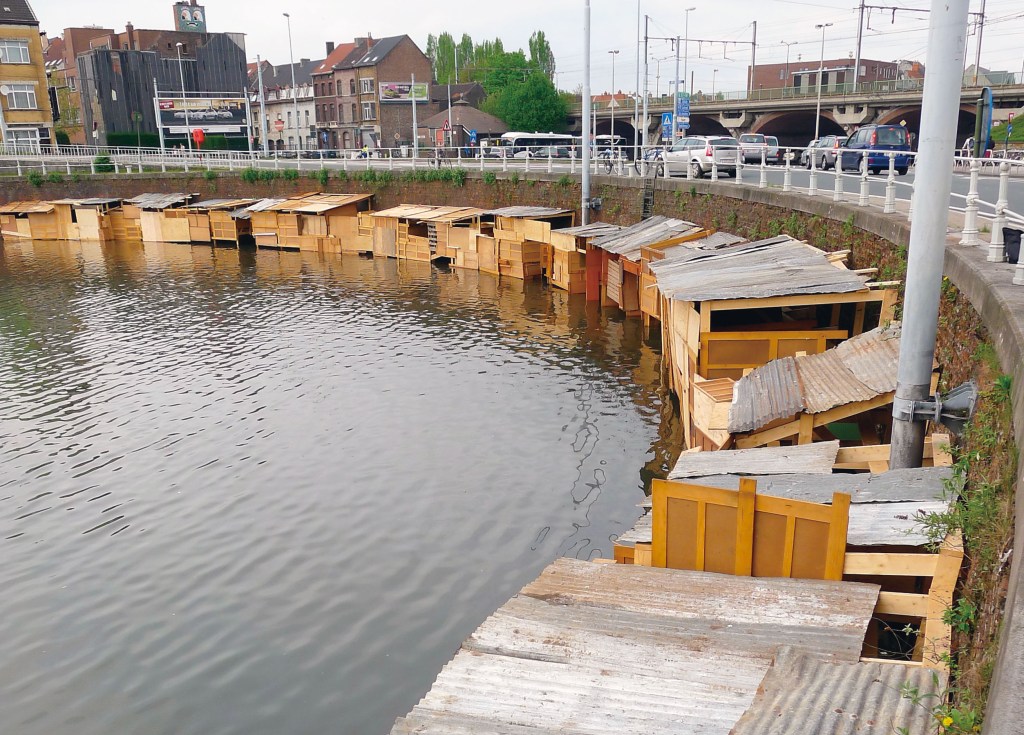
Favela for Gent
12 May – 16 September 2012
Ghent, Belgium
Produced by S.M.A.K. – the Municipal Museum of Contemporary Art – TRACK was a large-scale, temporary outdoor exhibition featuring works by 41 international artists, stretching from the center of Ghent to its outskirts. Kawamata installed a series of huts made from scrap materials, resembling a favela (slum), at the Dampoort turning basin, next to the city’s train station. The huts were semi-submerged, further emphasizing their precarious nature while also highlighting their resilience. Hanging in a non-place, these shelters made visible what is often overlooked.
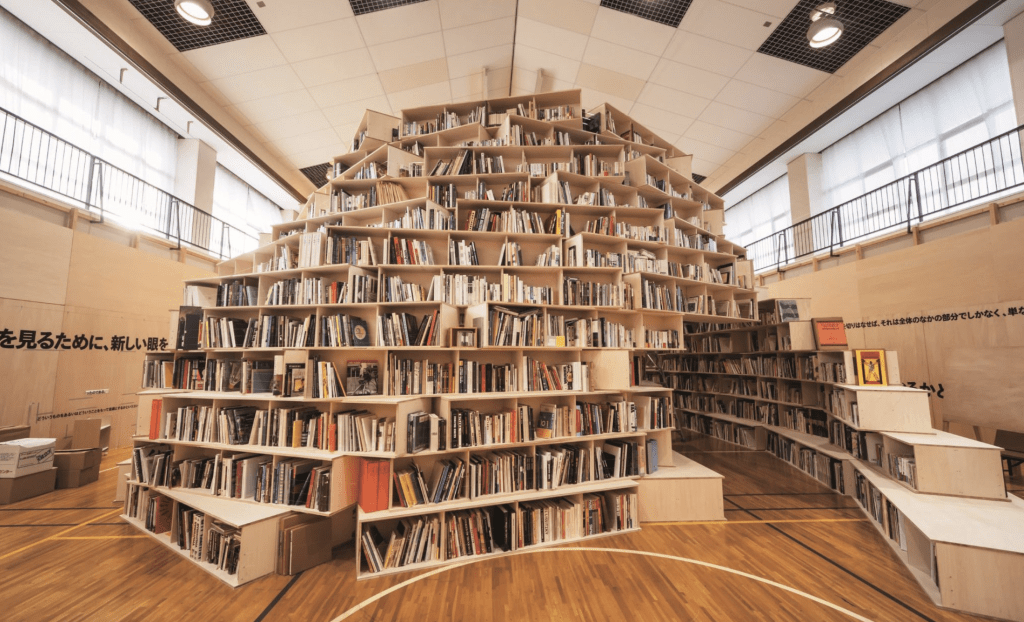
Nakahara Yusuke Cosmology
29 July 2012 – 10 October 2014
Center for Interlocal Art Network Matsudai, Shimizu Village, Niigata, Japan
On the occasion of the Echigo-Tsumari Art Triennale 2012
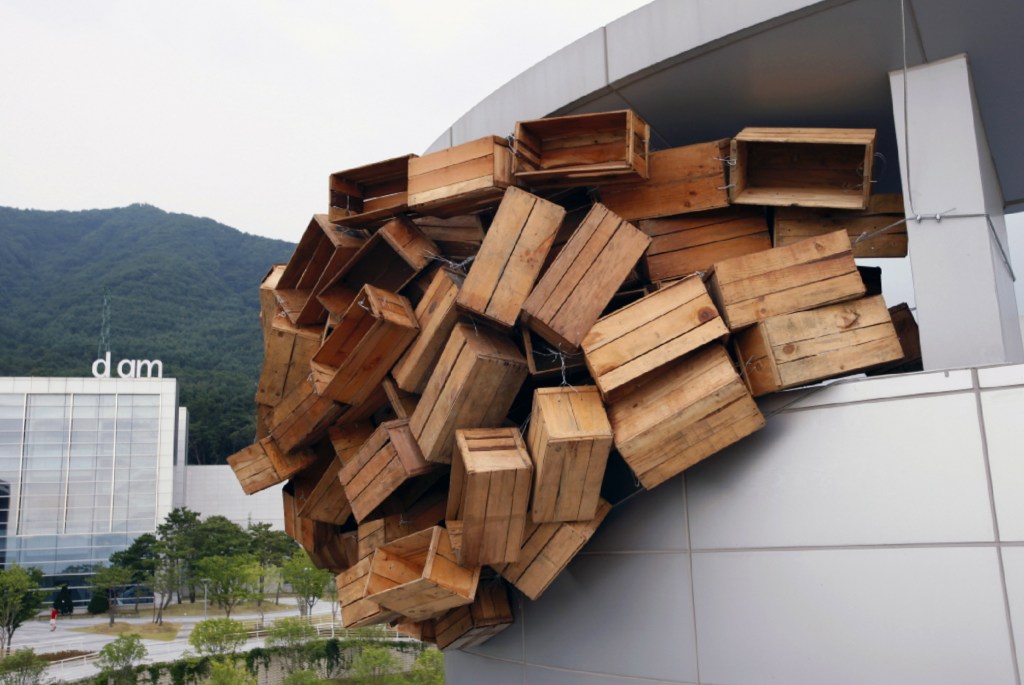
Box Construction in Daegu
14 August – 4 November 2012
Daegu Art Museum, Daegu, South Korea.
For his solo exhibition at the Daegu Art Museum, Kawamata created Box Construction in Daegu, a monumental site-specific installation that extends across both the interior and exterior of the museum building. The work was constructed from 9,000 recycled wooden boxes previously used at the local market for apples — one of Daegu’s main regional products, as the area is renowned for its many apple trees.
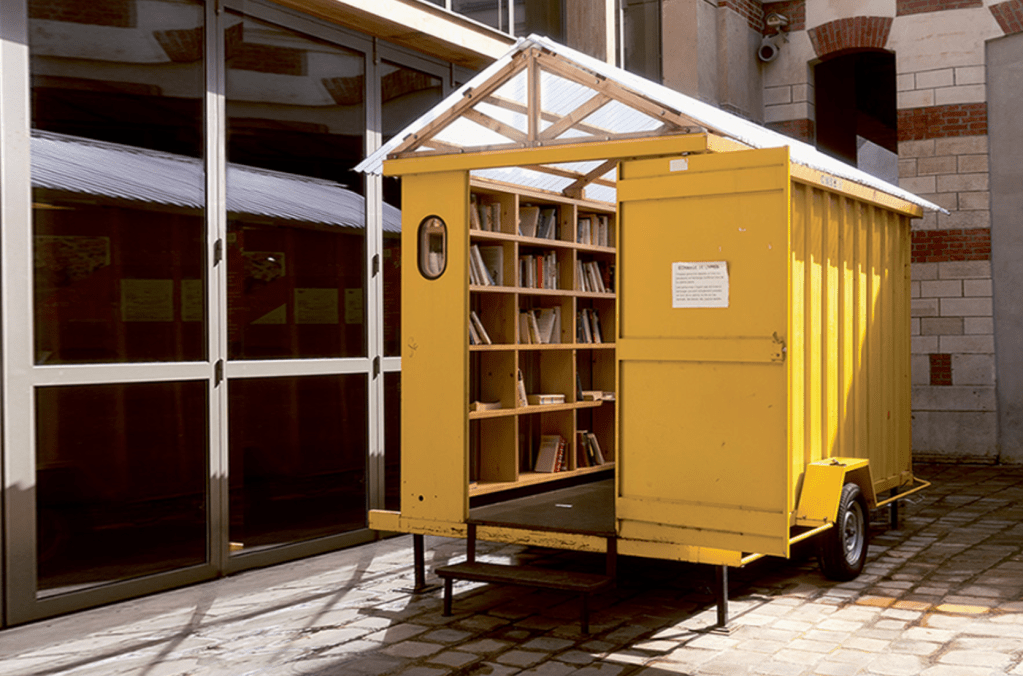
Exchange Library
18 – 21 October 2012
Tuileries Garden, Paris, France
On the occasion of FIAC Hors le murs 2012
Corner Structure
2012
UN Campus, The Bundeshaus (Federal House), Bonn, Germany
Permanent commissioned work
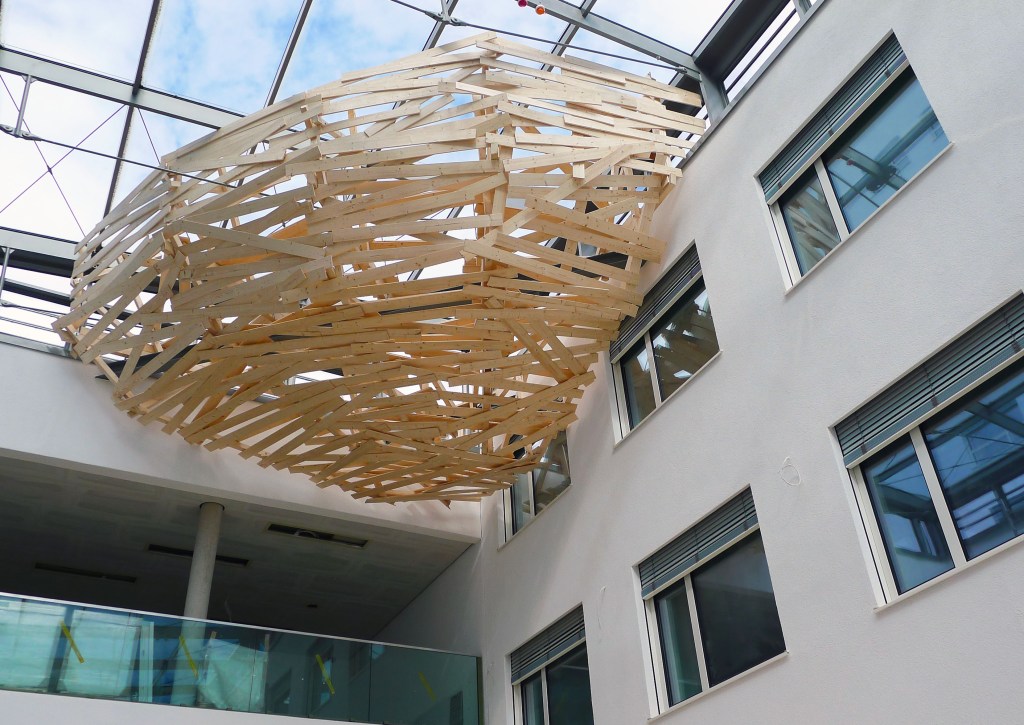
In September 2012, Corner Structure was installed in situ under the glass roof of the building’s atrium. This permanent artwork was commissioned as part of the 1% public art project competition in 2010.
Toyosu Dome – Tokyo in Progress
2012 – 2013
Koto-ku, Toyosu Harumibashi Park, Tokyo, Japan
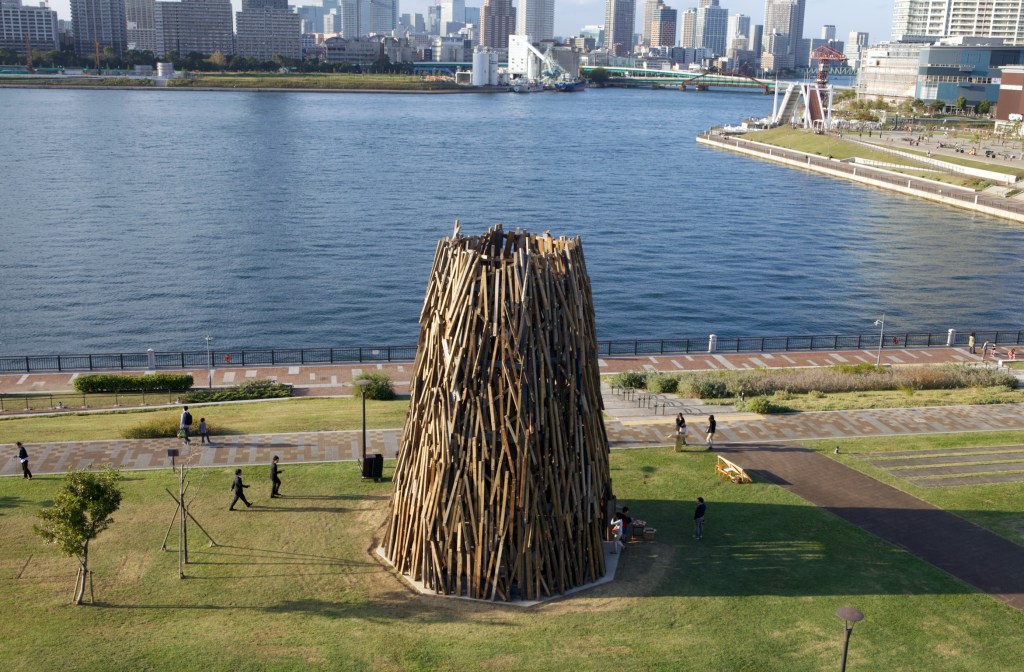
This is the final structure created as part of the Tokyo in Progress project, which ran from 2010 to its completion in 2013. Built using scrap wood from Tokyo, this dome-like structure was erected to provide people with access to the riverside view and an opportunity to observe the ever-changing cityscape of Tokyo in the Toyosu area. The three observation points— Shioiri Tower, Tsukuda Terrace, and Toyosu Dome —remained open to the public until the closing ceremony held on November 4, 2013, before being dismantled.
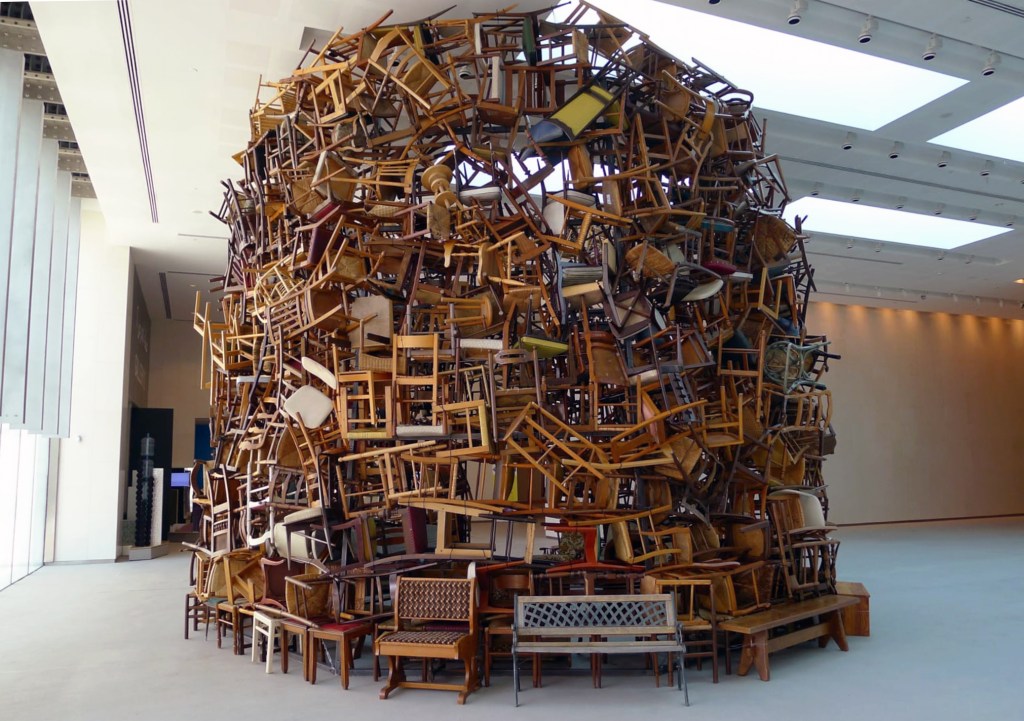
Chairs for Abu Dhabi
2012
Manarat Al Saadiyat, Abu Dhabi, UAE.
On the occasion of Abu Dhabi Art 2012
Expand BankART
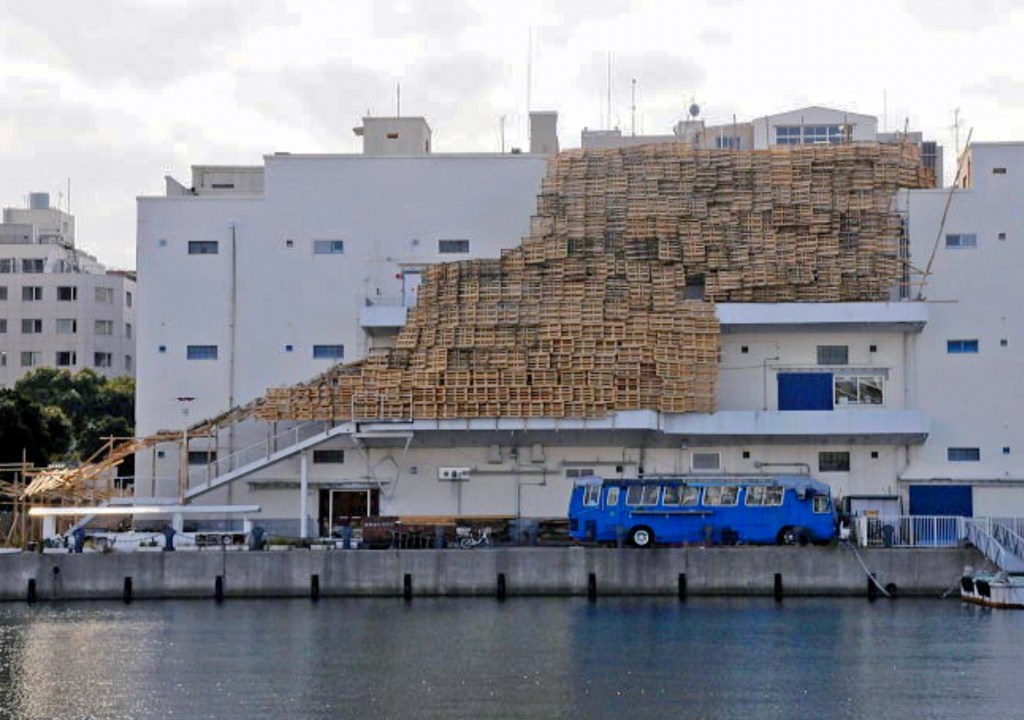
9 November 2012 – 13 January 2013
BankART Studio NYK, Yokohama, Japan
For this project, Kawamata created an indoor installation and an outdoor intervention on the building at BankART Studio NYK in Yokohama. Formerly a warehouse, it was renovated and converted into an art space..
Horizons ; Escale; Décise
2013
Musée de la Camargue, Arles, France.
Permanent commissioned works
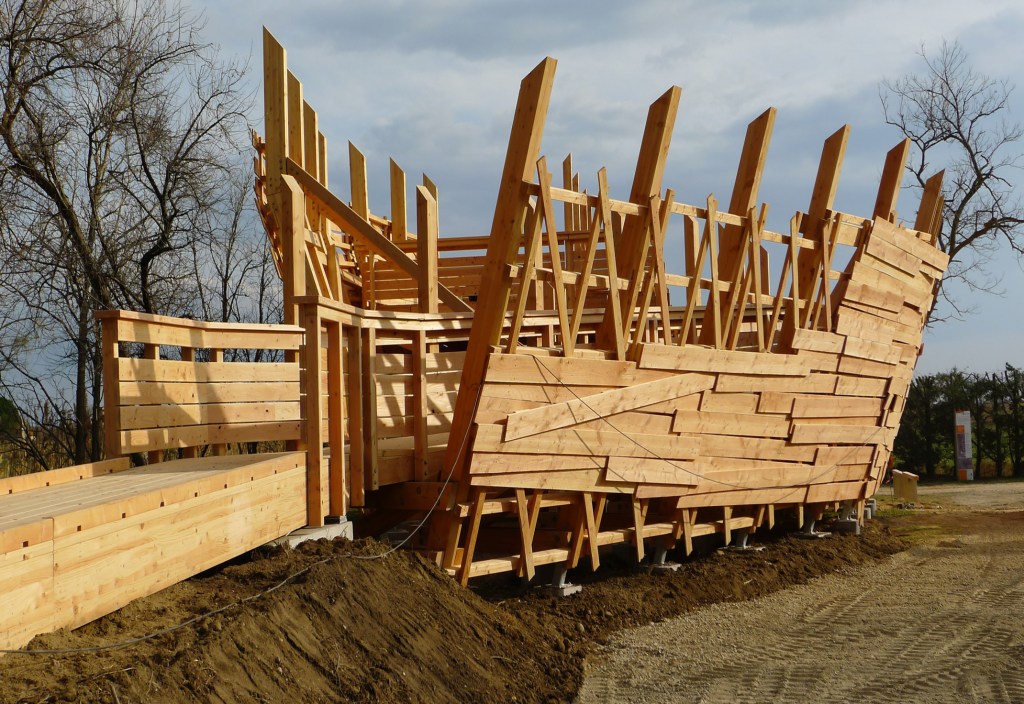
For the project Les Sentiers de l’eau, Kawamata created three site-specific outdoor installations titled Horizons, Escale, and Décise. Situated at Mas du Pont de Rousty, near the entrance to the Musée de la Camargue, Horizons offers visitors an open and accessible space where they can move freely, experiencing the work as a tool for viewing the surrounding landscape from multiple perspectives. The journey into nature continues with Escale, located on the banks of the Grand Rhône at the Grande Montlong pumping station, and with the mobile work Décise, a boat installed on the Quai Saint-Pierre in Trinquetaille. The concepts and designs for these works were developed in collaboration with students who participated in workshops in 2011, prior to the collective construction that took place from February 19 to 28, 2013. The commission was inaugurated on March 1, 2013, as part of the Marseille-Provence European Capital of Culture program..
Scheiterturm / Log Tower
24 March 2013 – 17 October 2015
Kunstmuseum Thurgau – Kartause Ittingen, Warth, Switzerland
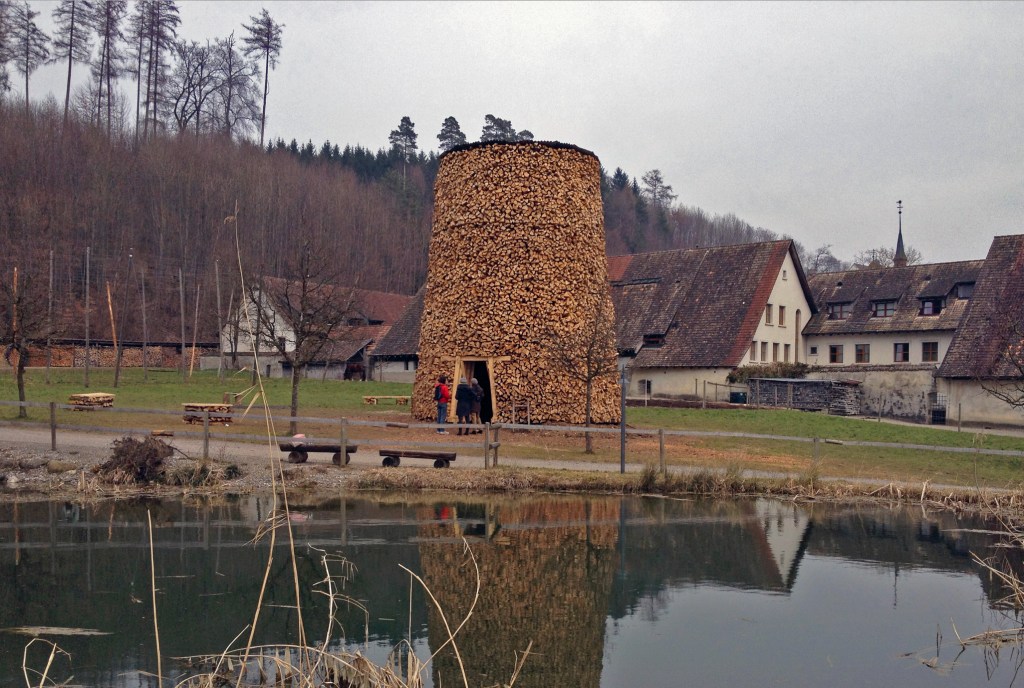
A 9-meter-high tower, resembling a chimney and made of logs, was constructed with the help of students from the School of Fine Arts in Paris (École des Beaux-Arts de Paris) by stacking approximately two thousand wooden logs. Inaugurated on March 24, 2013, it remained at the museum’s entrance for three years.
Collective Folie
17 April – 25 August 2013
Parc de la Villette, Paris, France
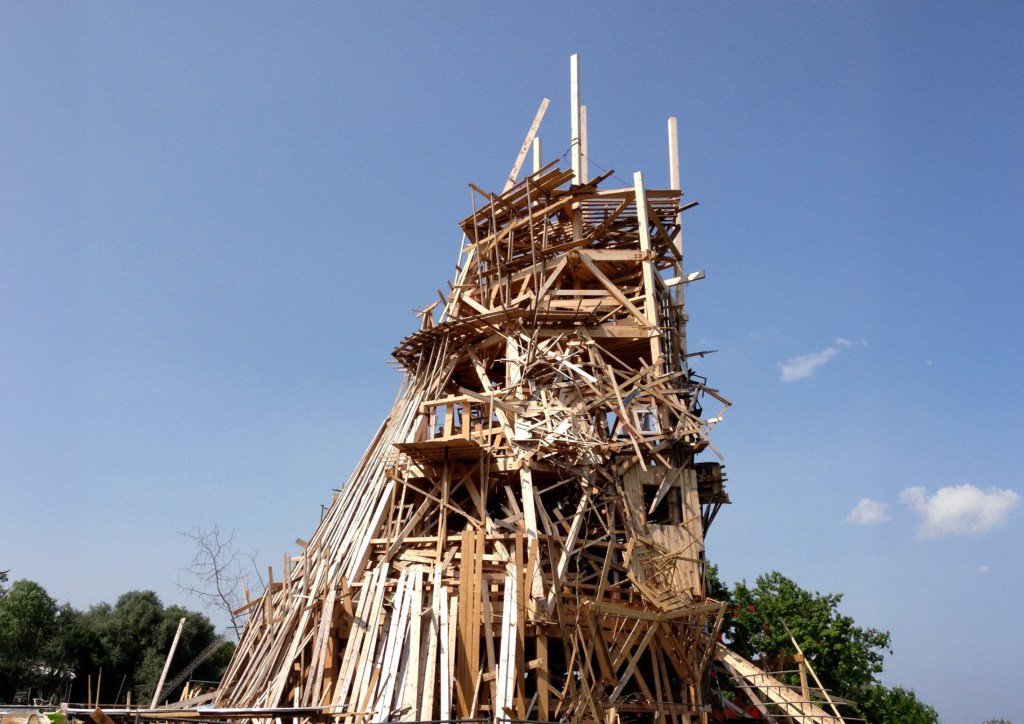
This 21-meter-high tower was the result of a participatory project involving a large number of people who took part in both the construction and the dismantling of the tower during several workshops bringing together students and volunteers at the Parc de la Villette.
Favela Café
11 – 18 June 2013
Art Basel, Basel, Switzerland
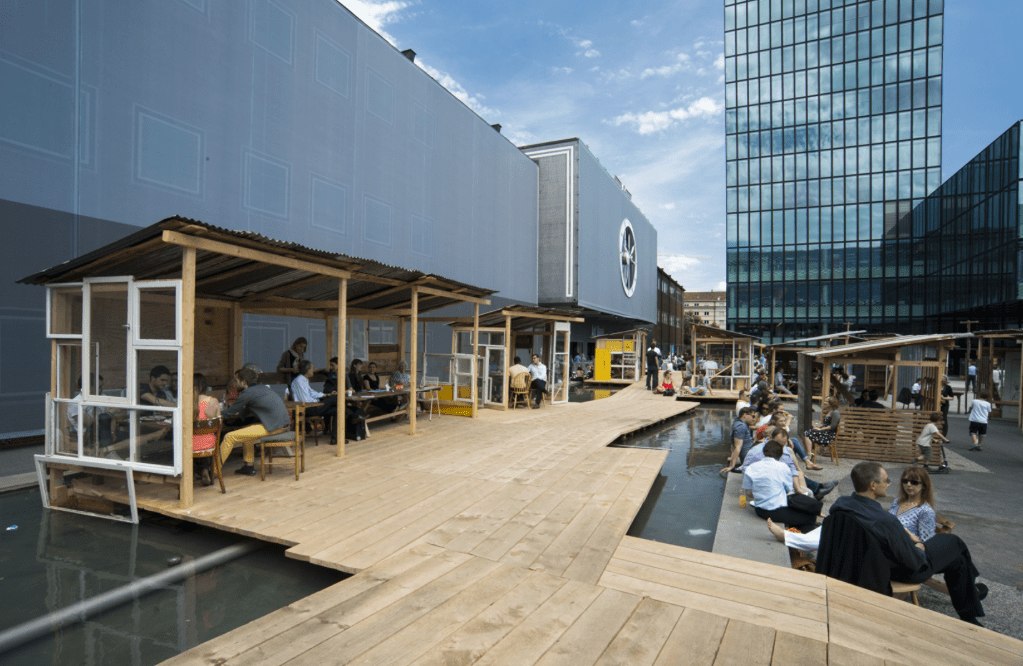
On the occasion of Art Basel 2013, Kawamata built a café terrace in front of the Messe Hall entrance, consisting of 18 huts made from recycled materials. Arranged around the Messeplatz fountain and connected by walkways, the installation resembled a small village and provided visitors with a place to rest during the art fair.
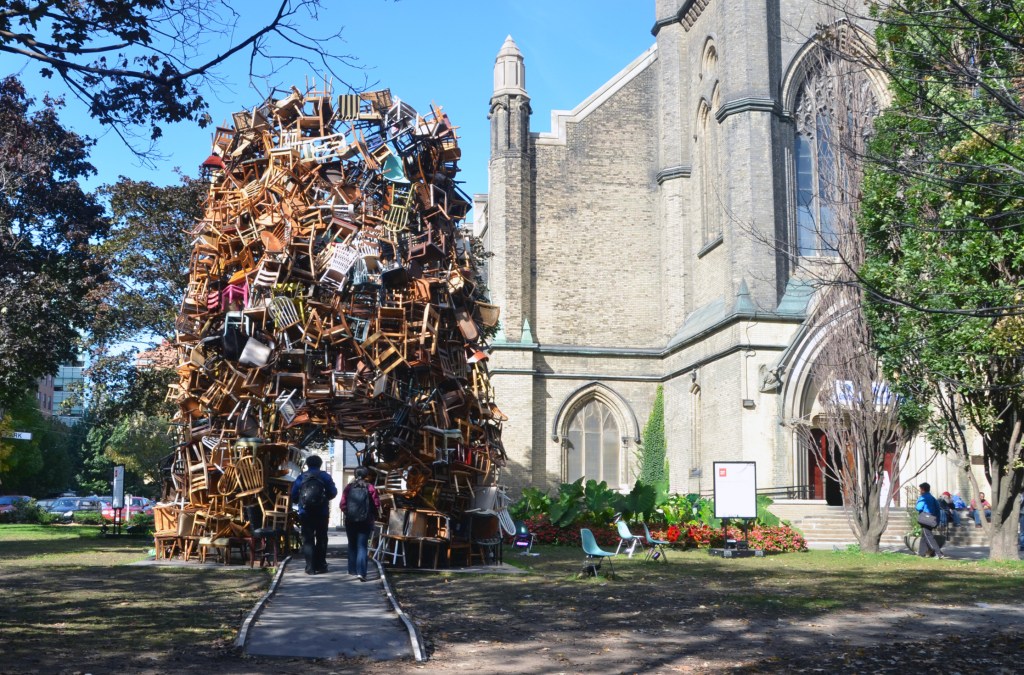
Garden Tower in Toronto
6-14 October 2013
Metropolitan United Church, Toronto, Canada.
As part of Nuit Blanche Toronto
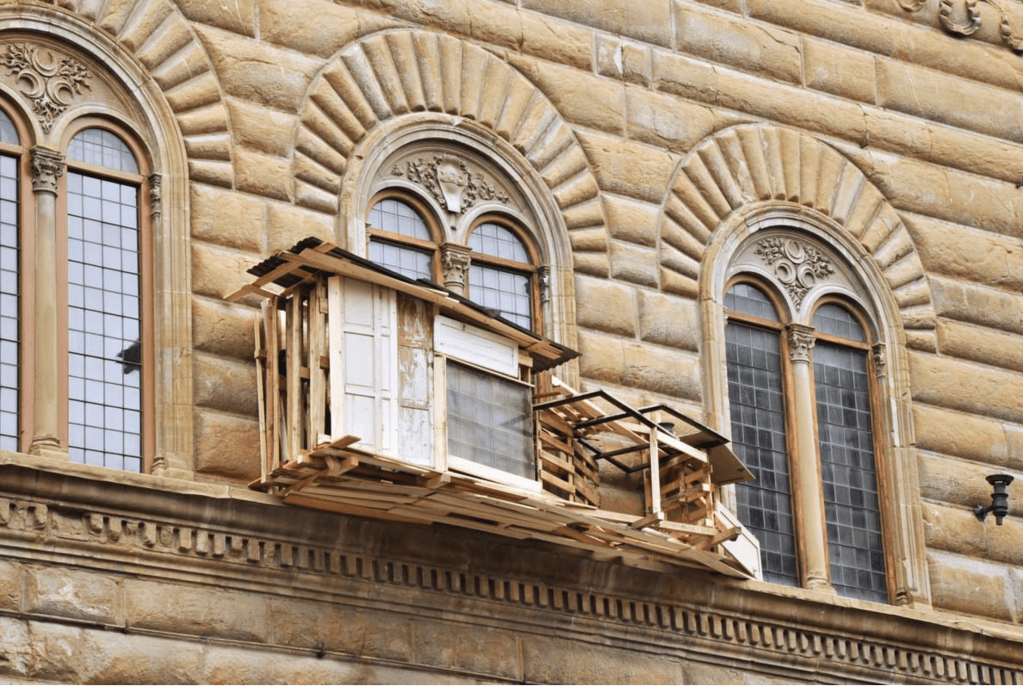
Tree Huts
11 October 2013 – 19 January 2014
Center for Contemporary Culture Strozzina, Palazzo Strozzi, Florence, Italy.
For the group exhibition Unstable Territory. Borders and identity in contemporary art at the Fondazione Palazzo Strozzi, housed in one of the most renowned Renaissance palaces in the heart of Florence, Kawamata carried out an in situ intervention featuring two tree-hut installations positioned on the building’s exterior façade and in its courtyard. Inside the exhibition spaces, the artist created Apnea, an installation composed of disused doors and windows recovered from the Palazzo Strozzi storerooms. Suspended from the ceiling, these elements evoke a condition of instability, suspension, and disorientation.
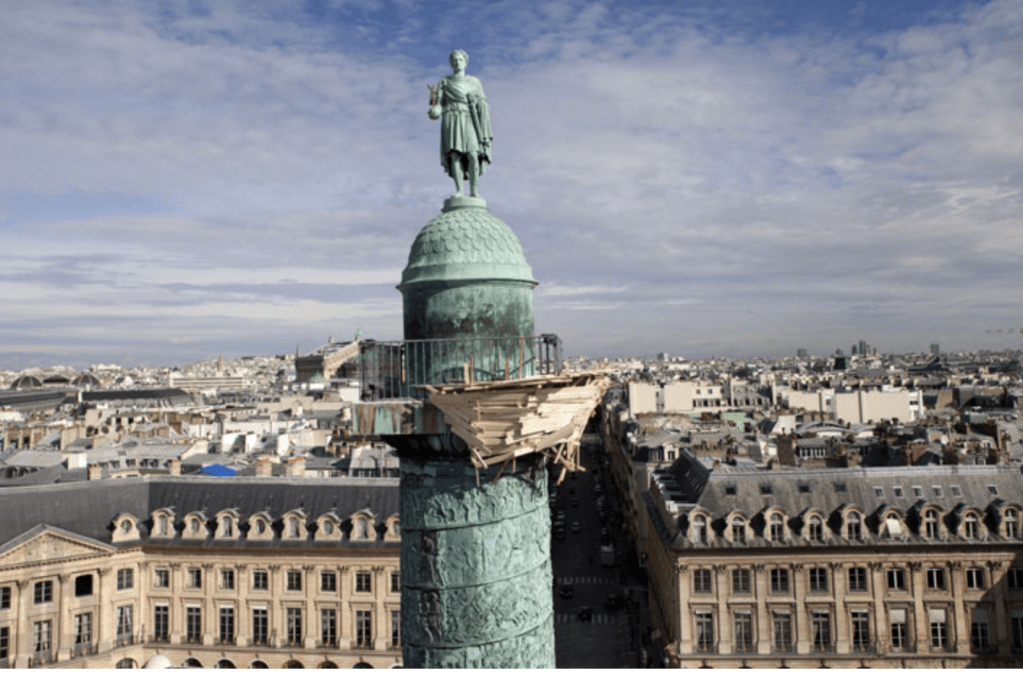
Tree Huts at Place Vendôme
24 – 27 October 2013
Place Vendôme, Paris, France
As part of FIAC Hors les Murs 2013, a tree hut was constructed at the top of the Vendôme Column, while four others were placed on the roofs of the surrounding buildings.
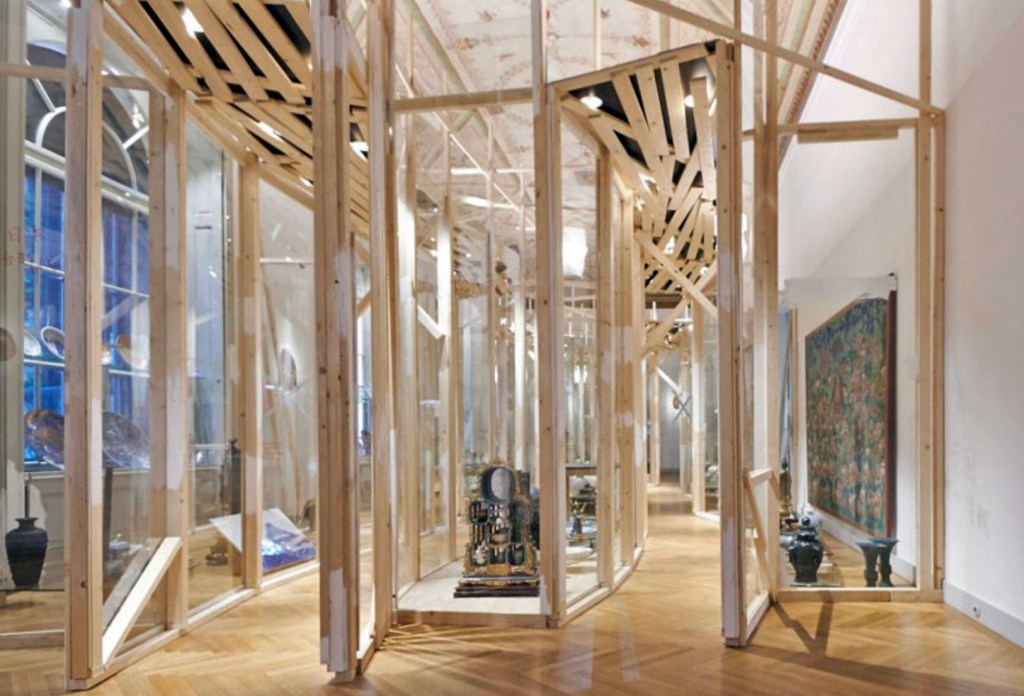
MAK Permanent Collection ASIA: China-Japan-Korea
2014
MAK – Museum of Applied Arts, Vienna, Austria.
New gallery display designed by Tadashi Kawamata
La Chaire
4 October – 30 November 2014
Kunisaki City, Oita, Japan
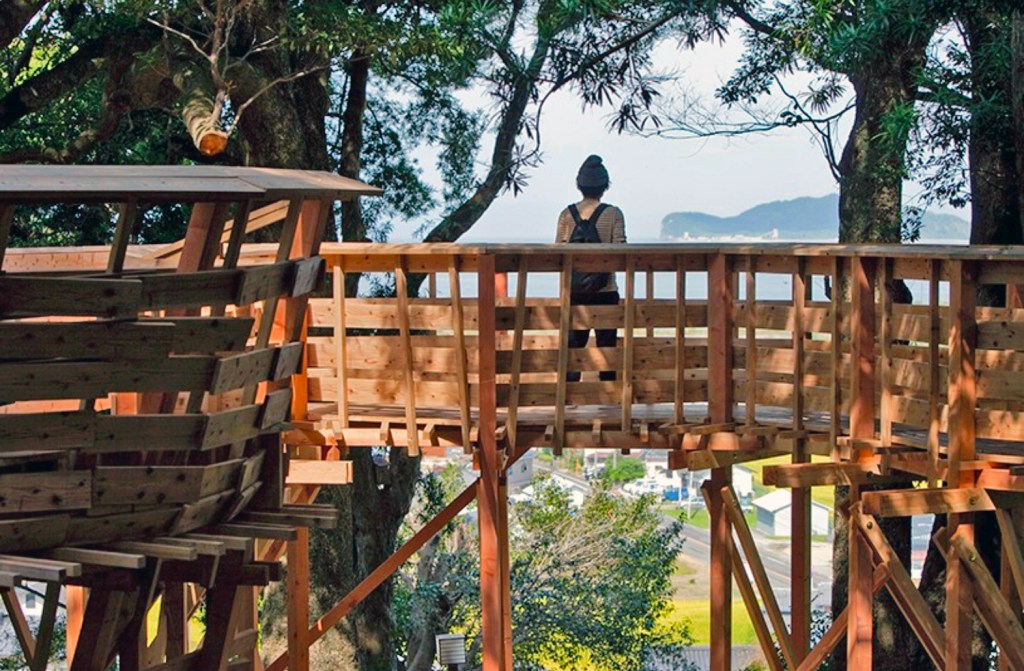
For his participation in the site-specific project program on the occasion of the Kunisaki Art Festival 2014, Kawamata presented the Kibe Project, which consisted of creating a wooden observation platform in Kibe Memorial Park. A small rural area in the city of Kunisaki on the Kyūshū Peninsula, Kibe is known as the birthplace of Petro Kasui Kibe, one of the first Japanese Catholic priests, who returned from Rome after completing his training at a Jesuit school. By overlooking the area, Kawamata’s intervention establishes a physical and symbolic connection between the present and the local history of the region — once home to a Christian community later suppressed following the nationwide ban on Christianity in 1614..
Stairs
19 February – 21 March 2015
Annely Juda Fine Arts, London, UK.
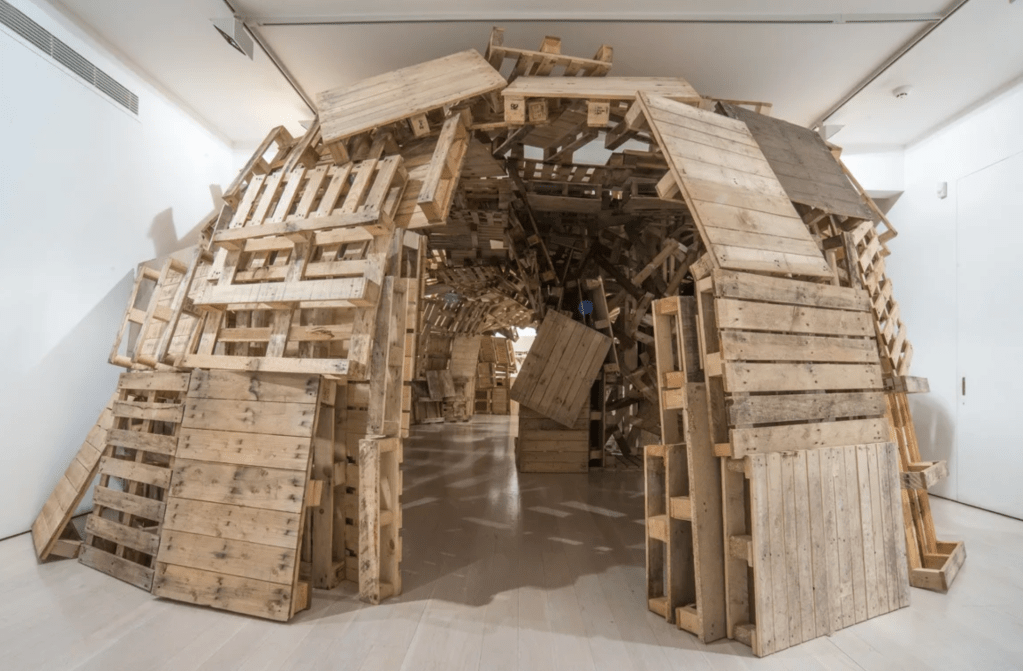
At Annely Juda Fine Art, Tadashi Kawamata transformed the galleries into an immersive architectural installation. A wooden spiral staircase rises from the storage area on the second floor and winds its way through the building. On the third floor, it passes through a large, igloo-like wooden dome, where gaps between the planks let visitors catch glimpses of Kawamata’s models and maquettes displayed on the walls. Continuing to the fourth floor, visitors reach the glass skylight, where they can enjoy views of the London skyline and see Kawamata’s works from above.
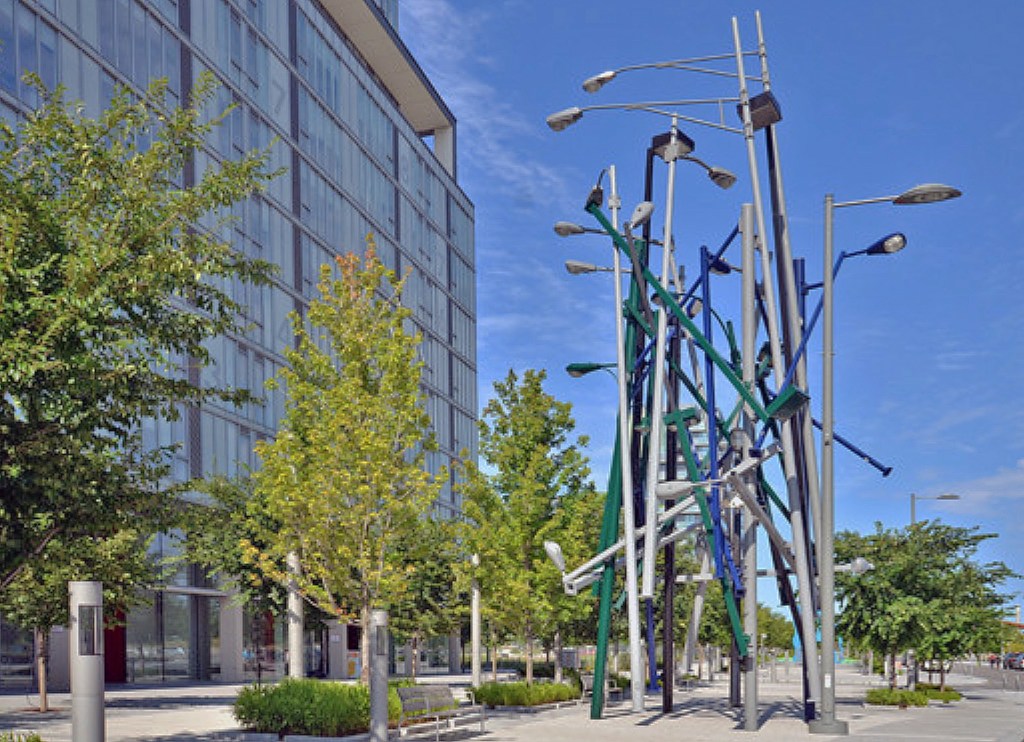
Toronto Lamp Posts
2015
West Don Lands, Toronto, Canada.
Permanent public work commissioned by Waterfront Toronto.
Guangzhou Project
2015
Park Hyatt Guangzhou, Guangzhou, China
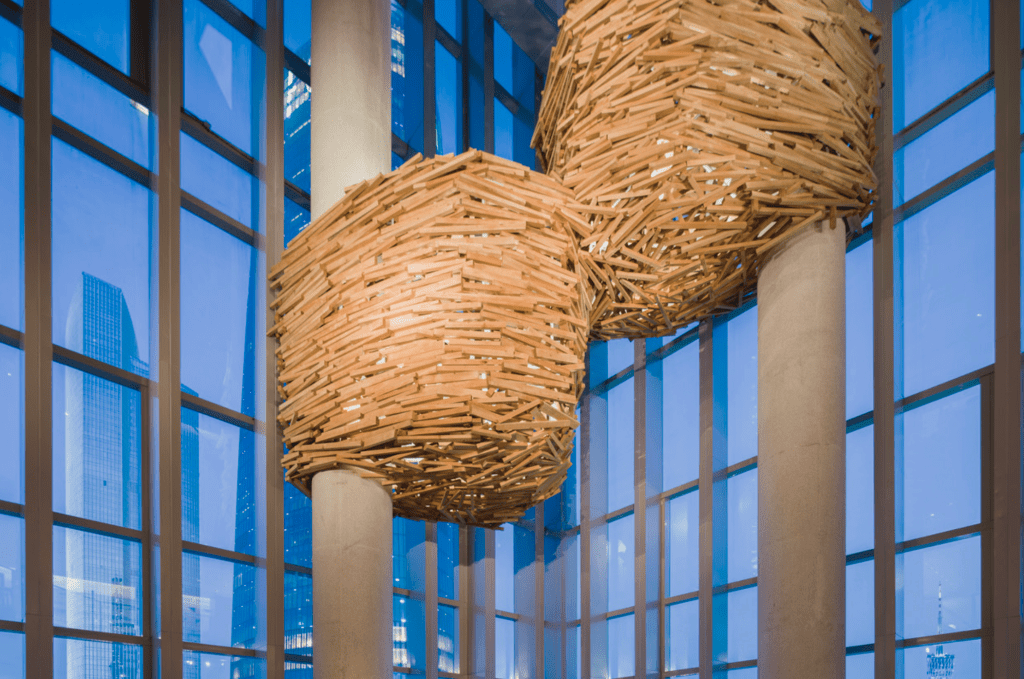
This commission for Park Hyatt Guangzhou was created in collaboration with a Japanese designer and consists of six artworks made from reclaimed wood, installed in the 66-story Yingkai Square building in Guangzhou. Among them, a massive hive-like structure is suspended around the structural columns in the hotel lobby on the 65th floor.
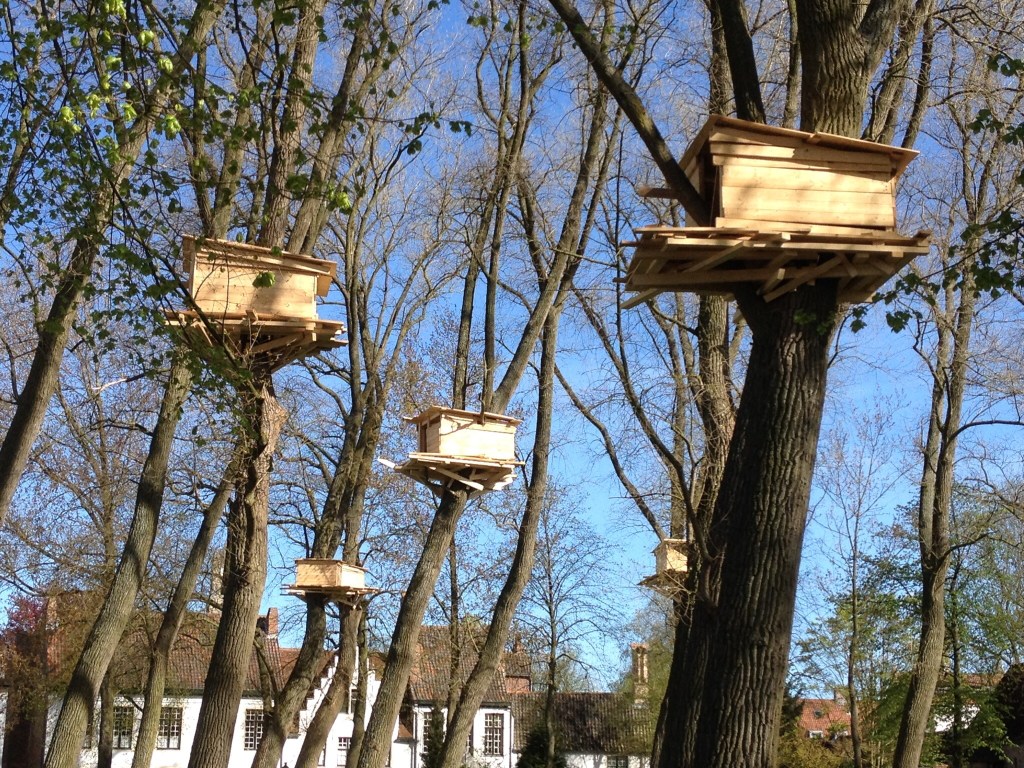
On the occasion of Bruges Triennial 2015, twelve tree huts were installed in the inner garden of the Flemish Beguinage in Bruges. Founded in 1245, this complex has been declared a UNESCO World Heritage Site. Today, it is home to a small community of Benedictine nuns. In this spiritual, quiet, and peaceful setting, the inaccessible presence of Kawamata’s intervention evokes the innate human desire to seek refuge in nature for contemplation and solitude.
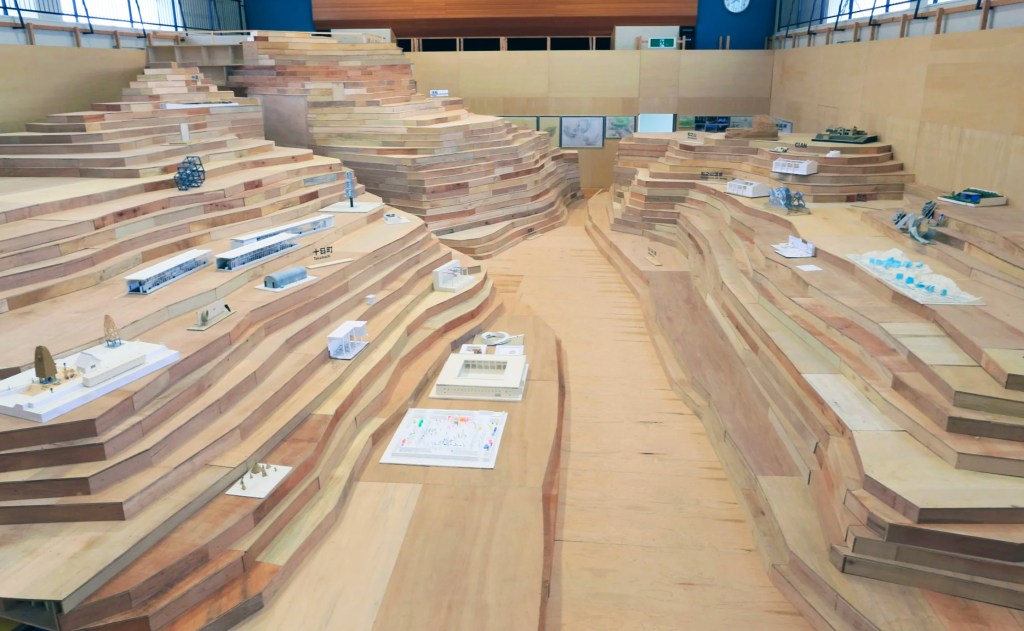
Tsumari Diorama
29 July – 13 September 2015
CIAN – Center for Interlocal Art Network, Niigata, Japan
As part of the Echigo Tsumari Art Triennale 2015
This monumental diorama installation, representing the topography of Echigo-Tsumari, was displayed in the exhibition room of CIAN (Center for Interlocal Art Network) in Tokamachi City, Niigata. Models, drawings, posters, catalogs, and other documentary materials from past festivals over the last fifteen years were presented on the diorama, allowing visitors to trace the festival’s history as they walked along.
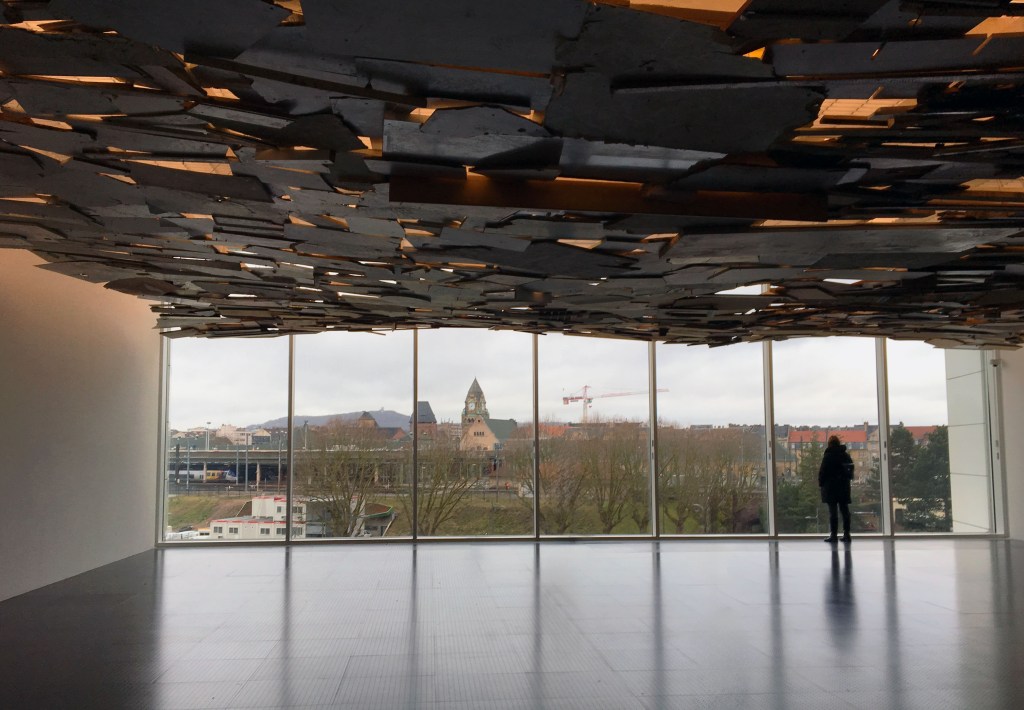
Under the Water
6 February – 15 August 2016
Pompidou Metz, Metz, France
Inspired by a newspaper article about waste from the 2011 Great Tōhoku Earthquake and Tsunami reaching the coasts of Canada and the U.S., the site-specific installation Under the Water was created at the Centre Pompidou-Metz in France in collaboration with thirty local students. Utilizing the entire Gallery 2 space, Kawamata covered the ceiling with a structure made of waste materials, evoking the sensation of walking beneath a sea of refuse and recalling the five million tonnes of debris generated by the tsunami.
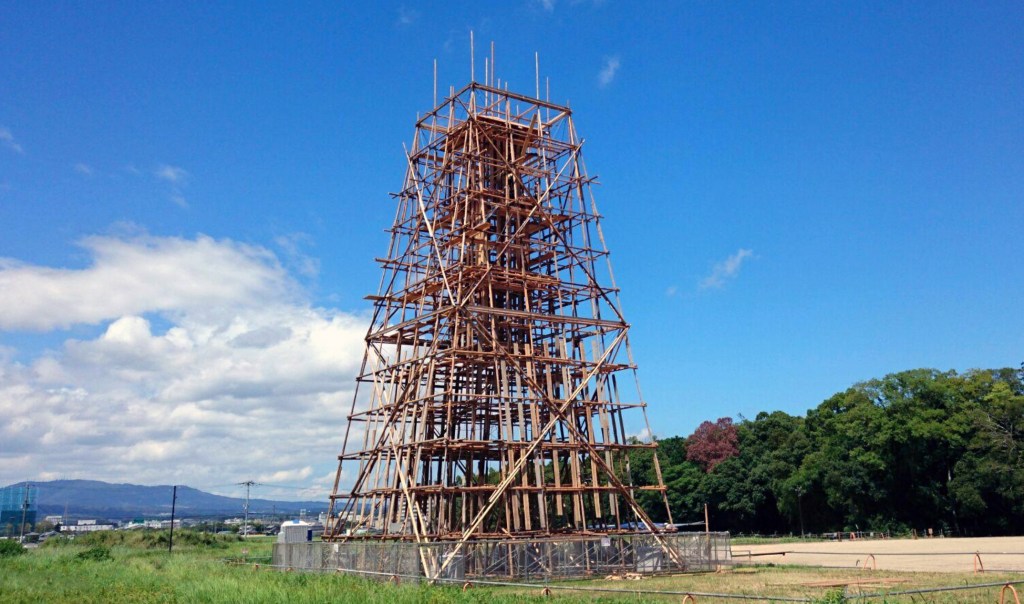
The Tower of Scaffold
3 September – 23 October 2016
Daianji Temple, Nara, Japan
Culture City of East Asia 2016, Nara
On the occasion of Nara’s designation as the Culture City of East Asia 2016—a tri-nation project promoting cultural exchange between Japan, China, and South Korea—the exhibition Beyond Time and Space featured several installation works by international artists at Nara’s shrines and temples. Using a thousand wooden logs from the local area, Kawamata built a scaffolding tower next to Daianji Temple, one of Japan’s oldest Buddhist temples. Constructed using traditional Japanese methods, the installation was inspired by an ancient wooden tower that once stood on the temple grounds, which extended across approximately 2 km² during the Nara period.
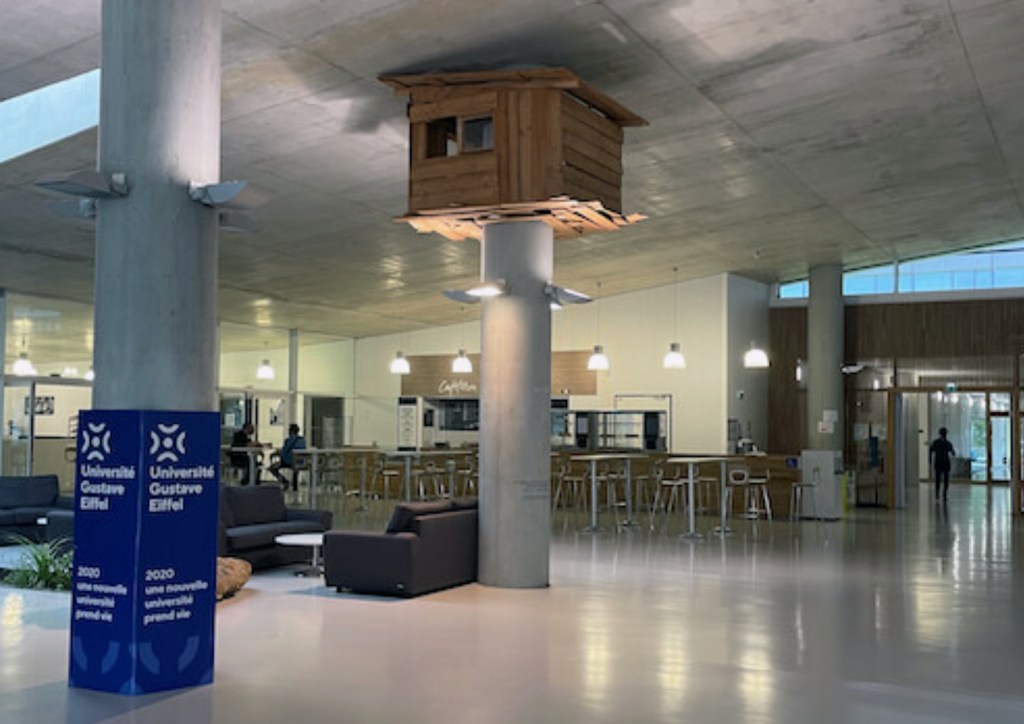
Les Cabanes de Champs-sur-Marne
2016
Espace Bienvenüe, Champs-sur-Marne, France.
Permanent commissioned work
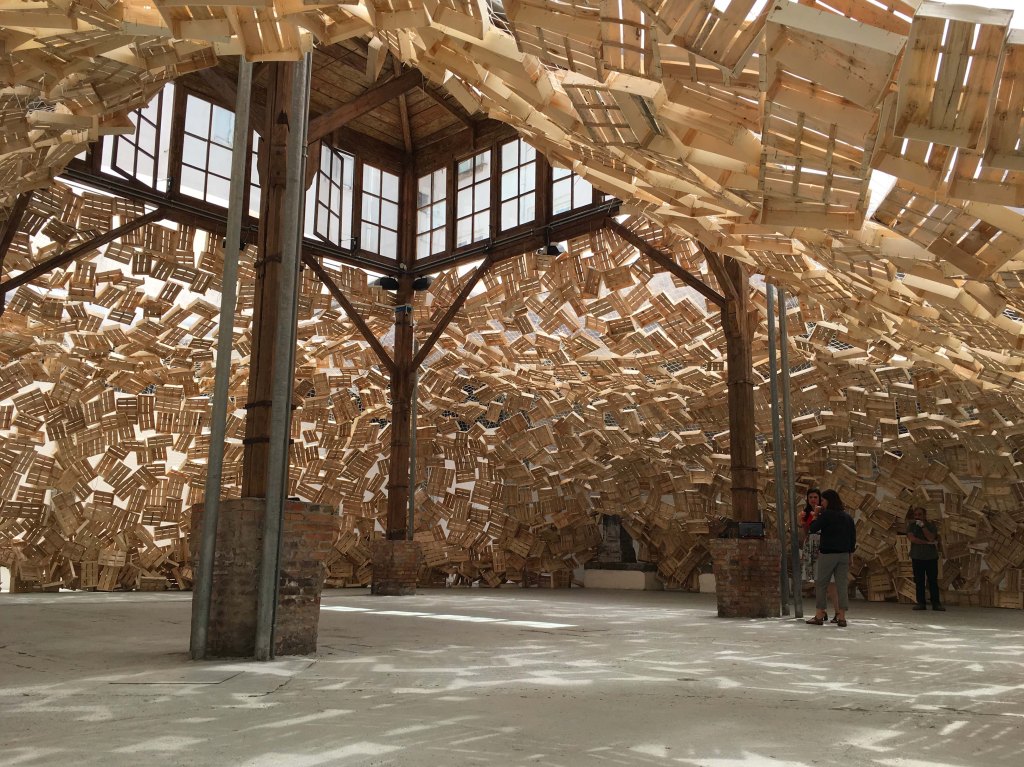
The Shower
13 May – 5 August 2017
Made in Cloister, Naples, Italy
The Foundation Made in Cloister is housed in the small cloister of the Church of Santa Caterina a Formiello, one of the most important Neapolitan Renaissance churches, located in Piazza Enrico De Nicola in Naples. The Shower was a site-specific installation made from vegetable crates collected from the neighbouring market, covering the open roof of the cloister and cascading down into its courtyard. Inspired by the natural light often streaming down from above a chapel, Kawamata’s intervention created a shower curtain that embraces the building’s architecture and its history.
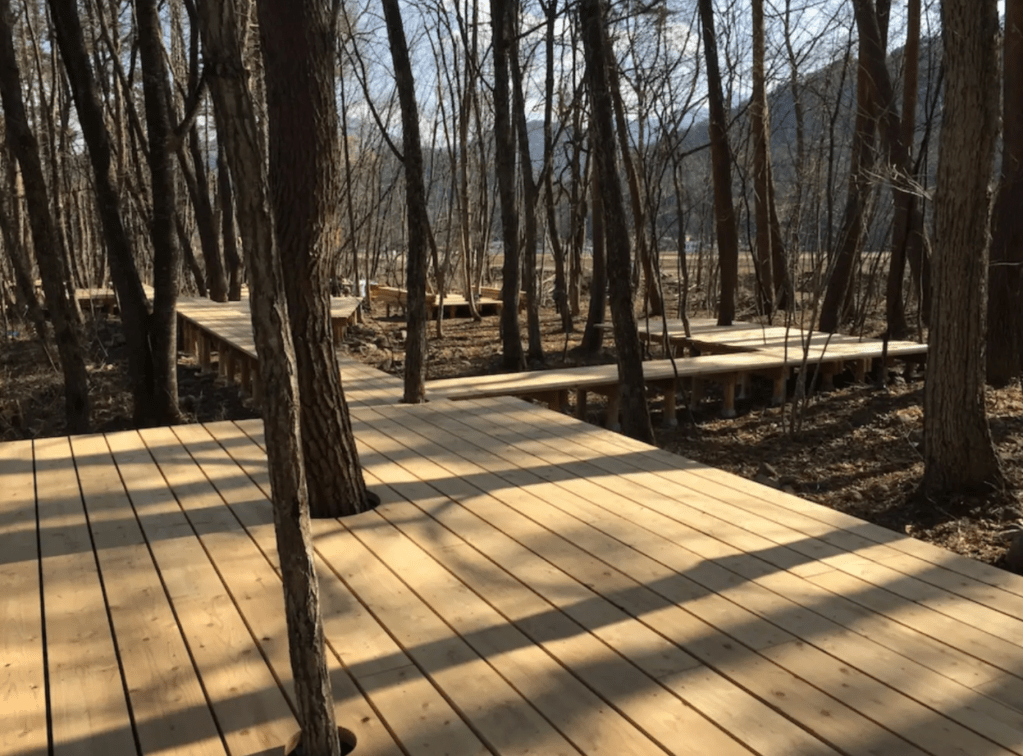
Terrace in a Bush
4 June – 30 July 2017
Omachi, Japan.
As part of Japan Alps Art Festival 2017
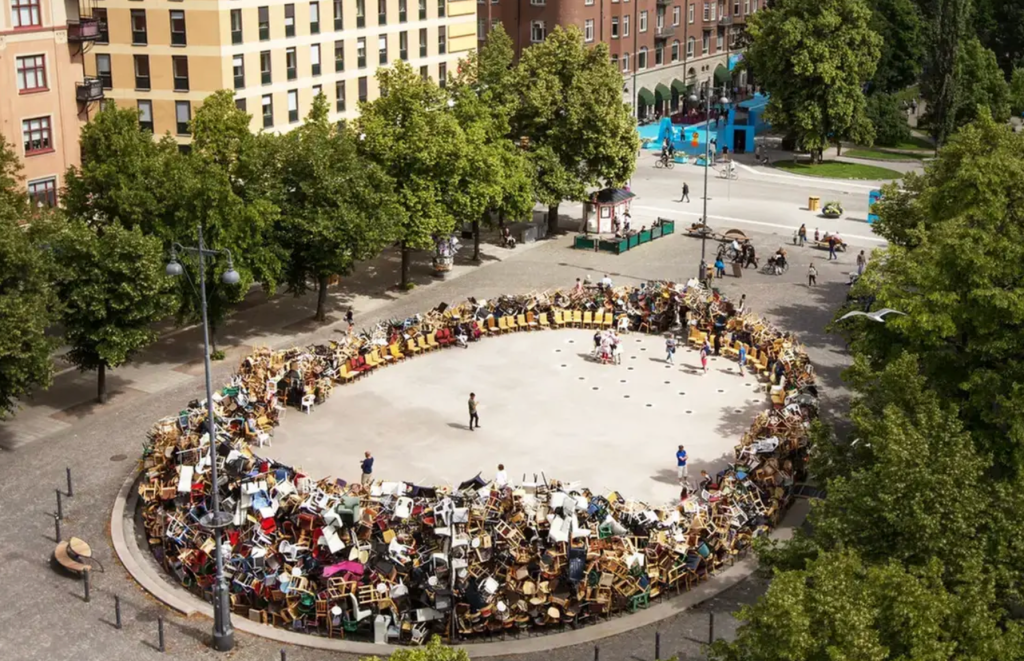
Share Chair Arena
18 June – 10 September 2017
Örebro, Sweden
On the occasion of the OpenART Bienniale
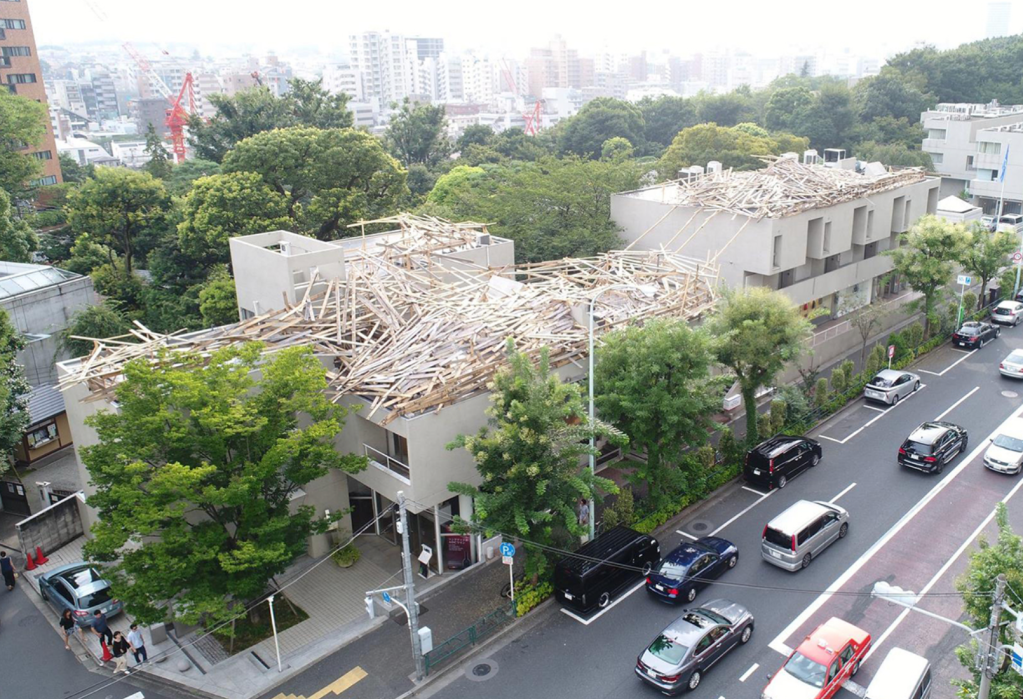
Starting Over, Under Construction
18 August – 24 September 2017
Hillside Terrace, Tokyo, Japan
Organised by Art Front Gallery
Starting Over, Under Construction revisited a project partially carried out by Kawamata at Hillside Terrace in Daikanyama, Shibuya, in 1984, which was discontinued due to a suspension order issued shortly after its opening. The 2017 intervention consisted of an installation of wooden planks on the building’s rooftop, inspired by the skyline of European cities.
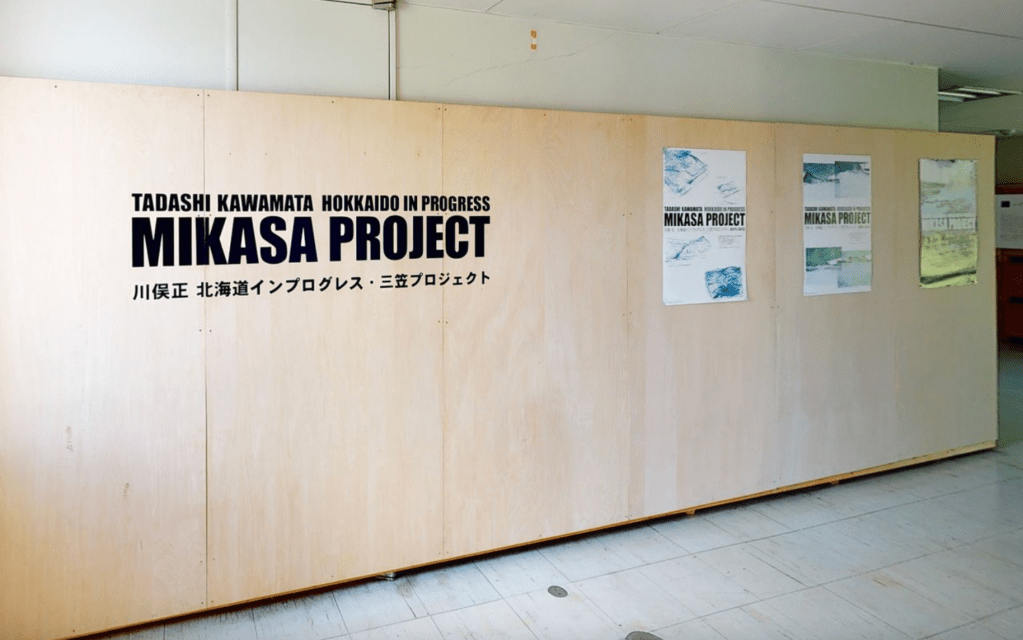
Utilizing the gymnasium of a former primary school in Mikasa, Kawamata created a large-scale representation of the town in the Georama style, resembling a single, expansive model. The project aimed to explore the potential for developing art initiatives in Hokkaido.
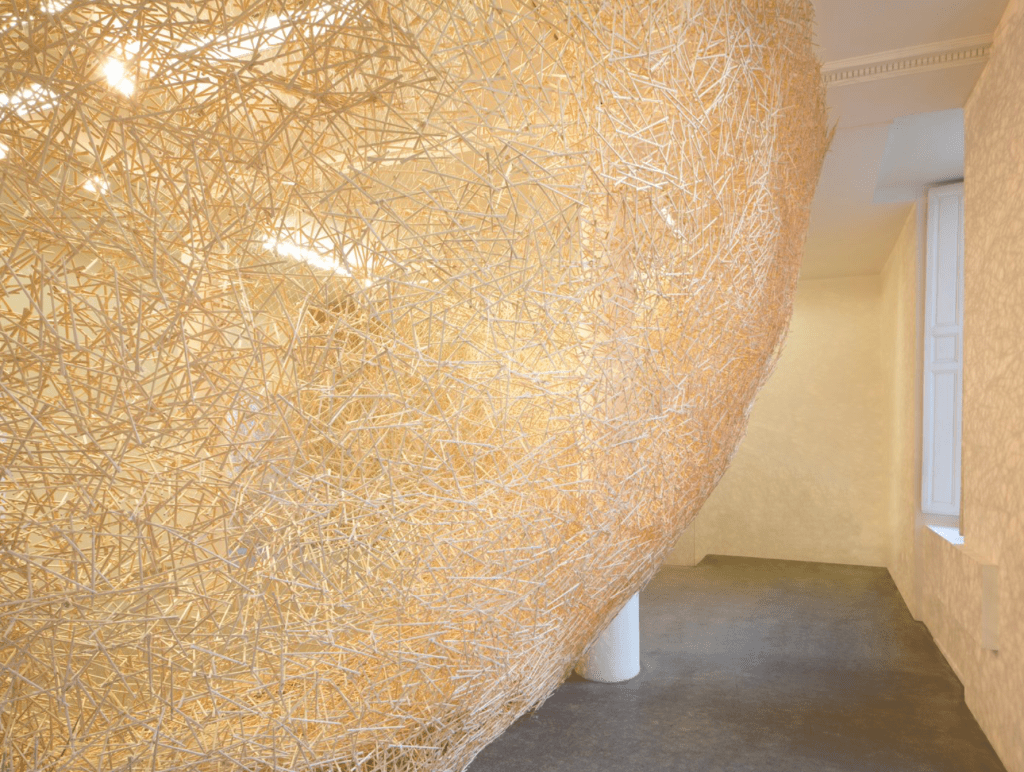
Nest
13 December 2017 – 27 January 2018
Mennour, Paris, France
Nest is a site-specific installation made of eighty thousand interlaced wooden chopsticks. This immense structure extended up to the ceiling of the three exhibition rooms and continued into the courtyard. Like a parasitic body invading the building, this soft yet imposing wall disoriented visitors while prompting them to reconsider and reimagine the space as they walked through.
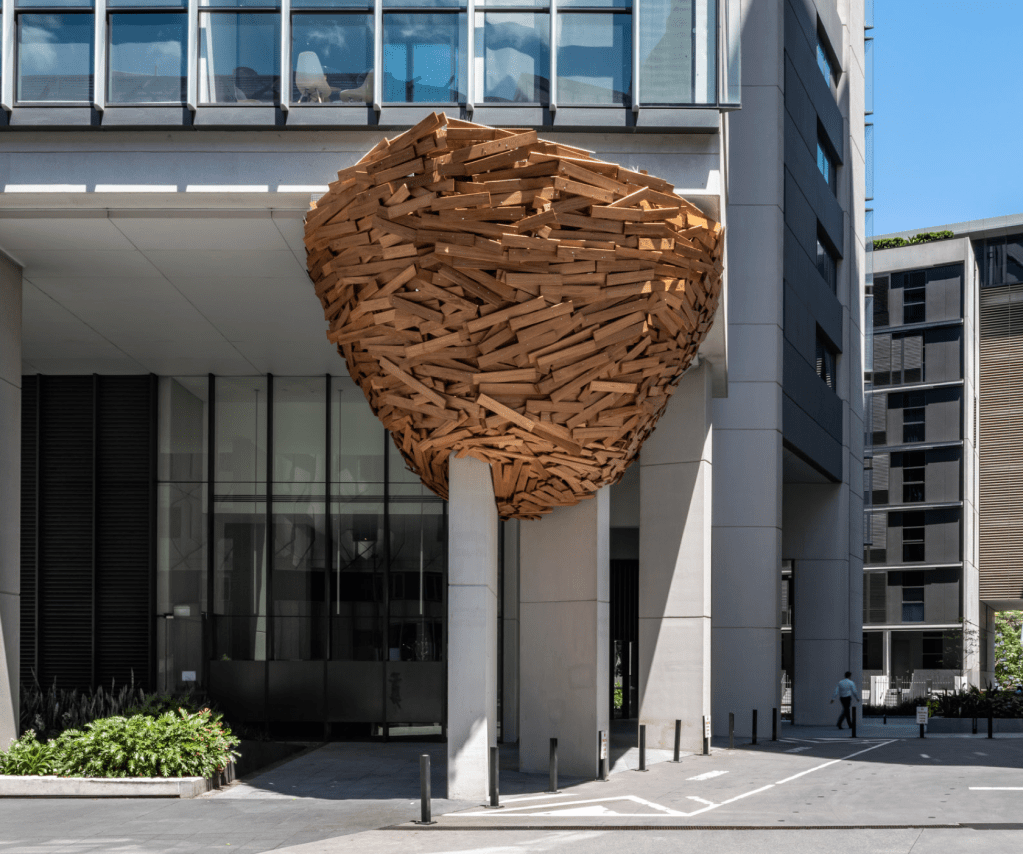
Big Nest in Sydney
2018
The Mark, Central Park, Sydney, Australia
Permanent commissioned work
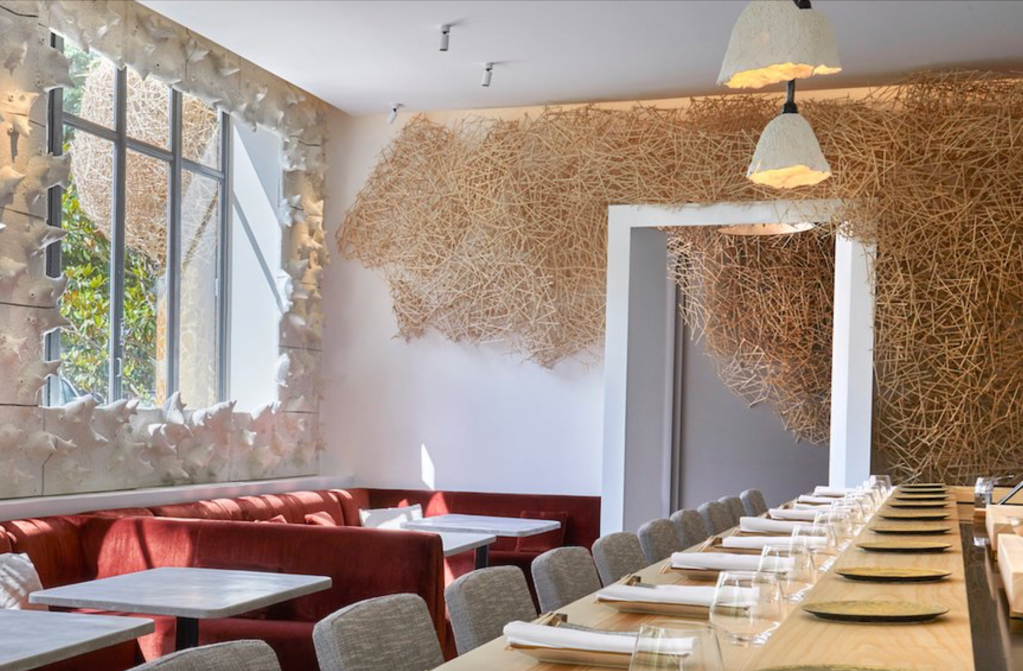
Commission for L’Abysse
2018
Pavillon Ledoyen, Paris, France.
Permanent commissioned work
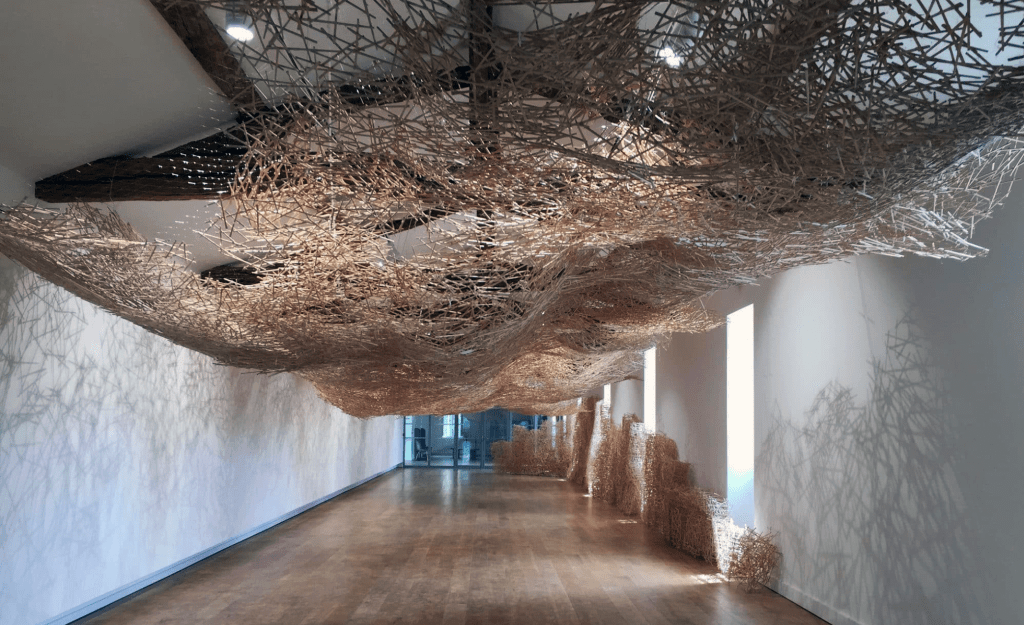
Nuageux – Requiem for Toulouse-Lautrec
7 July – 23 September 2018
Château Malromé, Saint-André-du-Bois, France.
Château Malromé, located 55 kilometers from Bordeaux, was one of the family residences of the painter Henri de Toulouse-Lautrec. Today, it houses a contemporary art gallery on the upper floor of the château’s east wing. Kawamata’s installation, made of 80,000 wooden chopsticks, floated in the gallery space just under two meters above the ground, giving visitors the impression of walking beneath the clouds.
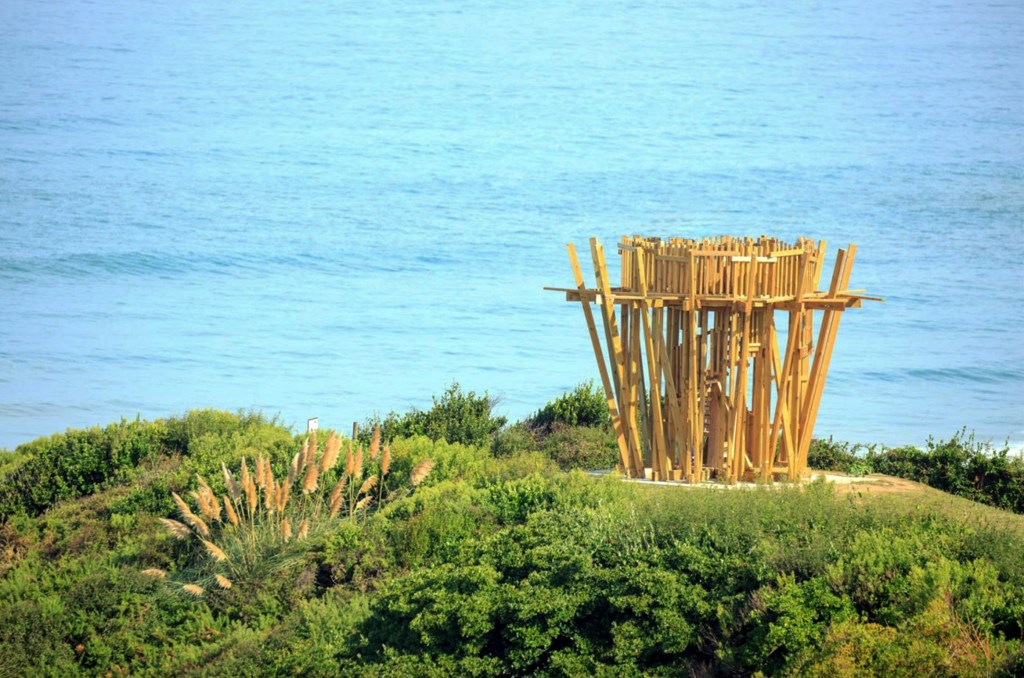
Love Tower
24 August – 4 November 2018
Anglet, France
On the occasion of La Littorale #7 – Chambre(s) d’Amour, Biennale internationale d’art contemporain Anglet – Côte basque
For the seventh edition of the Biennale d’Anglet, eleven international artists have been invited to create an open-air itinerary of original, site-specific, and ephemeral works, installed at the emblematic Basque seaside site, La Chambre d’Amour. The four-meter-high tower by Kawamata stands perched above the Chamber d’Amour cave, which, according to a tragic legend, once sheltered the bodies of two young lovers swept away by the waves. Like an extension of the cave rising toward the sky, Love Tower is symbolically connected to the myth of the site. With a spiral staircase at its core and a platform at its top, this structure offers visitors a privileged vantage point to admire the seaside beaches and the lighthouse of Cap Saint-Martin.
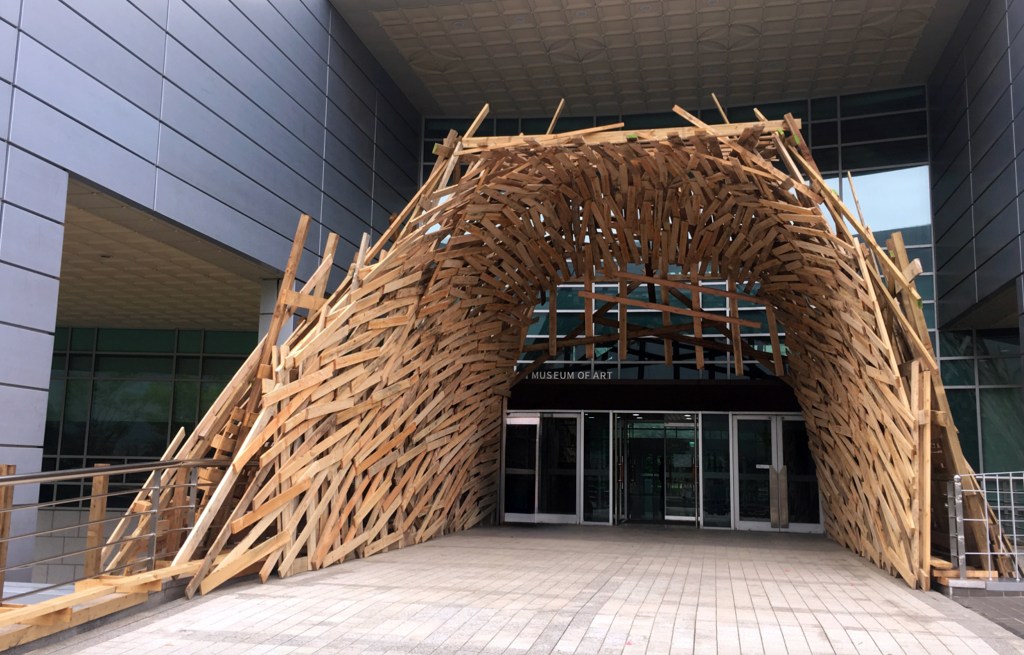
Big Nest
24 August 2018 – 17 February 2019
Busan Museum of fine Art, Busan, South Korea
As part of the group exhibition Botanica – Garden Project, held in the outdoor garden of the Busan Museum of Art, Kawamata’s monumental Nest was constructed using wood waste brought by Busan residents. Surrounding the museum entrance, the installation formed an arch-like structure that visitors passed through to enter the building. Its curved shape, along with the natural color and fragrance of the wood, created a sensory experience, welcoming guests as they stepped inside.
Kanazawa Squatters’ Project
15 September – 4 November 2018
Hirosaka, Kanazawa, Japan
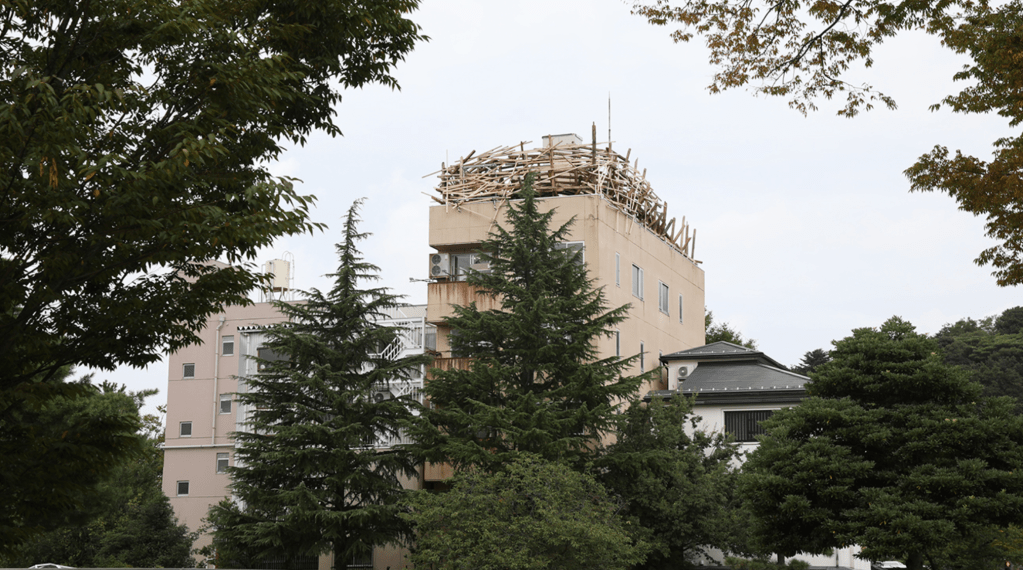
On the occasion of the group exhibition Altering Home, held as part of the Culture City of East Asia 2018 program in Kanazawa, Kawamata’s site-specific intervention at the Hakuichi Building, located next to the 21st Century Museum of Contemporary Art, transformed the entire building into a work of art. Evoking the series of Apartment Projects carried out by the artist between 1982 and 1986, this installation spread abruptly throughout the rooms of the five-story building, extending up to its rooftop, where a nest-like structure disrupted the sky view of the Hirosaka area.
Over Flow
5 October 2018 – 1 April 2019
MAAT – Museum of Art, Architecture and Technology, Lisbon, Portugal.
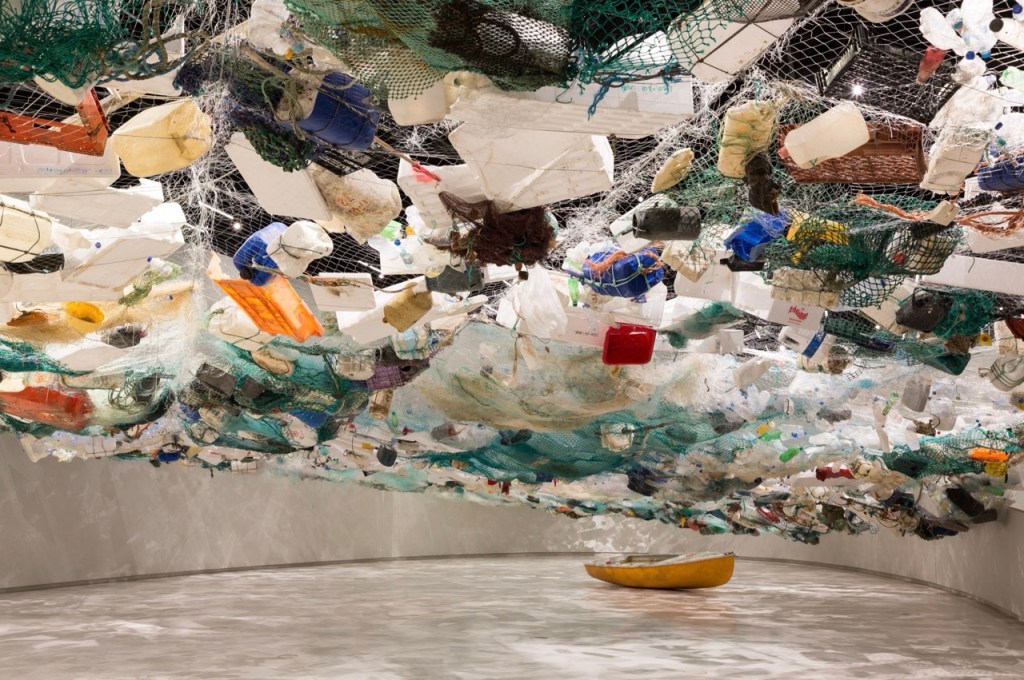
Over Flow is an immersive installation created for the Oval Gallery at MAAT, centered around environmental issues and global ecology. The installation incorporates plastic debris and abandoned boats collected from Portugal’s shores during volunteer-led beach cleanups, evoking the accumulation of pollution driven by the perpetual movements of the ocean, as well as the environmental toll of global tourism and the unsustainable consumption of natural resources..
Belvédère de l’Hermitage
2019
Nantes, France.
Permanent commissioned work
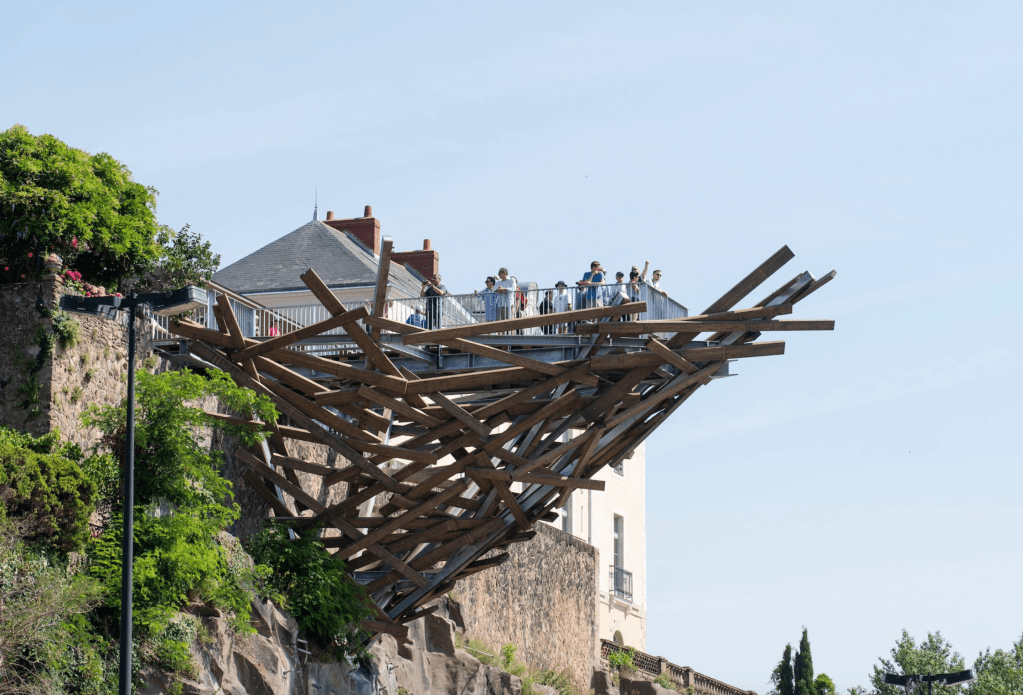
A narrow, 36-meter-long wood walkway extends into a nest-shaped deck clinging over the cliffside nearly 20 meters above the ground. Cantilevered ten meter over the cliff, this intricate structure offers a breathtaking view of the the city and the river. Belvédère de l’Hermitage (Hermitage Belvedere) is a permanent installation envisioned by Kawamata for the 2019 edition of Le Voyage à Nantes.
Les Nids
6 July – 1 September 2019
Nantes, France
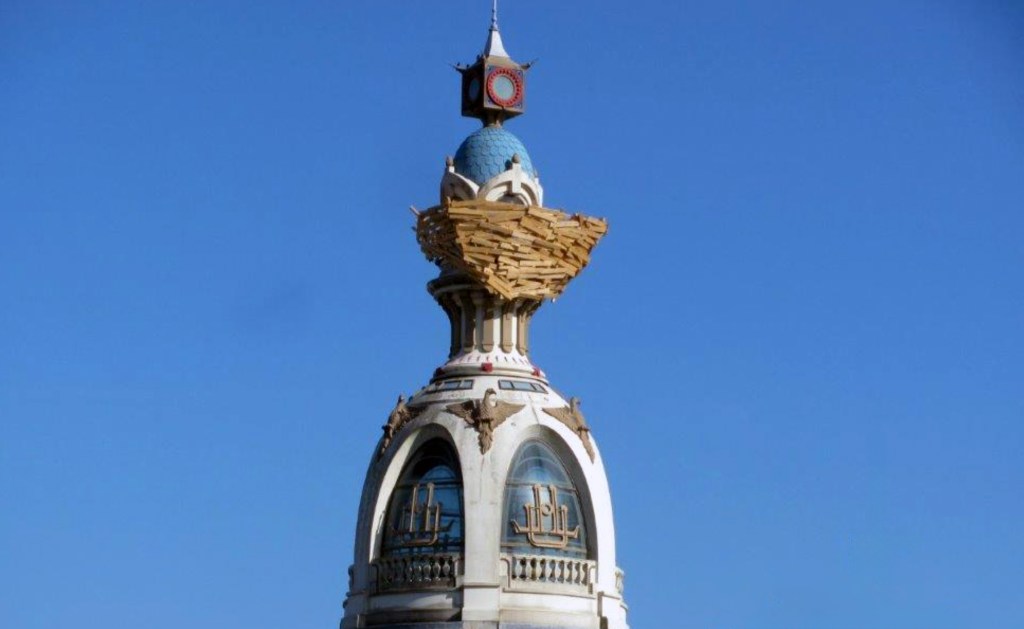
For the 2019 edition of Le Voyage à Nantes, held from 6 July to 1 September, in addition to the permanent installation Hermitage Belvedere, Kawamata installed ten temporary wooden structures resembling bird nests in various locations around the city of Nantes, including the iconic LU Tower at Le Lieu Unique, the National Center for Contemporary Arts.
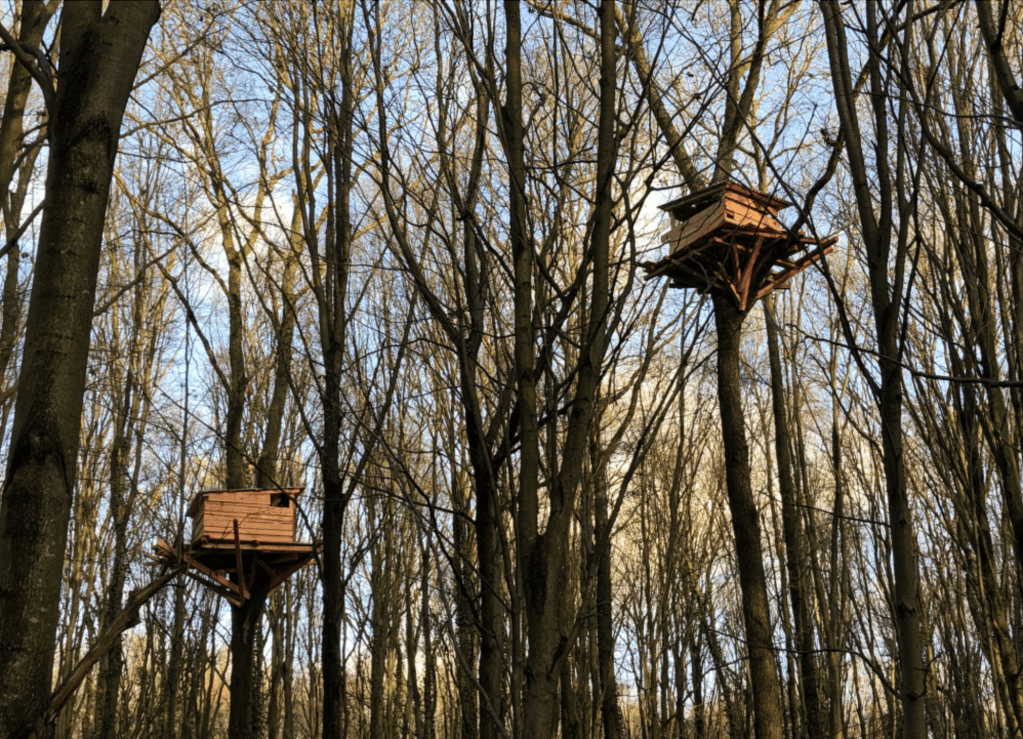
Bain de forêt
2019
Tremblay-en-France, France.
Permanent commissioned work
For this public commission, Kawamata installed twenty-three tree huts among the trees of the new urban park located in front of the city hall in Tremblay-en-France.
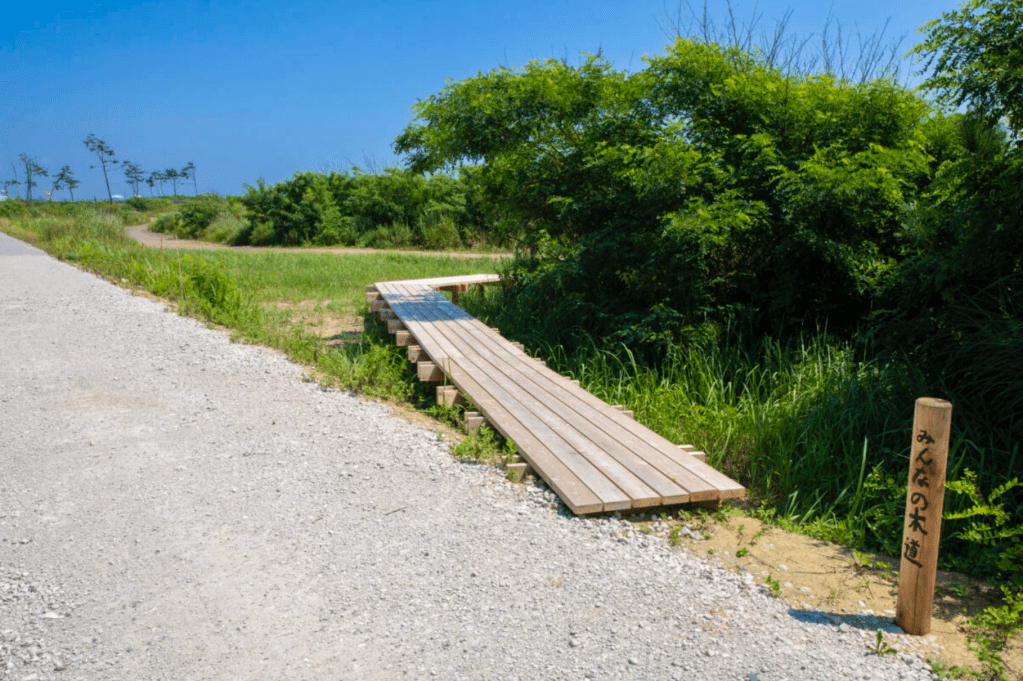
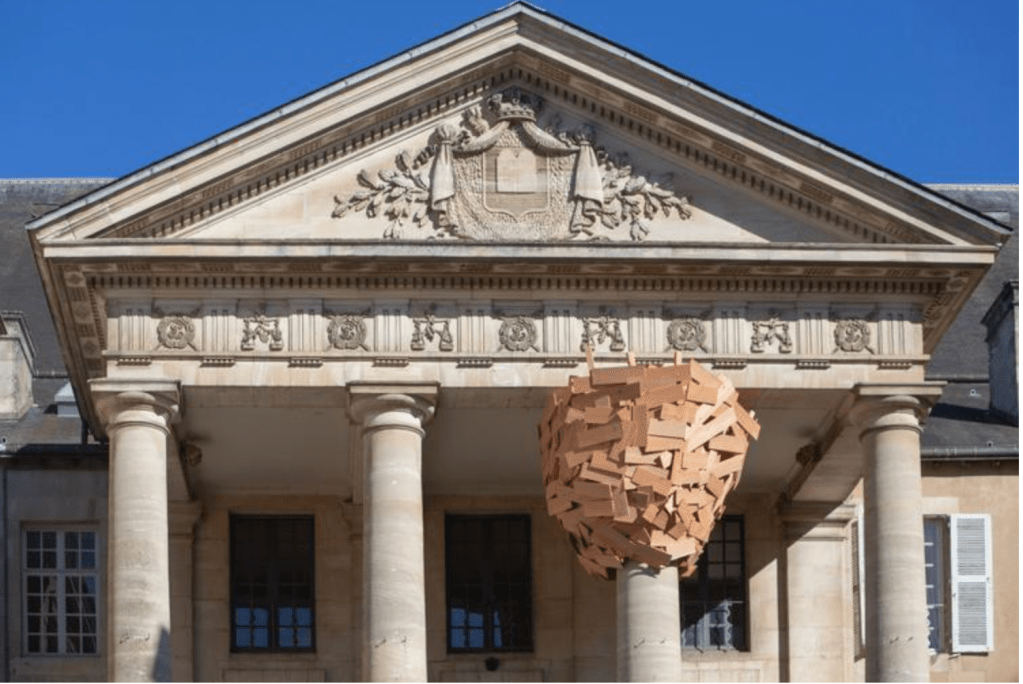
Nest ; Exit Tunnel
12 October 2019 – 19 January 2020
Palais des ducs d’Aquitaine, Poitiers, France
Created at the Palais des Ducs d’Aquitaine in Poitiers, France, as part of the group exhibition Traversées, Kawamata realized two site-responsive installations using reclaimed wooden planks, entitled Nest and Exit Tunnel. In contrast to the stone architecture and solemn atmosphere of the palace, the modest, shelter-like installation Nest evokes both fragility and the idea of refuge. At the building’s exit, Exit Tunnel extends this dialogue through a transitional and ephemeral structure that functions as a compulsory passageway sheltering visitors.
